Fine Art Photography
024A3214-Edit-Edit-3.jpg

2025 Top Twelve Photographs

David J Grenier Photography Blog Pages

Tales of Fish and People of the Ceylon Estuary, Revisited August, 2026.

Homeward Bound

As I get ready to visit the land of my birth mid-August, 2026, for the 5th time since I left the island of my ancestors in 1959, I feel compelled to write this blog post because of something that serendipitously happened to me recently. I received an email from a Jennifer Moragoda, who lives in Sri Lanka, telling me that she had inherited a copy of my father’s book, ‘Tales of Fish and People of the Ceylon Estuary’, that he wrote and published in 1954. She also told me that she was writing an article about the book for the Pathfinder Collection.

The Pathfinder Collection, I was told is a large and varied holding of antiquarian and modern books, art, prints, maps, Ceylon seashells, and other objects built up from three generations, and branches of her husband’s, Milinda Moragoda, family. https://pathfinderfoundation.org/

I was grateful and deeply touched by how and what had been written. Her choice of words evoked feelings within me of longing for, the unusual fun times of my youth growing up inCeylon, now Sri Lanka. Most of my memories are of my time living in Negombo, where I remember first seeing the ocean going catamarans used by fisherman to eke out a very arduous, and meager living. These catamarans, are unique to Negombo, let alone any other place in Sri Lanka, or the world.

Because I left home at an early age, I basically became an adult without my parents being present in my daily life. However, I now realize what a profound effect my father had on me growing up in Ceylon, and how he profoundly influenced me as a young boy. My love of the ocean, photography, travel, Mother Nature, music, and so much more. These appreciations of, and desires for did not settle deep within me with his use of a lot of words, lectures, or explanations, but by his deeds and his values so palpable they seemed to have simply seeped into the very core of who I am.

In all of the times I have visited Negombo, I have not been able to find the beach that we visited together so often. This time, with the help of Google Maps, I feel confident, and excited, to finally find that place at long last.

Homeward Bound. Homecoming!

Here is a copy of the article, shared below with the author’s consent. Thank you Jennifer for this beautiful, timely, and unexpected gift! I so wish that my father was still alive to have the chance to read this review of his early writings, as I know it would make him very happy….

Fish, Fisherfolk and a Forgotten Sri Lankan Classic
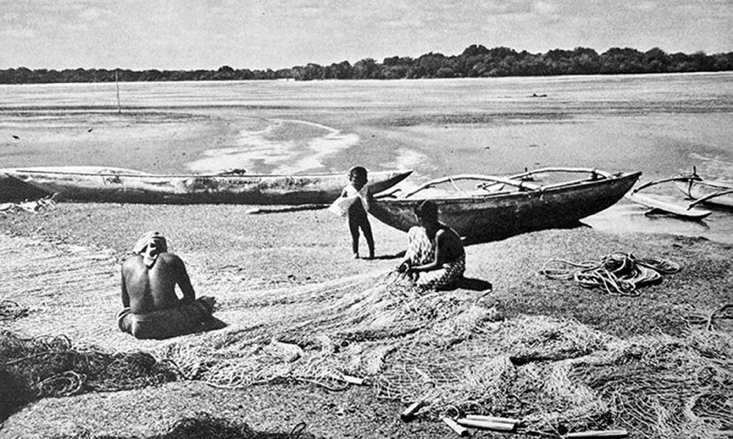
Fisherfolk mending nets beside their canoes on the shore. Photograph by Reg Van Cuylenburg from Image of An Island – A Portrait of Ceylon (1962). Pathfinder Collection

From the Pathfinder Collection

By Jennifer Moragado

Published in Colombo in 1954, J. A. R. Grenier’s Tales of Fish and People of the Ceylon Estuary is a small masterpiece: an angling memoir rich in natural history, practical fishing knowledge and tender observation of the fishing communities whose lives were bound to the sea.

 During the Covid lockdowns, my husband’s uncle Nimal Jayawardena began sorting through his extensive collection of books on wildlife, natural history, fishing and hunting. Boxes arrived at our house in batches. Unpacking, reading and cataloguing the books brought welcome pleasure to days otherwise marked by uncertainty, isolation and restrictions on movement.
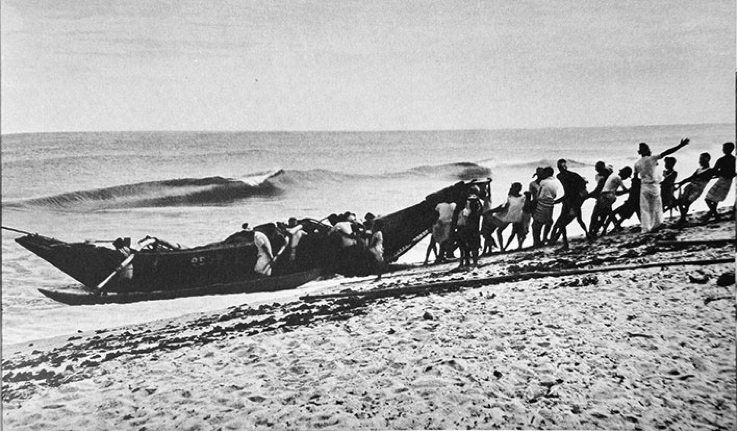
Fishermen hauling a fishing catamaran ashore after returning through the surf. Photograph by Reg Van Cuylenburg from Image of An Island – A Portrait of Ceylon (1962). Pathfinder Collection
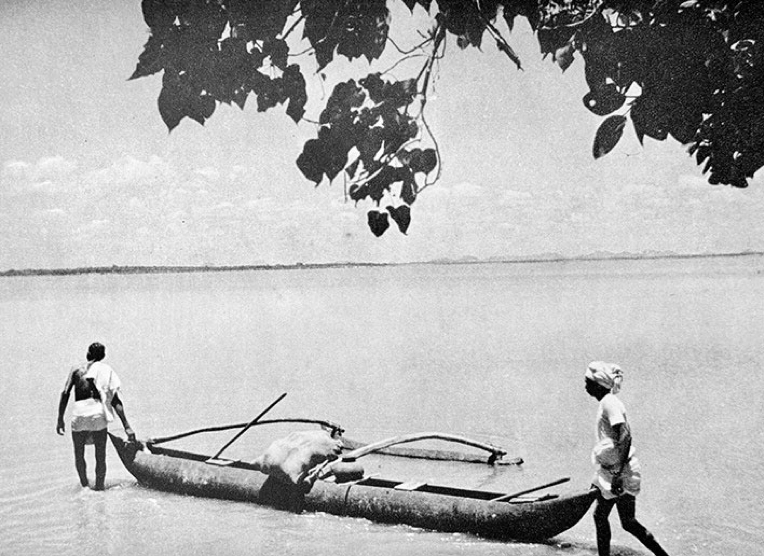
“What Will the Day Bring?” Canoe beside a tranquil estuary. Photograph by Lionel Wendt from Lionel Wendt’s Ceylon (1950). Pathfinder Collection

In one of the boxes, I noticed a slim volume in a plain white dust jacket. Spartan in appearance, its only adornment was a small circular medallion showing tow fish shimming in a ring around a rocky estuarine scene. The design was rendered largely in black and white, with a muted greenish-blue wash. At its centre appeared a title that promised far more than the modest artwork: Tales of Fish and People of the Ceylon Estuary. The cover did not even bear the author’s name.
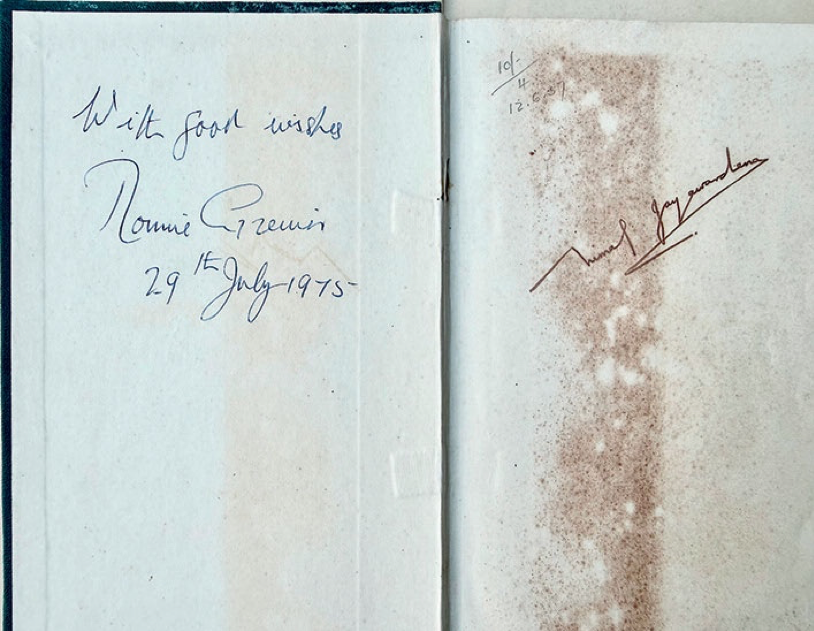
Inscription by J. A. R. Grenier to Nimal Jayawardena, dated 29 July 1975, with Jayawardena’s signature opposite. Pathfinder Collection. Author’s photograph
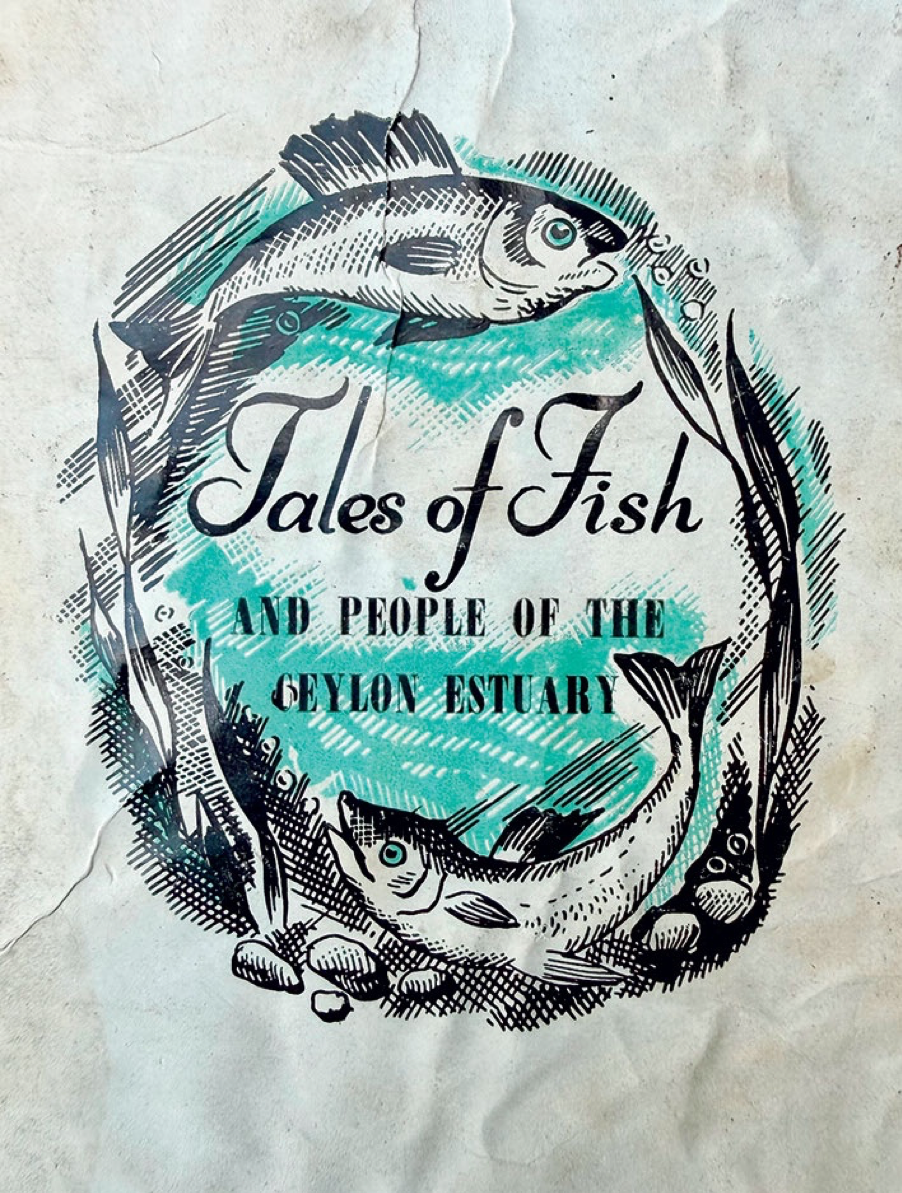
Detail from the dust jacket of Tales of Fish and People of the Ceylon Estuary (Colombo, 1954), showing the distinctive fish medallion. Pathfinder Collection. Author’s photograph

Out of curiosity, I opened this unassuming book and began to read. Within its weathered pages, a succession of worlds began to unfold: that of the recreational angler, for whom fishing was an absorbing passion; the natural world of Ceylon’s estuaries and their fish; the practical world of tackle, bait and technique; and, finally, the world of the fisherfolk, whose lives depended upon an intimate knowledge of the waters.
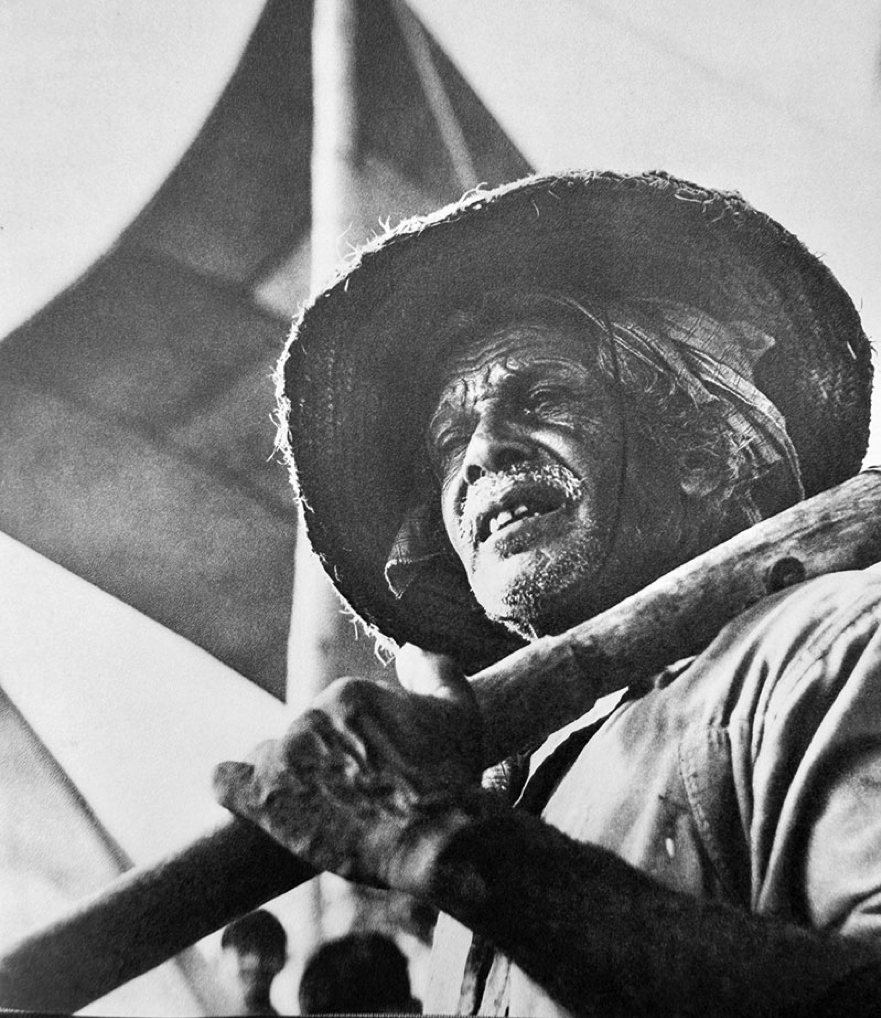
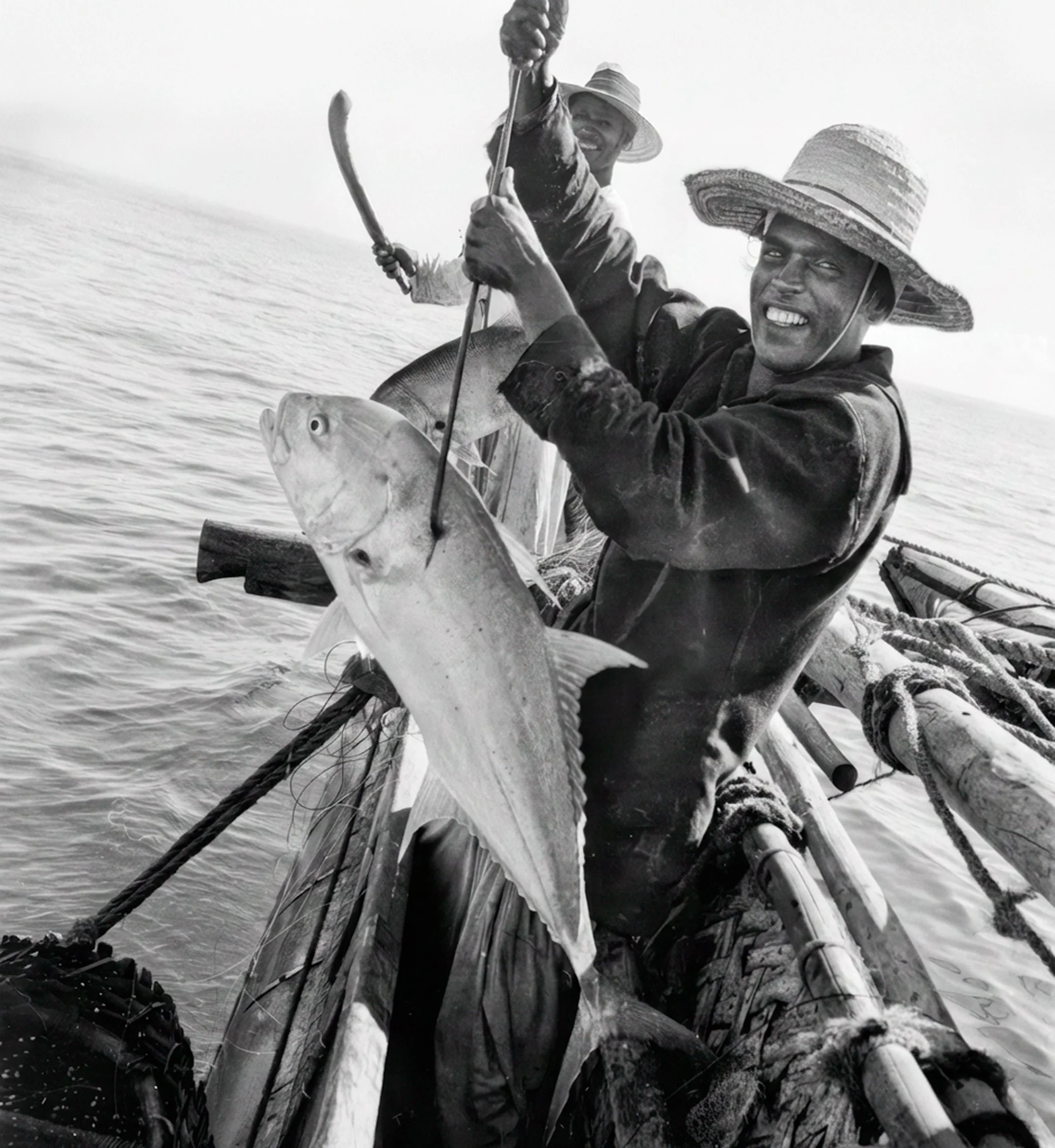
Portrait of a fisherman. Photograph by Reg Van Cuylenburg from Image of An Island – A Portrait of Ceylon (1962). Pathfinder Collection

At only 155 pages, the book is divided into two parts: “Fish,” devoted to the angler, the estuary and the practical knowledge of fishing; and “The People,” in which Grenier turns to the fisherfolk themselves.

 The mystery of the angler

 Grenier begins with a question that must have been put to anglers in every generation: why devote so much time, money and effort to an occupation involving discomfort, uncertainty and frequent failure?

 His book is, among other things, an extended answer to that question.

 In this, he belongs to a centuries-old angling tradition, familiar from Izaak Walton’s The Compleat Angler, in which fishing is valued not merely for the catch but for the fellowship it creates and the intimacy with nature it permits. Grenier gives that tradition a distinctly Ceylonese expression.

 For him, fishing satisfies the gambling instinct: every cast holds possibility, and every expedition begins with hope.

 The appeal also lies in escape. The estuary is usually remote: there, Grenier writes, the river, “tired of being harassed by humanity along its banks, seeks solitude where it meets the ocean.”

 Grenier describes the principal fish of the estuary and deep sea, their habits, feeding patterns and preferred habitats, observing how tide, season and weather shape their movements. He also preserves a detailed practical record of fishing: tackle, baits, traditional nets and fishing methods—knowledge accumulated through years of experiment, observation and conversation.

 His discussion of angling is often enlivened by the companionship, banter and minor disputes of his fellow anglers. Grenier recalls an episode from A. H. Pertwee’s Ceylon Marine and Estuary Fishing. Notes on a Neglected Pastime, first published as a series of articles in The Times of Ceylon before appearing as a booklet in 1907. To convince doubters of the strength of Ringall bamboo rods, Pertwee staged a “Man versus Fish Competition” at the Calcutta swimming baths. The “fish” was Mr. Mason, a powerful swimmer weighing more than ten stone —whom I cannot help imagining with a luxuriant handlebar moustache and a striped bathing costume. Harnessed to the line and given thirty feet of slack, he managed only seventy feet before Pertwee reeled him in foot by foot and finally “gaffed” him with a billiard cue.

 From fish to people

 Part Two, simply titled “The People,” is more than a change of subject; it alters the meaning of much that has come before.

 Grenier opens by confronting the stigma attached at that time to Ceylon’s coastal fishing communities. Those who earn their living from the sea, he observes, are often judged by people who know little of the skill and endurance their work demands, or of the dangers they face. However sympathetic, the “land-encumbered” observer, as Grenier puts it, can never fully comprehend the rigours and terrors of the sea without having faced them.

 The introductory chapter, titled “PRO” in capitals and quotation marks, makes Grenier’s regard for the fishermen unmistakable. They are the true professionals: men he came to admire and respect, and from whom he learned lessons extending far beyond fishing.

 For the working fisherman, the sea governs every aspect of life. It provides his livelihood, but may also threaten his boat and his life. Danger, hardship and uncertainty are enduring conditions of his world. The sports angler by contrast chooses temporary discomfort and may return empty-handed but to a secure bed and meal.

 Such conditions also help explain the fishermen’s reserve towards recreational anglers, whom they regard as outsiders whose inexperience may hinder the work and even jeopardise a catch.

 Grenier observes that a newcomer is fortunate if accepted within five years. Some of his happiest moments come when fishermen such as Jemma of the Kalu Ganga, Anthony of Negombo or Manuel of Mannar disclose a favoured fishing ground or allow him to join them in their boats. Yet fishing can also produce a camaraderie capable of crossing barriers firmly maintained on land. Grenier’s acceptance is never assumed, but gradually earned through patience, shared experience and respect for the fishermen’s knowledge. An invitation into a boat or the disclosure of a closely guarded fishing ground signifies far more than access to better sport. It marks his admission into a fraternity.

 From there, Grenier opens a window onto the fishermen and their communities through a succession of miniature biographies.

 The “PROS”

 There is Jemma, whom he calls the “King of estuary fishermen of Ceylon.” For thirty years he has fished at the mouth of the Kalu Ganga and knows every rock, obstruction and hidden danger in the estuary. So accustomed is he to sitting in his small canoe that, even on land, his legs creep beneath him into the same position when he becomes absorbed in conversation.

 His tackle is modest but meticulously made. Grenier’s respect for his skill deepens when one of his seemingly fragile handmade lines lands a skate weighing some twenty pounds.

 From Mannar comes Soosai, the shark hunter, whom Grenier describes as a “bronzed miracle of a man with limbs like jungle trees and shoulders as thick as a Dutch wall.” He lives amid the bones of his quarry.

 Bemiya prefers the company of fish and animals to that of people and speaks only when necessary, yet has lovely names of his own for the fish he catches. His gift lies not so much in fishing with rod and line as in diving. His large, “plate-like” hands and long, double-jointed fingers seem made for work beneath the surface, where he moves with an ease he is denied on land.

 Bemiya later disappears during a dangerous attempt to subdue a shark caught by his fellow fishermen. Grenier’s brief farewell to him is among the most affecting passages in the book.

 The final and perhaps most powerful portrait is that of Anthony, the wise and kindly fisherman of Negombo who takes Grenier under his wing. Anthony teaches him not only how to fish, but also the fisherman’s code. Behind his patience and wisdom lies a history of personal loss.

 The book closes with his account of the storm in which he lost his son. Boats remain at sea while the people on shore watch the horizon with the quiet dread born of bitter experience. Through Anthony’s recollection, Grenier evokes an entire village overtaken by grief, its cries of mourning rising against the gale and the breaking surf. Anthony bears his loss with a sad fatalism.

 The sea, he tells Grenier, “makes us and breaks us.”

 A society in transition

 J. A. R. Grenier—known as Ronald—was born in Ceylon in 1912.

 The world he evokes is that of late colonial and early post-independence Ceylon: government service, clubs, sporting friendships, coastal journeys and long-established personal networks, brought through fishing into close contact with communities bound by occupation, poverty and dependence upon the sea. Moved by the book, I wanted to learn more about its author. My search led me to the website of his son, David Grenier, and to the life that lay behind its pages.

 By the late 1950s, Grenier had concluded that his children’s prospects in Ceylon were uncertain. In 1959, his fourteen-year-old son David left for Australia with several family members, including his grandmother and aunts. Grenier followed three years later, in 1962.

 The decision was practical and paternal, but came at great personal cost. According to David, his father knew before leaving that he would not be happy in the West and would dearly miss the ocean, the fish and the fishing people of Ceylon.

 I had scarcely read those words before thinking, “he will never be happy there.” A few paragraphs later, David wrote that his father was never the same after the move.

 Read with that knowledge, the book becomes not merely an account of fish and fisherfolk, but also a record of a landscape, a body of knowledge, and a way of life from which Grenier was soon to be separated.

 The story of our copy

 When I returned to our copy while preparing this article, I noticed that it bore an inscription by Grenier dated 29 July 1975. Puzzled, since I knew he had emigrated to Australia more than a decade earlier, I telephoned my husband’s uncle Nimal to ask about its circumstances.

 Nimal recalled that Grenier had returned to Sri Lanka that year for a fishing journey “down memory lane” along the East Coast with their mutual friend Frank Kelly, who had also migrated to Australia.

 In his younger days, Nimal had been an avid angler, deep-sea fisherman and sportsman who knew the eastern coastline and its jungles particularly well. Frank called at his house to borrow camping equipment for the expedition, and Grenier accompanied him.

 By coincidence, Nimal was reading Tales of Fish and People of the Ceylon Estuary at the time. He brought the book downstairs and asked Grenier to sign it. The three men spent some time reminiscing about earlier days of fishing before Grenier and Kelly continued on their journey.

 Nimal also knew Willie Obeysekera and Peter Jayawardena, fellow anglers whom Grenier thanks in the acknowledgements. After retiring, Peter worked as a guide for one of the family companies, based in Inginiyagala.

 These connections place the book once again among the friendships and shared experiences from which it emerged. The inscription transforms our copy into a record of Grenier’s return to waters, friendships and memories that had endured the years abroad.

 Grenier in Australia

 In later life, Grenier developed a rare and incurable illness that severely affected his health and wellbeing. He died in Queensland in 1988, aged seventy-five.

 When I learnt of Grenier’s death, my thoughts returned to the hope he had once expressed for Bemiya: “I hope there are fish in the place he has gone to, for without them, he, like you and I, will never be happy.” David later worked to preserve his father’s literary legacy, personally publishing Isle of Eden Revisited, in 2017, an expanded version of the original  book of short stories, Isle of Eden, originally published in Ceylon, in 1961.

 A forgotten Sri Lankan classic

 Grenier’s work defies easy classification. It is a rare conjunction of fishing manual, angling memoir, natural history and social record. Within little more than 150 pages, he preserves an extraordinary body of knowledge about Ceylon’s estuaries: their fish, habitats, fishing methods, language and communities. It is, in effect, a compact cultural archive written in the form of an angling memoir, distinguished throughout by tenderness, restraint and quiet humanity.

 Its appeal extends far beyond anglers. More than seventy years after its publication, there is still nothing quite like it. The book deserves to be read again.
2025 Top Twelve Photographs

Happy New Year to all my family and friends. It is my sincere wish that 2026 brings you Love, Light, and Laughter!

2025 was an interesting year for me, both personally and creatively. I began the year by traveling to Wellington, New Zealand, to visit my daughter, who was working at Wētā Workshop as a Creative Director. Wētā Workshop brings imaginary worlds to life. It creates concept designs, physical effects, collectibles, immersive visitor experiences, and games for the entertainment and creative industries. Its most famous works include 'The Lord of the Rings' trilogy, 'Avatar', 'Black Panther: Wakanda Forever', and 'Dune'. Wētā has been recognised with five Academy Awards, four BAFTA Awards, three Thea Awards, and over 30 other national and international accolades.

We are planning to go back to New Zealand’s south island in December 2026, to complete a photography tour, one we had planned to do this year but unfortunately had to be cancelled. I got the opportunity to visit the Eastern Sierras in June this year for a night shoot in Bodie State Historic Park, and a beautiful sunrise in Mono Lake. I also visited Yosemite National Park in May, as well as mid November, and a number of my images made during those trips have been voted in to this years Top Twelve.

I’m also fortunate to live in a small town named Gold River, California, 20 miles east of Sacramento, that allows me to walk on a daily basis, the miles, and miles of local trails, built into acres of thriving oak trees. Annually I look forward to photographing California poppies that bloom in amongst the trails, as well as other local flowers where I get to have fun with my macro lens.

“Twelve significant photographs in any one year is a good crop.” – Ansel Adams

It is that time of the year, once again, for me to share with you my Top Twelve Photographs of the Year, 2025. This is the 13th edition of a tradition that began in 2013, inspired by the Ansel Adams’ quote above. Ansel Easton Adams (February 20, 1902 – April 22, 1984), is one of the most recognizable names in American landscape photography. His black-and-white landscape photographs of the American West, especially Yosemite National Park, have been widely reproduced on calendars, posters, books and prints.

As in previous years, I determine my Top Twelve, and the order of the selections by the number of unsolicited responses, or Likes, each of the images shown below received on my social media Facebook page. Hardly a foolproof or scientific way to do this, but I use it so I don’t have to sift through hundreds of images and make these choices arbitrarily by myself.

So, let’s begin with Number 12, its title, some background about each image, and some basic EXIF data.

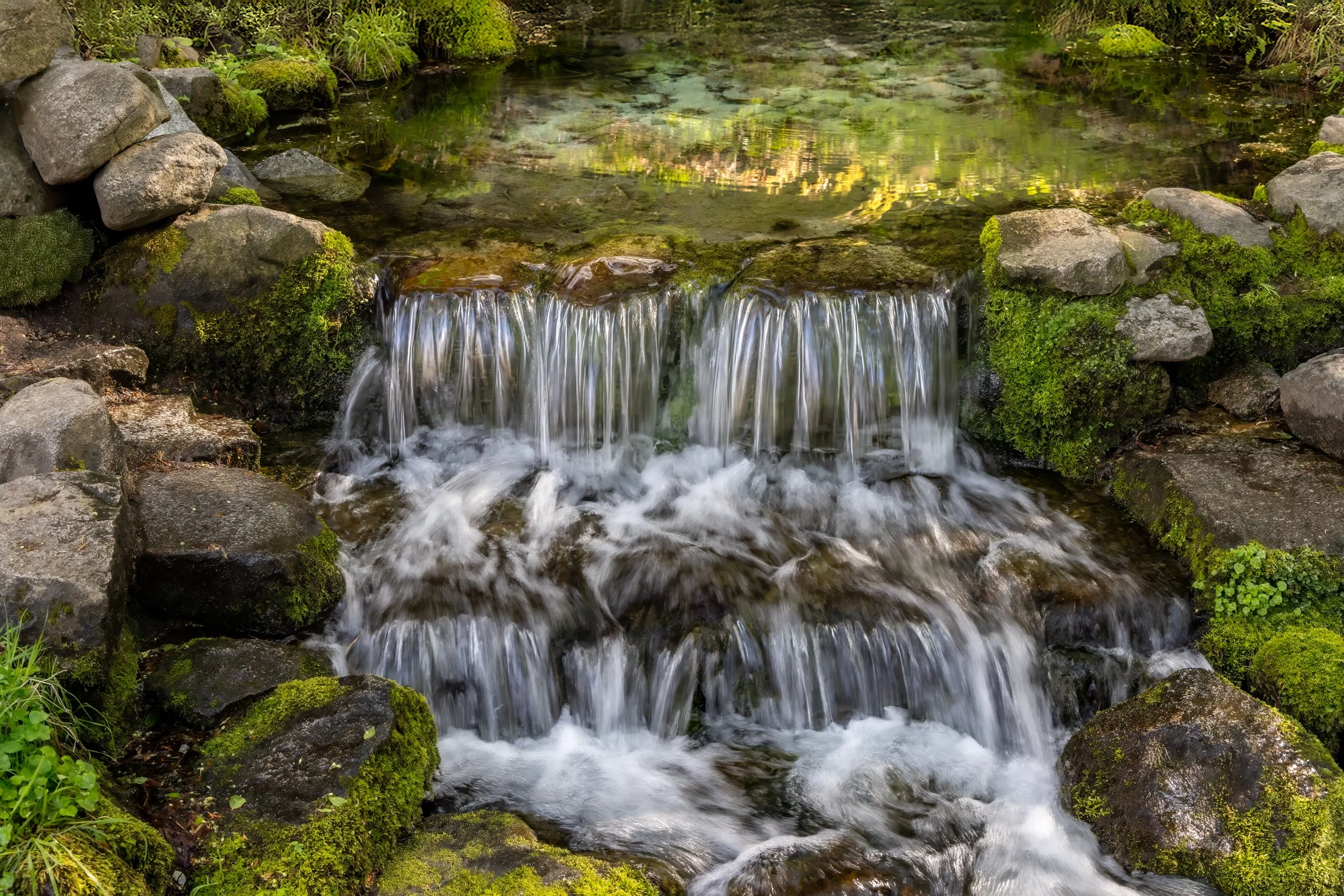
#12. 'Drink The Water’' – This is the sweet, tiny gem that is Fern Springs in Yosemite, that is located just after crossing Phono Bridge. I’ve seen a large number of people stop here to fill up their water containers and drink the water. There are several schools of thought about is the water safe to drink, and finally earlier this May for the first time I drank the naturally filtered water. Tasted clean, pure, and really good.

May 5, Fern Springs, Yosemite NP, CA; exposure 1/20 sec @ f/8.0, ISO 800; lens 24-105mm @ 2 50mm.

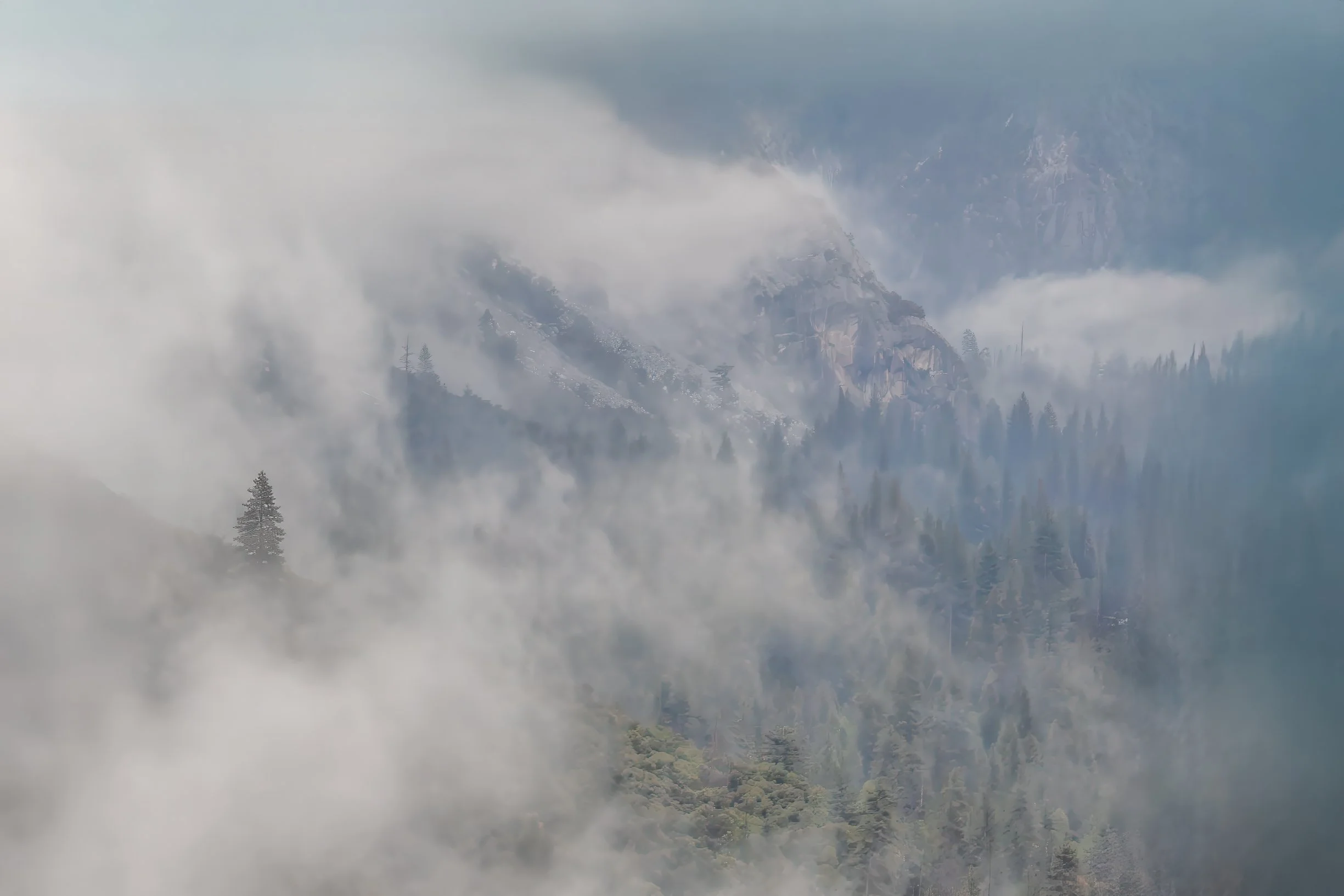
#11. ‘Alone Again Naturally’- I love it when there’s fog in Yosemite Valley, as it was this day, as seen from Tunnel View. This lone pine tree, somehow always manages to catch my eye.

May 13, Tunnel View, Yosemite NP, CA; exposure 1/250 sec @f/11, ISO 640; lens 18-300mm @ 147mm.

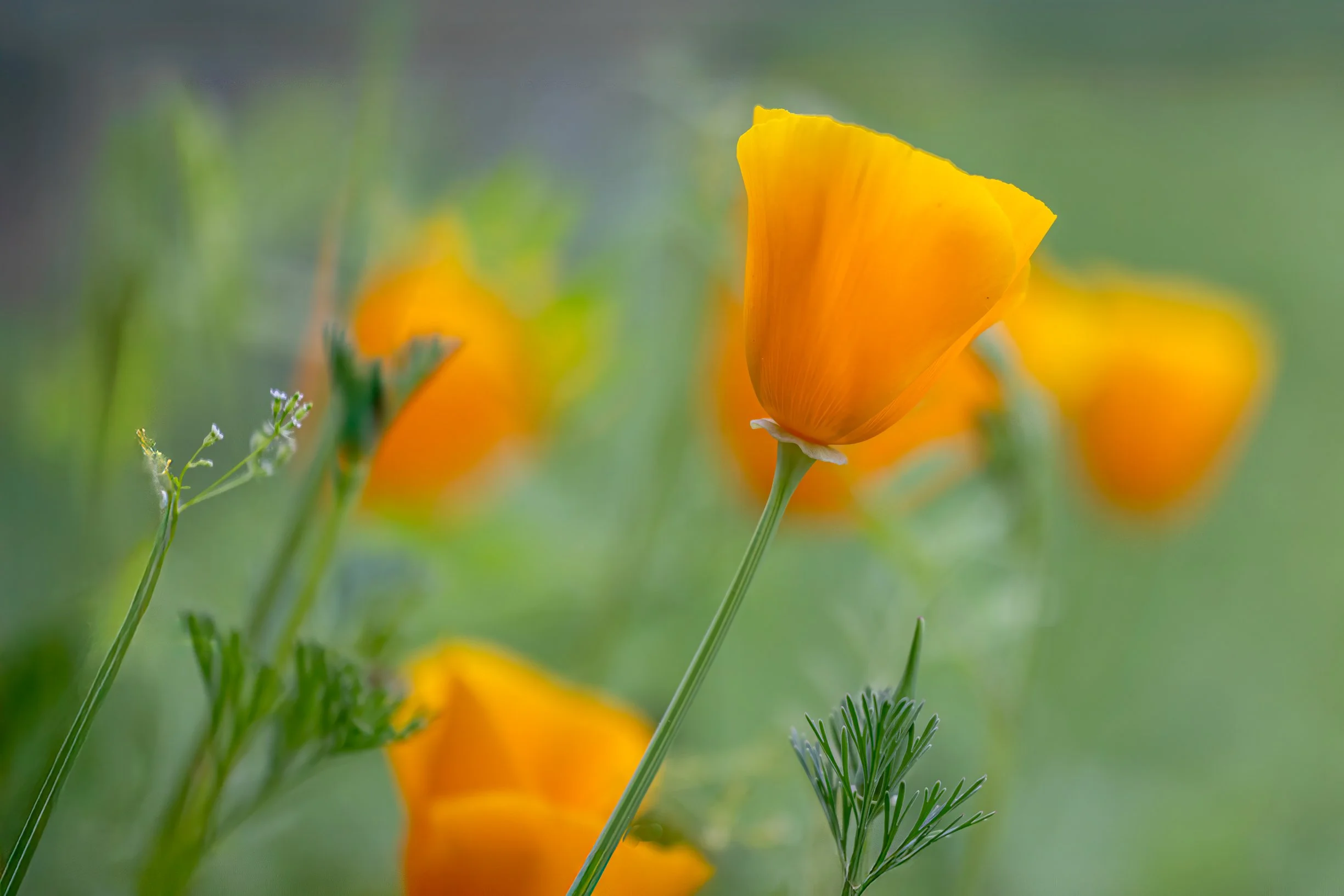
#11. ‘Summer Time’ - This year I have two images tied at #11. When the wildflowers bloom in California, it is always a joyous time of the year for me. I love having to get down to ground level, isolate, and selectively focus these beautifully colored poppies, the official California state flower, the Golden Poppy .

April 17, Gold River, CA; exposure 1/1,250 sec @f/4.0, ISO 1000; lens 70-200mm @ 191mm.

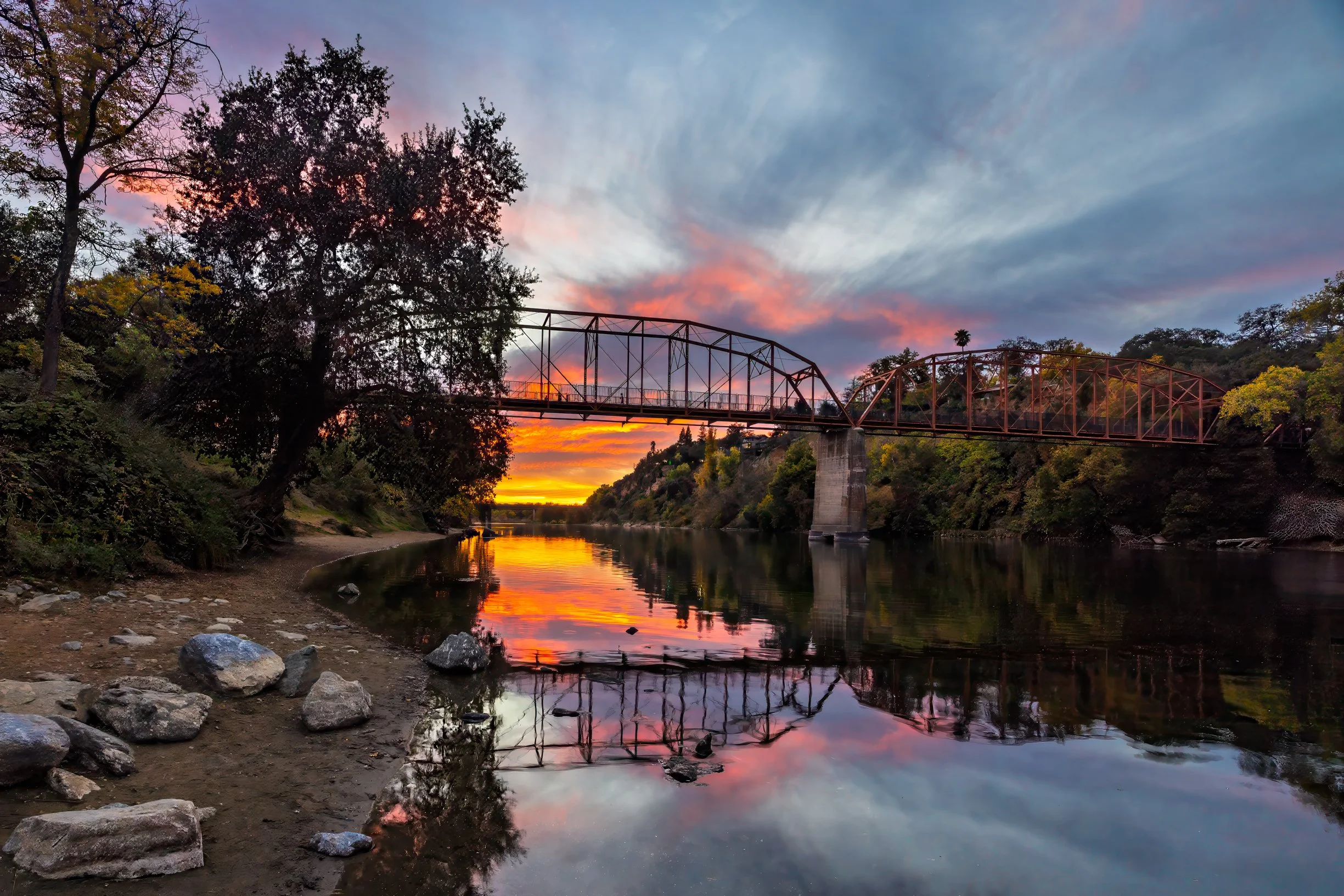
#10. ‘Ring of Fire’ - This is the Fair Oaks Bridge, now used for pedestrian and bicycle traffic only. This evening I set out to capture a full moon rising, but clouds got in my way and I ended up at this bridge, with sunset colors making it a good night!

November 4, Fair Oaks, CA; exposure 0.3 sec @f/11, ISO 100; lens 14-35mm @ 15mm.

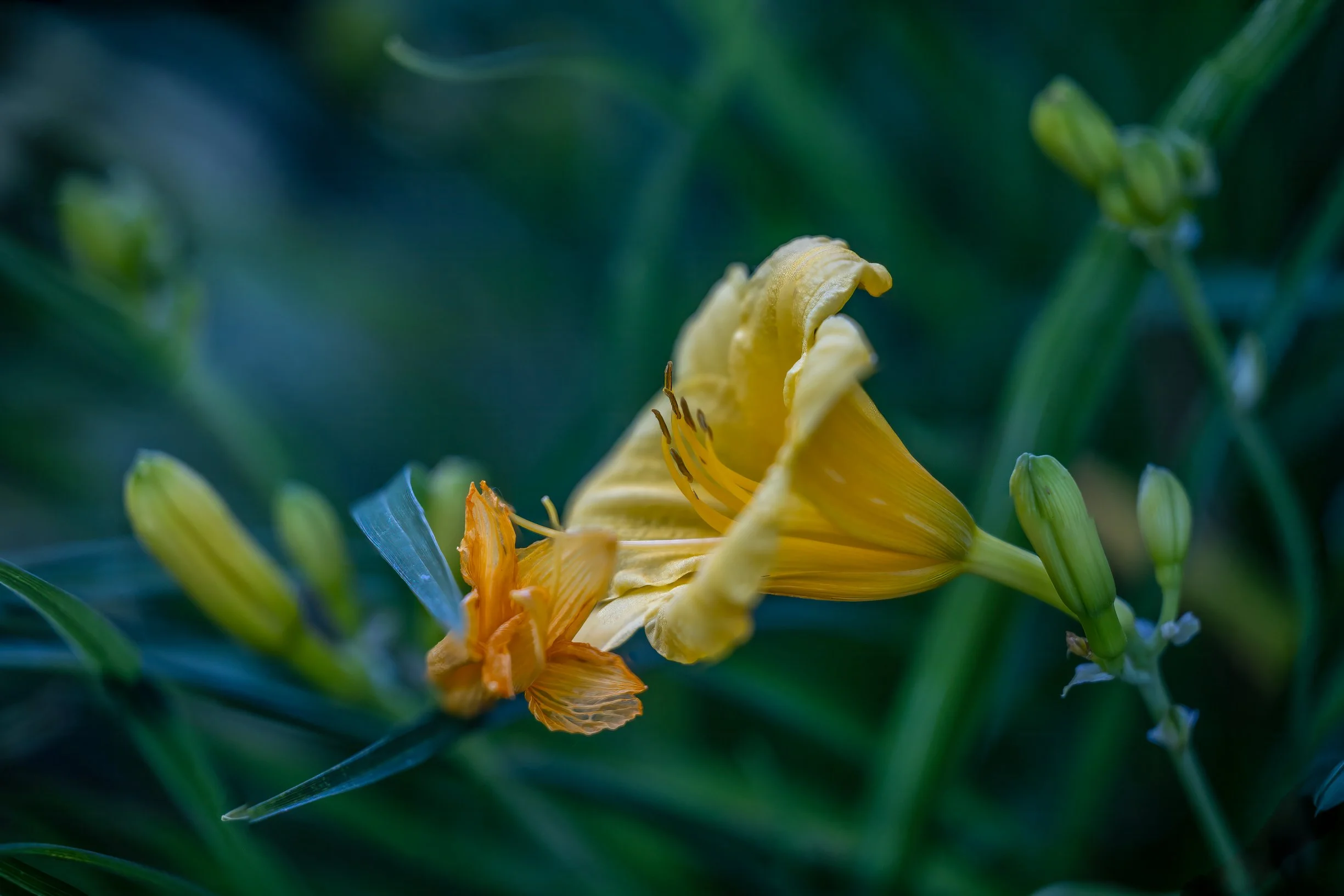
#9. "Love is the flower you've got to let grow." - John Lennon. This daylily in my front yard caught my eye for it simple, yet intricate beauty. It has been famously said ‘The earth laughs in flowers’ , by Ralph Waldo Emerson, from his poem "Hamatreya," suggesting flowers are nature's beautiful, joyful, and resilient expression of life, often seen as a gentle mockery of human arrogance and fleeting control over the Earth, with blooms symbolizing renewal and beauty against the backdrop of life's impermanence.

May 22, Gold River, CA: exposure 1/640 sec @ f/11, ISO 400; lens 70-200mm @ 200mm.

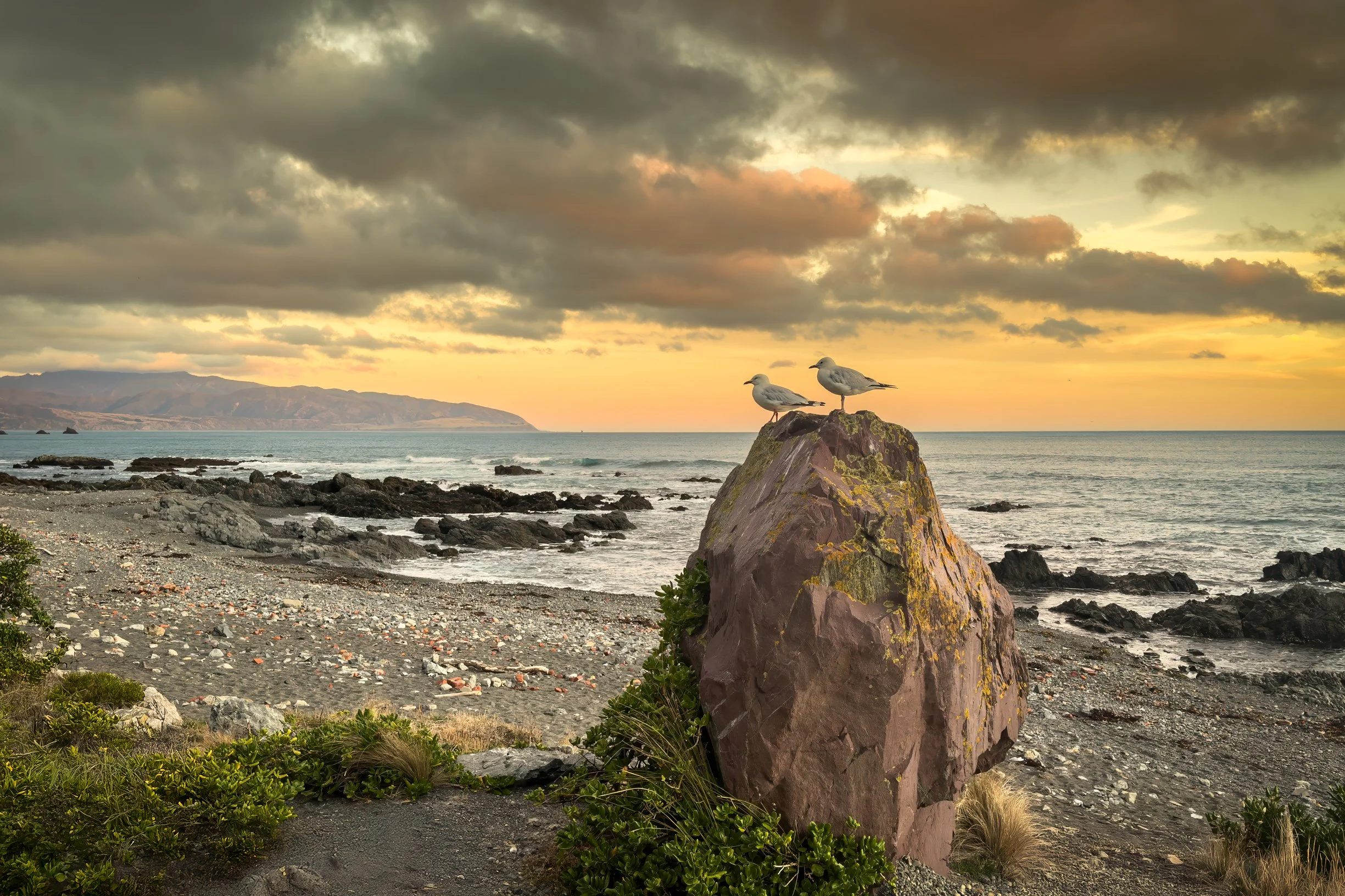
#9. 'Jonathan Livingston & Friend' - This was shot on our first evening in Wellington, at Red Rocks Beach, where we spent sunset getting a feel for being in New Zealand. My initial feeling was that New Zealand has a quiet beauty, that is definitely unique and different to any other country I have visited. This again is a tie for the #9 rating..

March 14, Red Rocks Beach, Wellington, New Zealand; exposure 1/120 sec @f/1.8, ISO 80; iPhone 14 Pro Max lens 6.9mm @ f/1.8

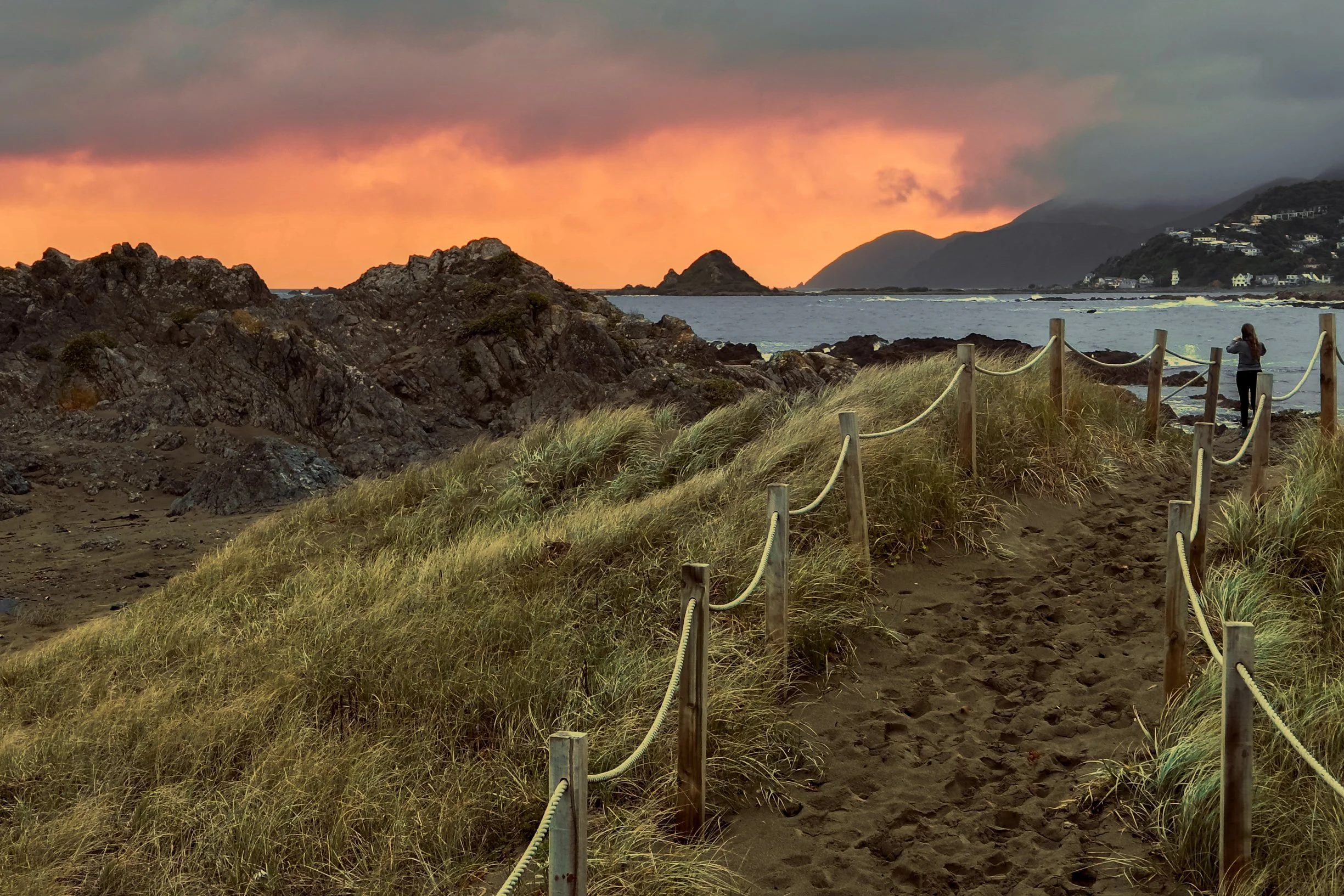
#8. ’Fire in the Sky’ - Another sunset shot, also in Wellington, this time we were at Princes Bay on our last night before we headed home the next morning. I left Wellington with the impression, that New Zealand has a unique, ancient, and English feel in many ways. I do hope that I get another chance to see and photograph this beauty again, especially in the south island next time.

March 20, Princess Bay, Wellington, New Zealand; exposure 1/120 sec @f/1.8, ISO 80; iPhone 14 Pro Max lens 6.9mm @ f/1.8

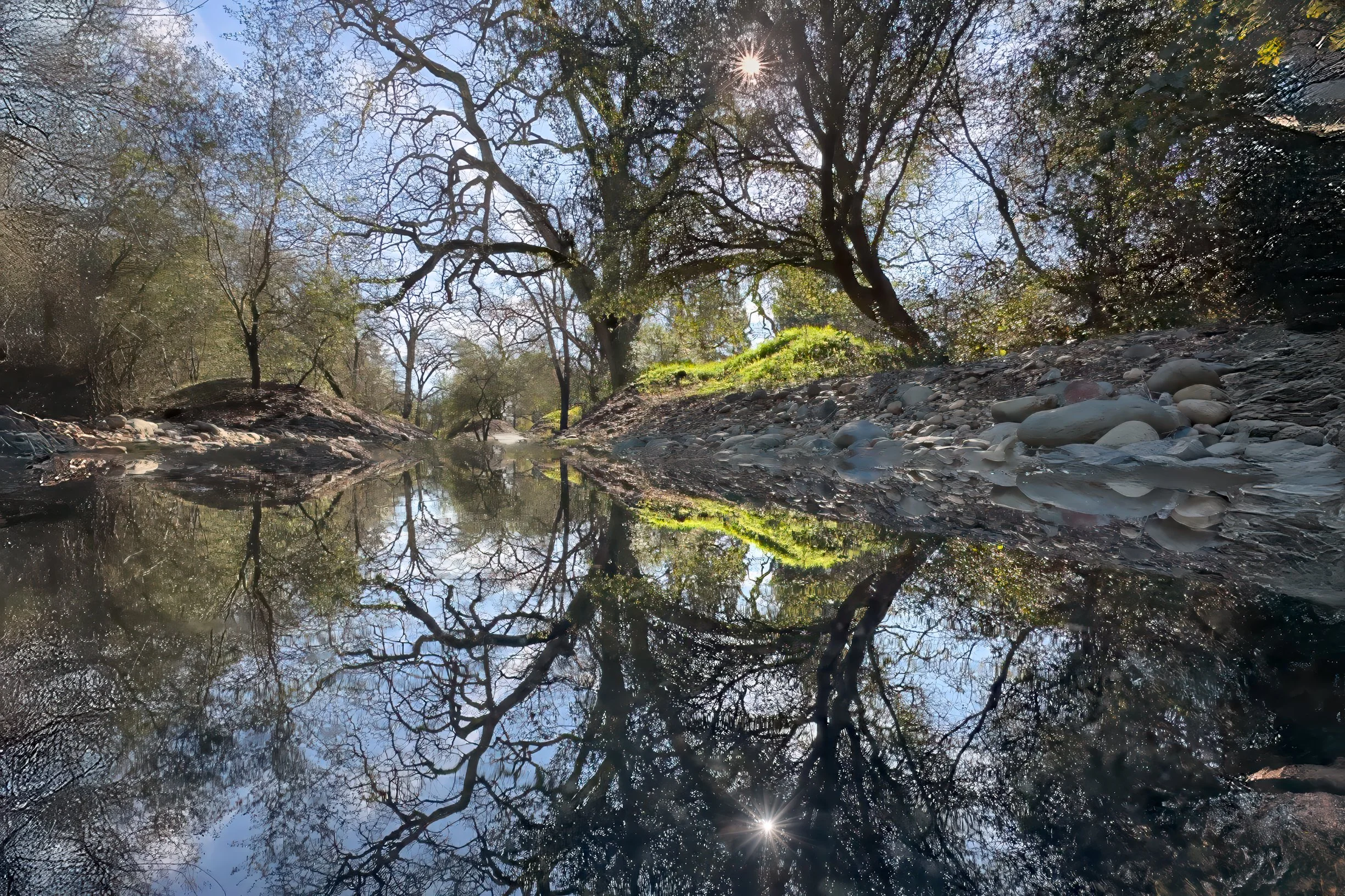
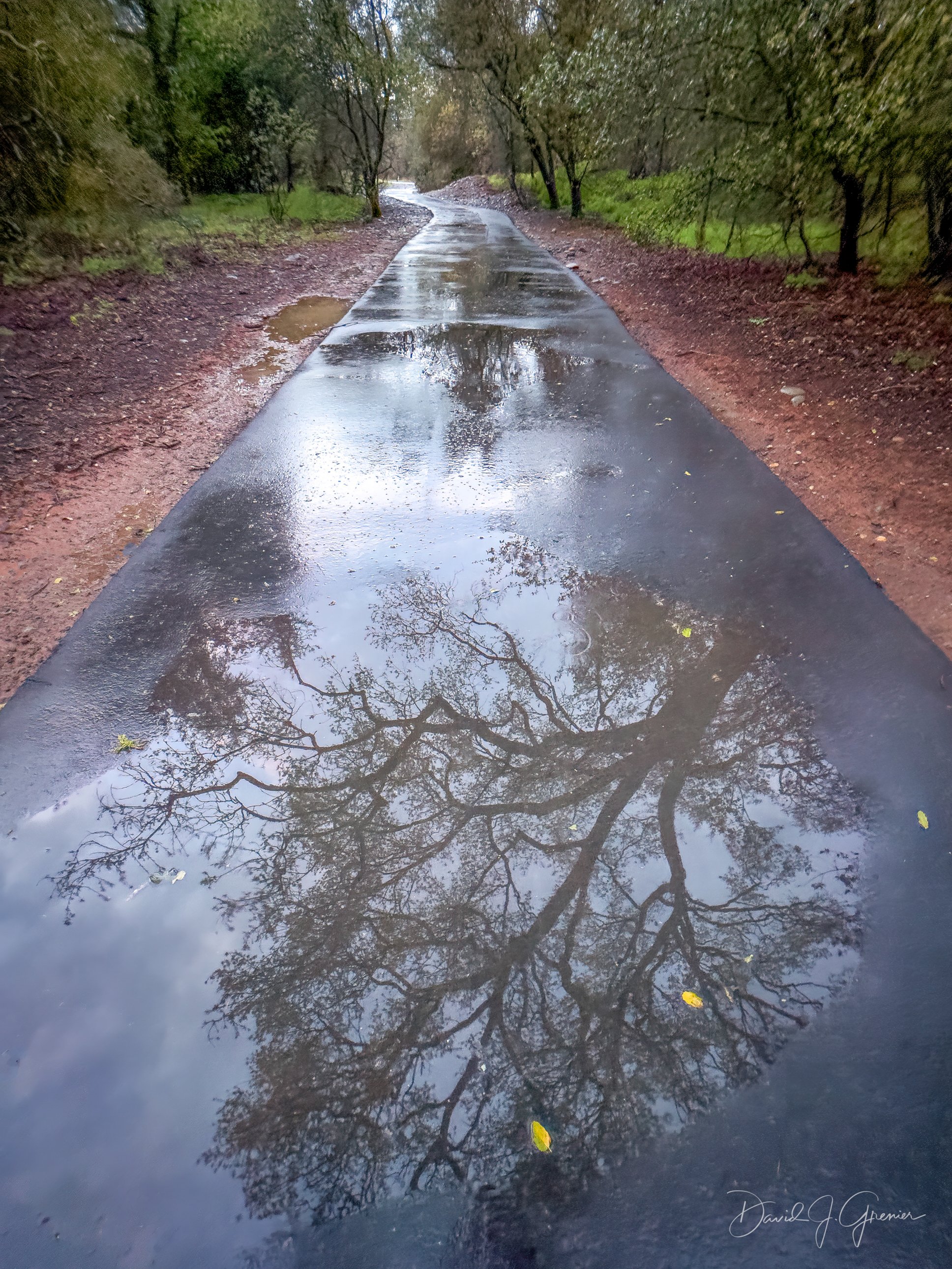
#7. ‘Spring Reflections’ - I still love walking in the rain, and on clear days using my iPhone to capture reflections at puddles of rainwater. Most of my recent images have been captured during my daily walks, which continue come rain or shine! This reflection in this image is created by holding my iPhone upside down, placed right next to the puddle of water!

February 20, Gold River, CA; exposure 1/320 @ f/2.2, ISO 40; lens iPhone 14 Pro Max 2.22m @ F/2.2.

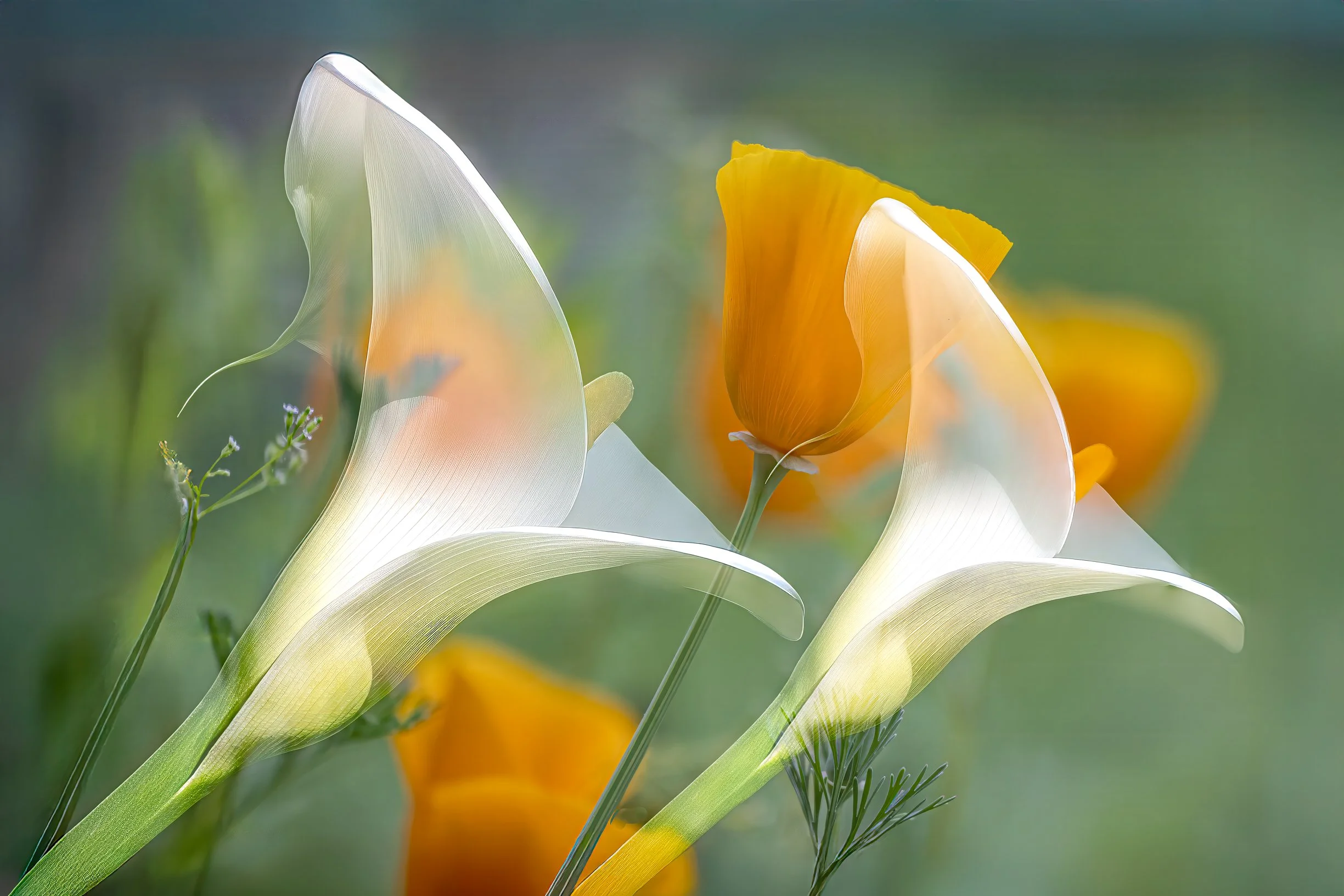
#6. ‘Angels Flying Too Close To The Ground’ - This image was made by blending in Photoshop, an image of golden poppies, and an image of two white calla lilies shot in my front yard. . Thanks Willie for the use of your beautiful song title...

April 17, Gold River, CA; exposure 1/1,250 sec @f/4.0, ISO 1000; lens 70-200mm @ 191mm.

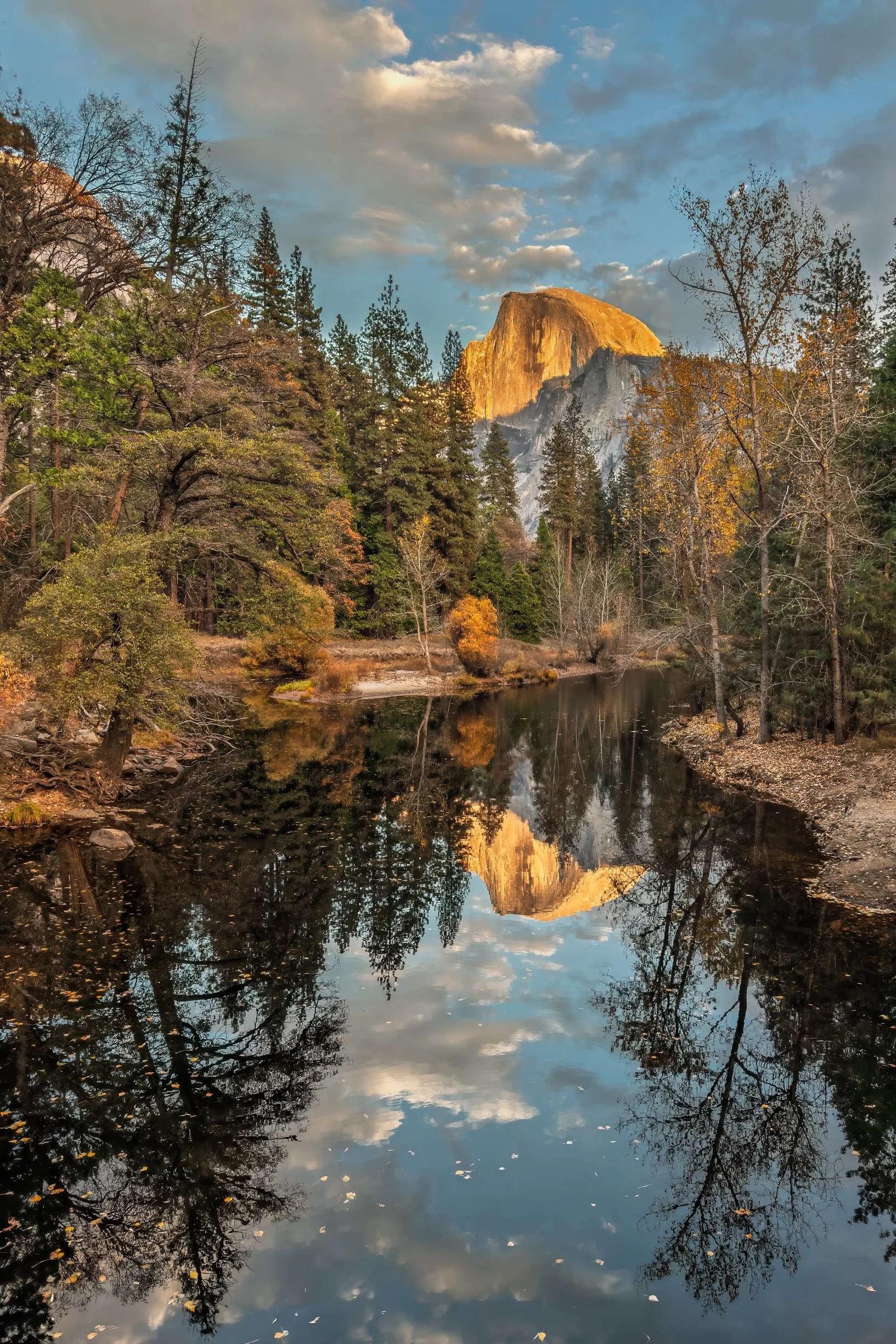
#5. ‘Golden’ - Right place at the right time. Alpine glow on Half Dome, sunset shot from Sentinel Bridge, with a touch of clouds placed in a perfect position to enhance the composition.

November 12, Sentinel Bridge, Yosemite NP, CA; exposure 1/200 sec @ f/1.8, ISO 125; iPhone 14 Pro Max 65mm @ 1.78mm.

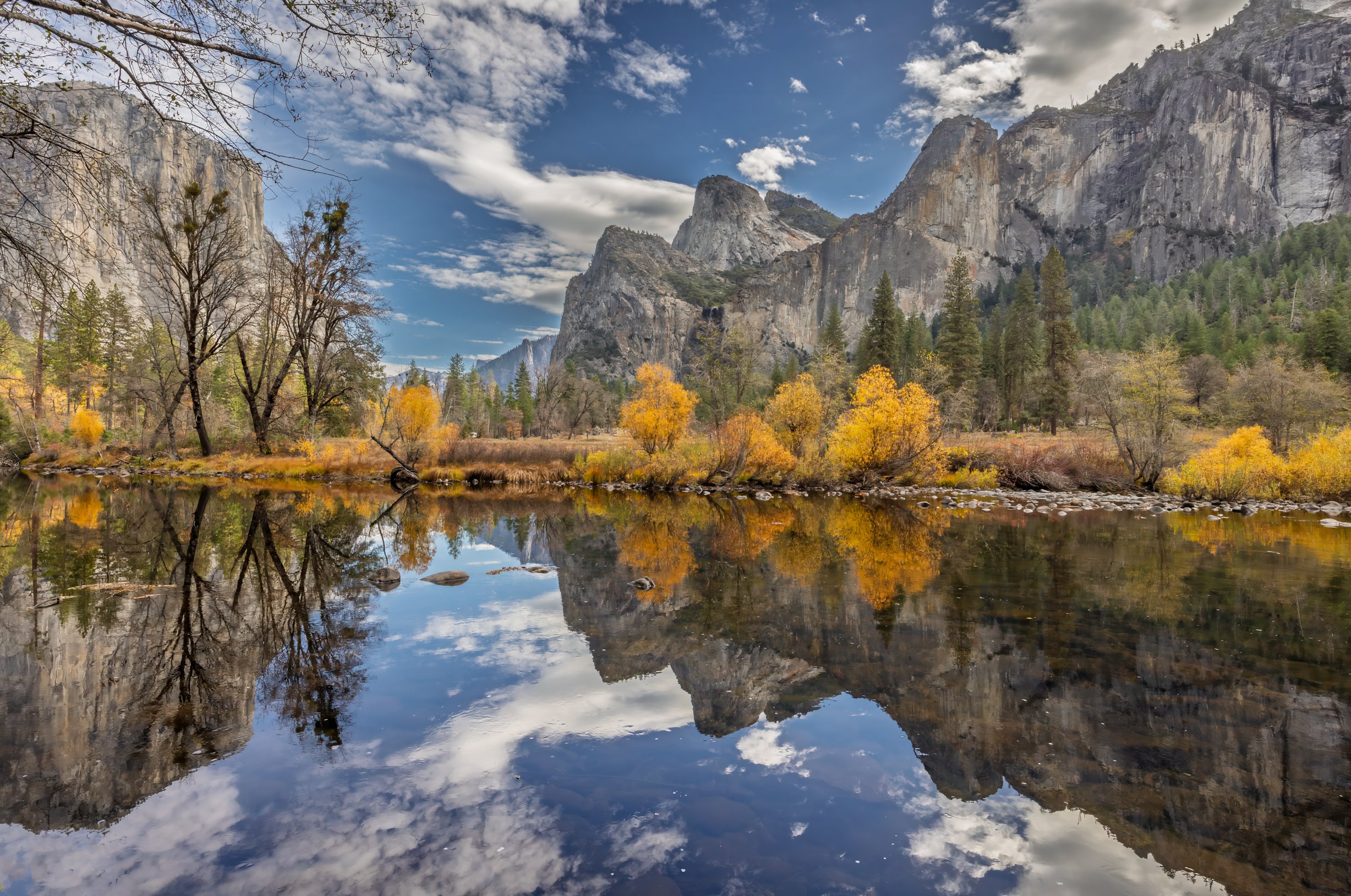
#4. ‘Magnifique!’- We arrived in Yosemite at least two weeks late to capture the prime fall colors. Hence, I was extremely grateful to be able to capture this image at Valley View, the tail end of the fall color leaves, and in between breaks of heavy rain falls.

November 11, Valley View, Yosemite NP, CA; exposure 1/800 sec @f/11, ISO 500; lens 14-35mm @ 26mm.

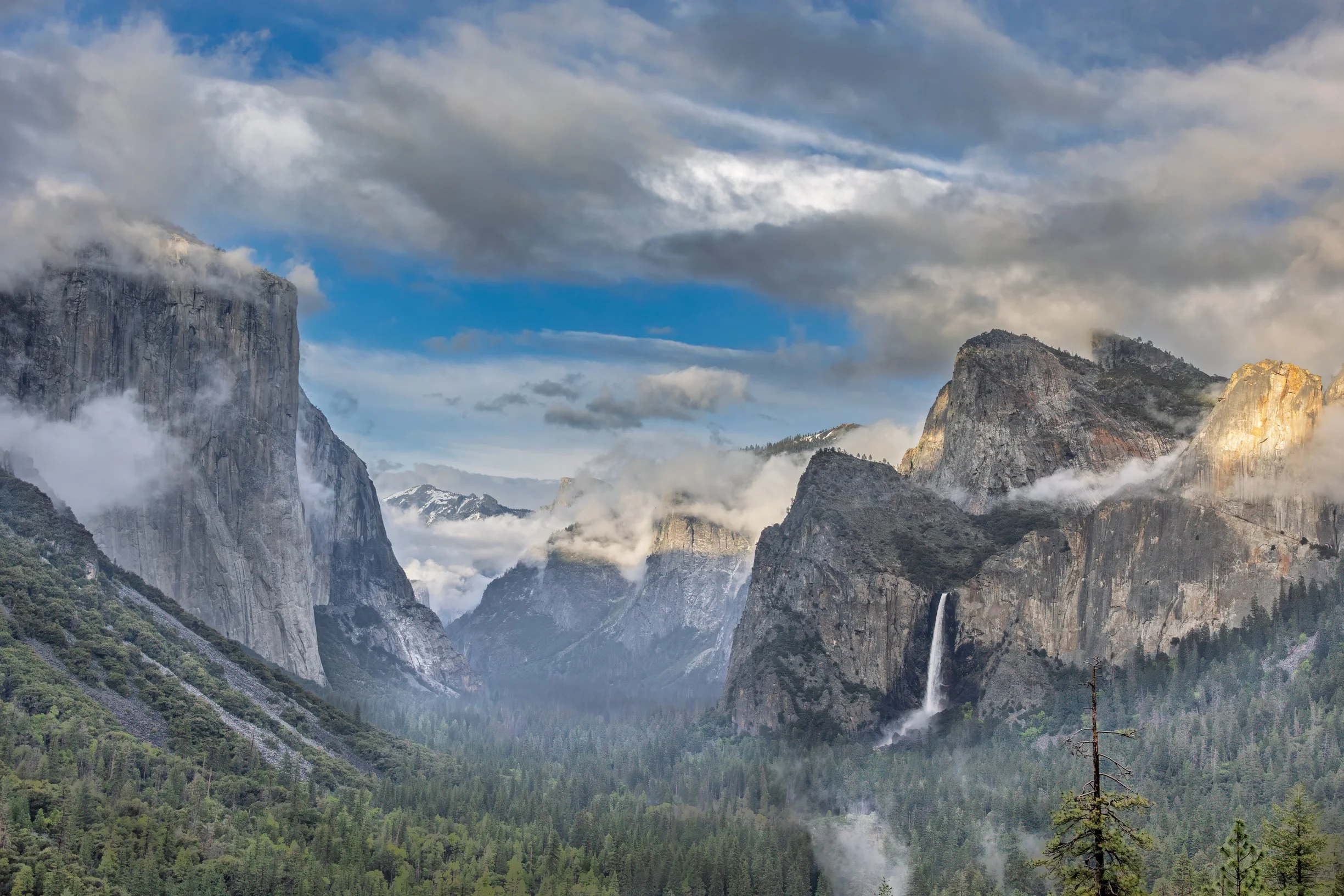
#3. ‘Dreamland, Dreamland’ - I have been blessed with some beautiful landscape conditions at Tunnel View over the many years I’ve been coming to Yosemite. This is my favorite single location on planet Earth, which John Muir describes so well in one of his many quotes about Yosemite. “But no temple made with hands can compare with Yosemite. Every rock in its walls seems to glow with life. Some lean back in majestic repose; others, absolutely sheer or nearly so for thousands of feet, advance beyond their companions in thoughtful attitudes, giving welcome to storms and calms alike, seemingly aware, yet heedless, of everything going on about them.” ― John Muir, The Yosemite

May 4, Tunnel View, Yosemite NP, CA; exposure 1/250 sec @ f/11, ISO 640; lens 28-300mm @ 40mm.

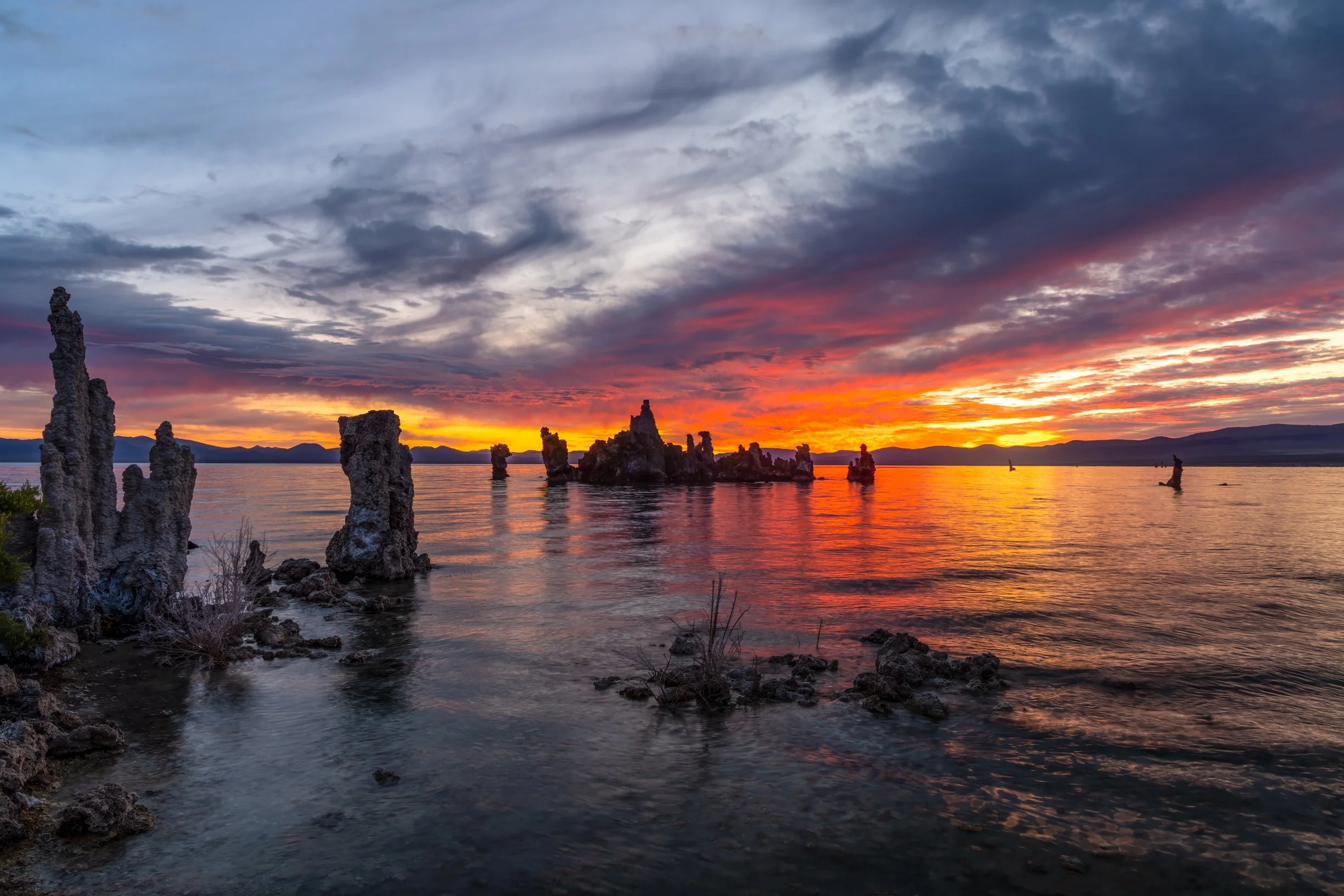
#2. ‘Light My Fire’ - I saw the night before a possibility of clouds in the sky at sunrise in Mono Lake. We woke up at 4:15am, to be in place to shoot the sunrise at 5am. What we were given made it so worthwhile! What you see in the foreground, as well as the mid ground are called tufas. Tufas are stunning, calcium-carbonate rock spires and towers formed underwater by freshwater springs rich in calcium meeting the lake's salty, alkaline water, creating limestone that builds up around the spring vents over centuries, most visible at the South Tufa area where they rise dramatically from the lakebed as the water level dropped due to diversions, making them a unique geological marvel for photography.

June 22, Mono Lake, CA; exposure 0.4 sec @ f/8.0, ISO 50; lens 24-105mm @ 19mm.

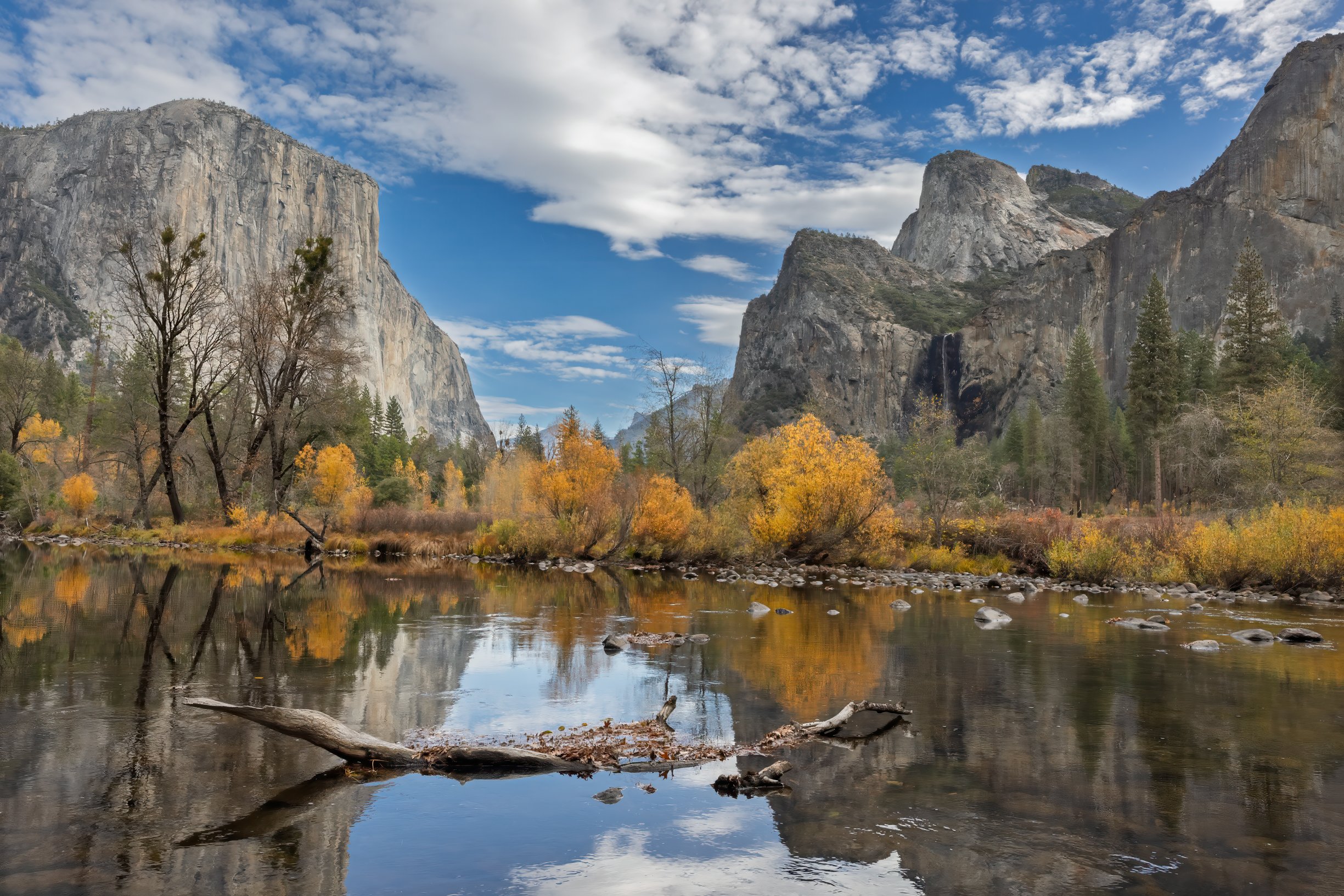
#1. ‘She Comes in Colors…’ - Valley View has changed over the years, and I found myself standing in this particular spot, which I thought gave me the best chance to maximize the fall colors, and the reflections in the almost still Merced River. Grateful for what I captured, this being the most liked image of mine in 2025.

November 11, Valley View, Yosemite NP, CA; exposure 1/160 sec at f/11, ISO 400; lens 14-35mm @ 19mm.

And there you have it, my Top Twelve Photographs for the 2025 year. I always have fun looking back at the past year, as it gives me an idea of what I created, where and when, and reflect on any creative ideas that I can come up to use in the New Year. In retrospect, deep gratitude to what I was given by Mother Nature, what I managed to do with these gifts, and now look forward to the future with measured anticipation and hope!

In 2026 I will be leading a photography tour into the land of my birth, Sri Lanka. Come join me for a once in a lifetime journey into this ancient kingdom originally named Ceylon, August 19 through August 28, 2026. I have two seats available, with discounts on the tour pricing through the end of January, 2026. To see a more detailed itinerary, and to register go to: https://www.davidjgrenier.com/2026-sri-lanka-photography-tour

A couple of observations looking back after compiling this list of my Top Twelve images (a total of 14 this year including ties): 1. Six of this year images were shot in Yosemite, a first, 2. five of the images were shot within walking distance of my home, and finally, 3. two of the images were shot overseas, with the remaining 12 shot in locations within California.

I’d also like to say a big Thank You to all those who expressed their support of my photography on my Facebook page, and for taking the time to do so – it is greatly appreciated! As always, I also owe a great deal of gratitude to the many people who support my art by purchasing my images in various print formats, and especially those attending my private workshops.

I also want to say a heartfelt thank you to a handful of my closest friends who travel with me, help arrange the logistics of our journeys, that then gives me the opportunities to create beautiful images. In no particular order they are Eric, Michael, Kim, and Rena. I’m extremely grateful for our lasting and long friendships!

I am looking forward to 2026, again with optimism and hope for us as Mankind. Lots of work to be done in various parts of a troubled world, and my hope again is that we can work together to look after the environment, and leave it in a better place for the next several generations to come, so that they can enjoy and marvel at what we have been given on this beautiful Blue Planet we call Earth!

Here’s to a Wonderful New Year!

2024 Top Twelve Photographs

Happy New Year to all my family and friends. It is my sincere wish that 2024 brings you the gift of Love, the gift of Peace, and the gift of Happiness!

2024 was an interesting year for me personally and creatively. I began the year by traveling to Venice, Italy, my first chance ever into this beautiful country. There is something about Italy that suits my eye. Beautiful, old, and colorful architecture, built in the middle of such reflective canals, that carry ancient vessels; black, sleek, and shiny gondolas. Did I mention that I love Italian cuisine!

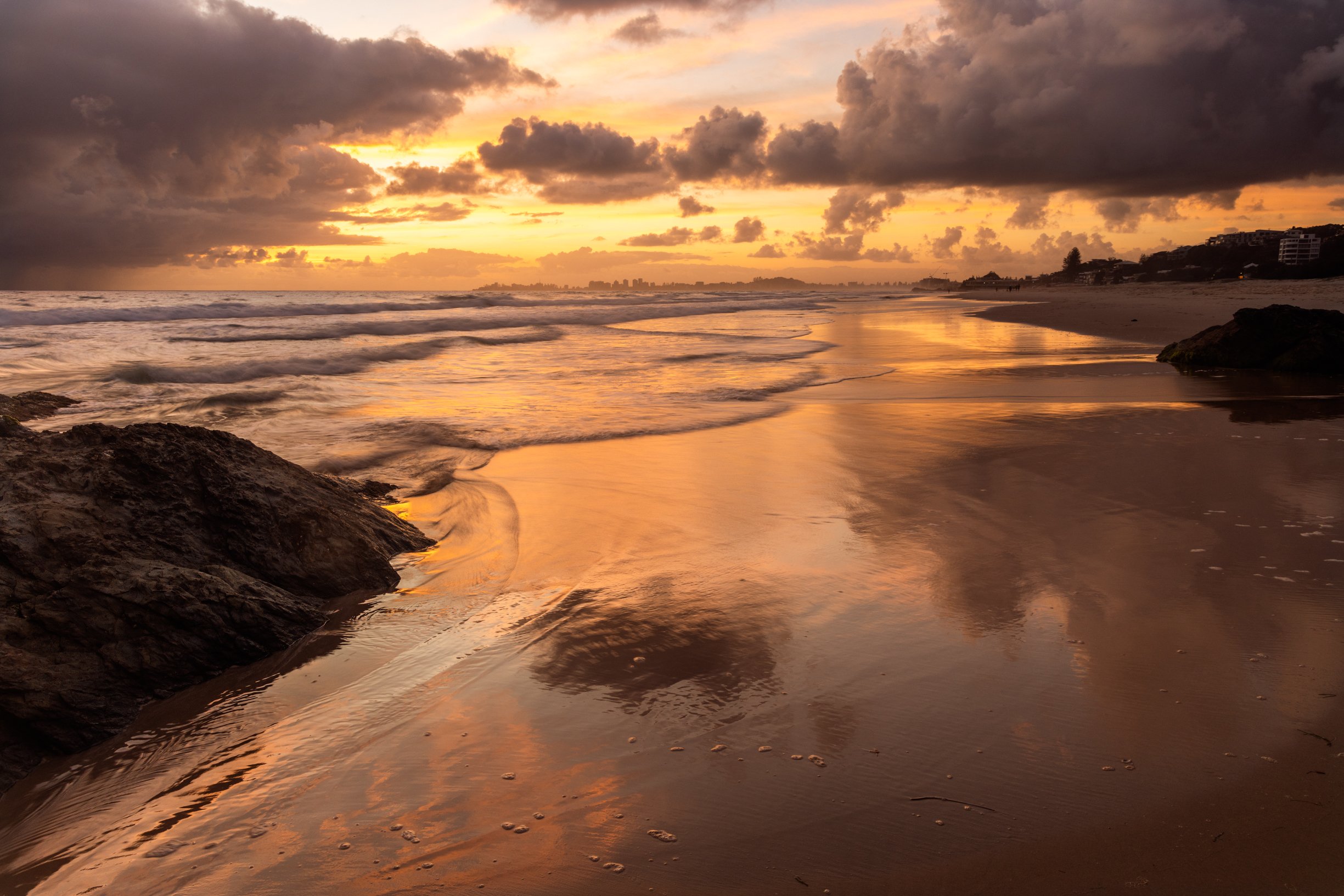
Then I got to go on a road trip with two of my oldest and closet photographer friends, Eric and Michael. First stop was a return visit to the Grand Tetons, and then on to Yellowstone. These National Parks are so beautiful, and contain landscapes like no other place on this planet. Ended the year by going back to one of my three ‘Homes’, Australia, where I got to photograph Australian wildlife, as well beautiful sunrises over the ocean in a place I used to surf in my youth, Currumbin, Queensland.

I’m also fortunate to live in a small town named Gold River, California, 20 miles east of Sacramento, California, that allows me to walk on a daily basis, the miles, and miles of local trails, built into acres of thriving oak trees. Those creations feature quite prominently in my Top Twelve list for this year!

“Twelve significant photographs in any one year is a good crop.” – Ansel Adams

It is that time of the year for me to share with you my Top Twelve Photographs of the Year, 2024. This is the 12th edition of a tradition that began in 2013, inspired by the Ansel Adams’ quote above. Ansel Easton Adams (February 20, 1902 – April 22, 1984), is one of the most recognizable names in American landscape photography. His black-and-white landscape photographs of the American West, especially Yosemite National Park, have been widely reproduced on calendars, posters, books and prints.

As in previous years, I determine my Top Twelve, and the order of the selections by the amount of unsolicited responses, Likes, each of the images shown below received on my social media Facebook page. Hardly a foolproof or scientific way to do this, but I use it so I don’t have to sift through hundreds of images and make these choices by myself.

So, let’s begin with Number 12, its title, some background about each image, and some basic EXIF data.

#12. 'Clouds Got In My Way' – a tribute to Joni Mitchell, after seeing her on the 2024 Grammy Awards show. Reminded me she is one of the greatest singer songwriters of my lifetime, whose music has been part of the soundtrack of my life for so long! This is an iPhone shot of a rain puddle, something I have fun doing. It is done by turning your iPhone upside down, dialing in the widest angle lens, placing the lens end down right by the edge of the puddle, and taking the shot.

January 7, Gold River, California; 1/1050 sec @f1.8 ISO 100; lens iPhone 14 Pro Max 6.9mm, f/1.78mm.

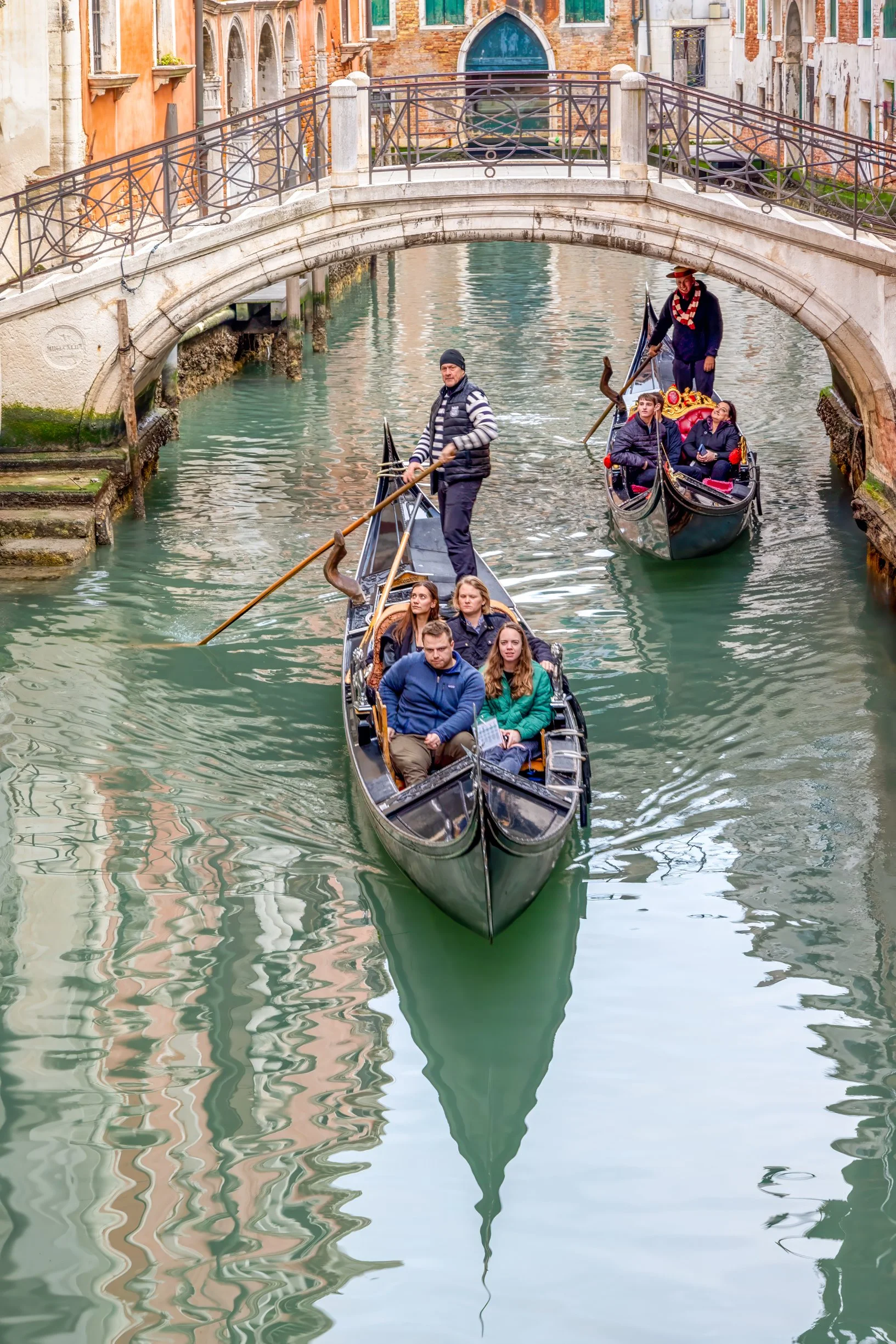
#11. 'Gondola Haven' - I've dreamed of capturing gondolas, under a canal bridge. In reality, they are much more beautiful than I imagined. Venice is truly a beautiful city, and I've managed to capture some of this beauty in the last few days of our visit. This to me typifies Venice, it’s very Italian, and at the same time the tip of the iceberg of how this city is overrun with way too many tourists…

March 8, Venice Italy; exposure 1/25sec @ f/8.0, ISO 1250; lens 24-105mm @ 83mm.

#10. ‘Contented Man’ - I'm instinctively drawn to photograph people I meet on the street, as I was with this man in Venice. I never know when or why I want to photograph any particular person, and I asked this man permission to photograph him, and he agreed. After I shot this image, he asked me if he could photograph me as he pulled out his own camera, something that has never happened to me before, and I gladly obliged!

March 9, Venice, Italy; exposure 1/60 sec @ F/8.0, ISO 200, lens 24-105mm @ 70mm.

# 9. ‘Let it Snow’ - an airplane window shot while traveling from Paris to Venice over the French Alps, which looked both frigid and stunning at the same time with all that snow. In recent years I have chosen a window seat when I travel by air, hoping to ge an opportunity to witness and capture images like this.

Exposure 1/2000 sec @f1.8; lens iPhone 14 Pro Max 6.9mm, f/1.78mm.

#8. ‘The Lost Temple’ – I like to capture rain puddle images at this particular spot in the inter. The first image show above, was also captured at this particular location on one of my daily walks. Then, while freewheeling through Photoshop’s Blend options, with two mirror images of this iPhone shot of a rain puddle reflection, this stunning image emerged. The shape reminded me of the Buddhist temples in Sri Lanka.

February 1, Gold River, California; 1/40 sec @ f1.8, ISO 100; lens iPhone 14 Pro Max 6.9mm, f/1.78mm.

#7. ‘Child’s Play’ – I love photographing California poppies. It is California’s state flower, they are beautiful to see, and photograph, and for me, close up with selective focusing. I love these flower so much because they always seem to me to be happy, and having fun blossoming in the NorCal summer, in fields bathed in warm California sunshine!

April, 11, Gold River, California; exposure 1/1000 sec @ f/2.8, ISO 400; lens 70-200mm @ 200mm.

#6. 'Summertime' ...when the living is easy. My love of the California poppy is boundless! This was made blending two different images in Photoshop, and then adding the bokeh effect in Topaz Studio. It try’s to capture the feeling I have here in California, ‘when the living is easy…’

April, 11, Gold River, California; exposure 1/1000 sec @ f/2.8, ISO 400; lens 70-200mm @ 200mm.

#5. ‘A Venetian Sunset' – we were given one beautiful sunset during the five days that we spent in Venice, and made this image with gondolas in the foreground, and the Church of San Giorgio Maggiore in the background. We were given overcast skies, and drizzle for most days we were there, and then this beautiful sky appeared on our last evening in this beautiful city. I’d like to return some day for one more bight of the apple…

March 10, Venice, Italy; exposure 1/60 sec @ f/1.8; lens iPhone 14 Pro Max 6.9mm, f/1.78mm.

#4. 'Stillness Sanctuary' – it is always fun to find a location, like this one, in the Grand Tetons NP that we did not know existed, let alone photographed. We found this spot simply by accident while on a scouting walk, and using the PhotoPills app, we were able to make an educated guess at when and where the sun would rise, and what the lighting may look like at that time. We were thrilled to see in the morning actually look like this!

October 6, String Lake, Grand Tetons, Wyoming; exposure

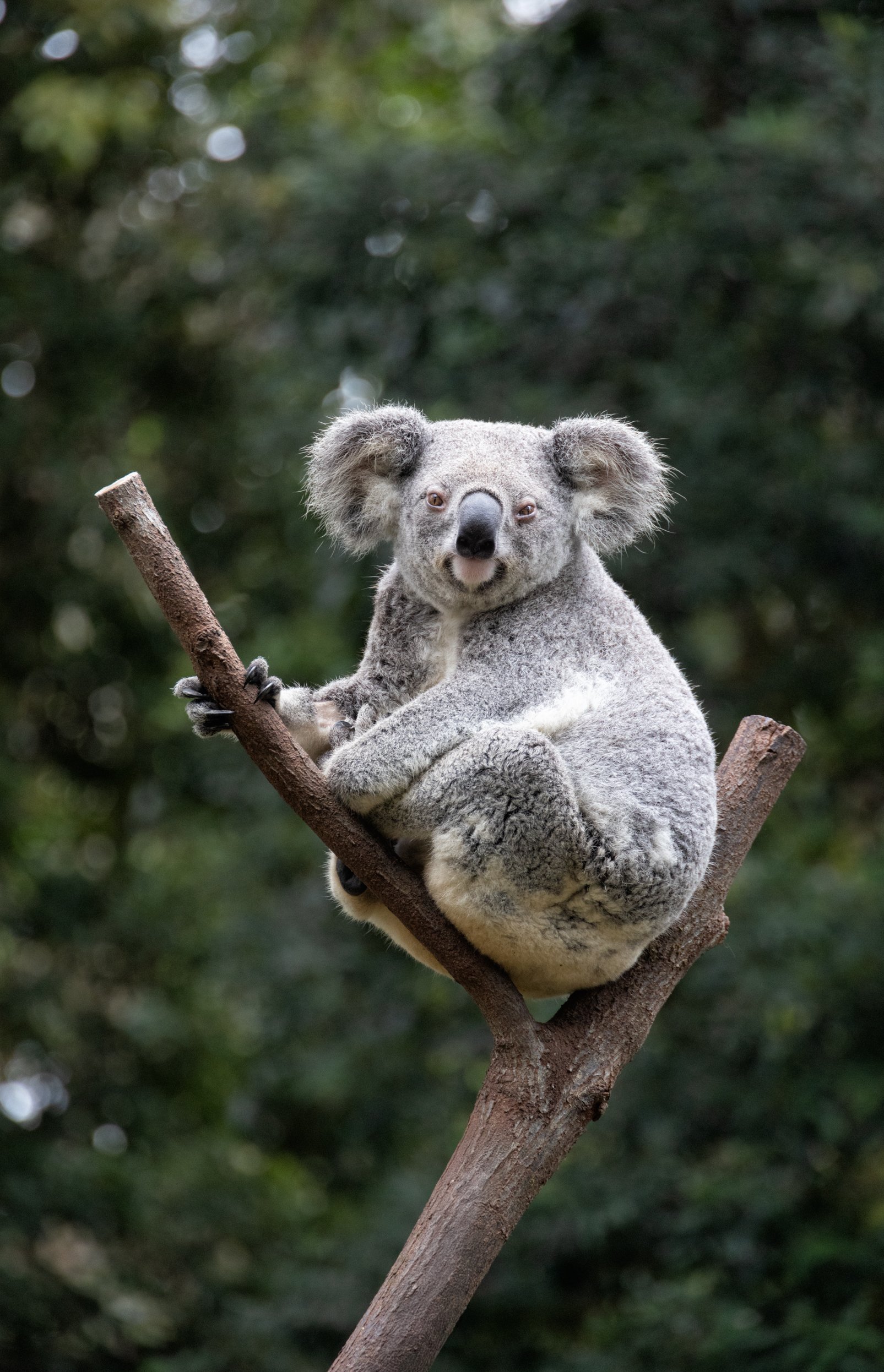
#3. 'G'd Day, Mate!' – this image was captured at the Currumbin Wild Life Sanctuary, in Queensland, where a visitor can see a vast array of the wildlife indigenous to Australia. Koalas can eat up to a pound of eucalyptus leaves and sleep up to 20 hours a day. They are probably one of the cutest animals to look at and photograph. Their extraordinary sleeping habit is believed to be an adaptation to their leaf-based diet, as they get very little energy from just eating leaves. Hence, koalas need more rest and sleep than most mammals to conserve their energy in dry environments such as the Australian bush.

November 14, Currumbin, QLD, Australia; exposure 1/80 sec @f/6.3, ISO 1600; lens 24-240mm @ 188mm.

#2. 'Ghost Rider' -this location, standing on the Academia Bridge, is one of the only four bridges spanning the Grand Canal in Venice. The bridge as seen today was built in 1933 in just 37 days! Venice has been sinking for centuries at a rate of about 1 centimeter per century. The sinking is due to natural processes, as well as human activities like pumping groundwater from the lagoon in the 20th century.

March 7, Venice, Italy; exposure 4.0 sec @ f/22, ISO 50, lens 16-35mm @ 28mm.

#1. 'Butterfly Lost' – this is an abstract image created by blending two rain puddle reflection shots, made on one of the many trails of the development that I live in, and then blended in Photoshop, and finally adding a texture layer in Topaz Studio. The fun part of this process is I never know what the results are until it's finalized!

January 7, Gold River, California; 1/1050 sec @f1.8 ISO 100; lens iPhone 14 Pro Max 6.9mm, f/1.78mm.

And there you have it, my Top Twelve Photographs for the 2024 year. I always have fun looking back at the past year, as it gives me an idea of what I created, where and when, and reflect on any creative ideas that I can come up to use in the New Year. In retrospect, deep gratitude to what I was given by Mother Nature, what I managed to do with these gifts, and now look forward to the future with measured anticipation and hope!

In 2025 I will be leading another photography workshop into the land of my birth, Sri Lanka. Come join me for a once in a lifetime journey into this ancient kingdom originally named Ceylon, August 2 through August 13, 2025. We have a couple of seats still available, to see more details and make reservations: https://phototoursworldwide.com/product/sri-lanka-pearl-of-the-indian-ocean-aug-2025/ For a more detailed itinerary go to: https://www.davidjgrenier.com/2025-sri-lanka-photography-tour

A couple of observations after looking back when compiling this list of my Top Twelve images: a. Five of the the twelve images were shot locally, within walking distance of my home. b. four of the images were shot with my iPhone 14 Pro Max, and finally c. six of the images were shot overseas.

I’d also like to say a big Thank You to all those who expressed their support of my photography on my Facebook page, and for taking the time to do so – it is greatly appreciated! As always, I also owe a great deal of gratitude to the many people who support my art by purchasing my images in various print formats, and especially those attending my private workshops.

I also want to say a heartfelt thank you to a handful of my closest friends who travel with me, help arrange the logistics of our journeys, that then gives me the opportunities to create beautiful images. In no particular order they are, Eric, Michael, Kim, and Rena. I’m extremely grateful for our lasting friendships!

I am looking forward to 2025, with optimism and hope for us as Mankind. Lots of work to be done in various parts of the world, and my hope is that we can work together to look after the environment, and leave it in a better place for the next several generations to come, so that they can enjoy and marvel at what we have been given on this beautiful Blue Planet we call Earth!

Here’s to a Wonderful New Year!

2023 Top Twelve Photographs

Happy New Year to all my friends, near and far!

“Twelve significant photographs in any one year is a good crop.” – Ansel Adams

It is that time of the year for me to share with you my Top Twelve Photographs of the Year 2023. This is the 11th edition of a tradition that began in 2013, inspired by the Ansel Adams’ quote above. Ansel Easton Adams (February 20, 1902 – April 22, 1984), is one of the most recognizable names in American landscape photography. His black-and-white landscape photographs of the American West, especially Yosemite National Park, have been widely reproduced on calendars, posters, books and prints.

As in previous years, I determine my Top Twelve, and the order of the selections by the amount of unsolicited responses (Likes) each of the images shown below received on my social media Facebook page. Hardly a foolproof or scientific way to do this, but I use it so I don’t have to sift through hundreds of images by myself choose, making a subjective, and arbitrary guess.

So, let’s begin with Number 12, its title, some background about each image, and some basic EXIF data.

#12. ‘Against All Odds’ – this is an image that I shot in Negombo, Sri Lanka, one early morning, which was the time that the fisherman who operate these vessels were leaving their home beach where the vessles are stored. I was trying to capture the difficulties these men have getting these catamarans launched past the shore breaks, propelled only by the sails of the catamarans.

July 29, Negombo, Sri Lanka; expo. 1/500sec @ f/9; lens 24-240mm @ 88mm; ISO 2000.

#11 ‘Deeper Into the Mystic’ – I went into the snow in the foothills close to my home in early winter, and came back with this colorful abstract. I made this image by blending several in camera multiple images of snow covered trees. The unexpected, colorful result surprised and thrilled me, as I walk deeper into the mystery of digital creativity.

January 17, Pollock Pines, CA; expo. 1/5 sec @ f/18; lens 24-105mm @ 94mm; ISO 50.

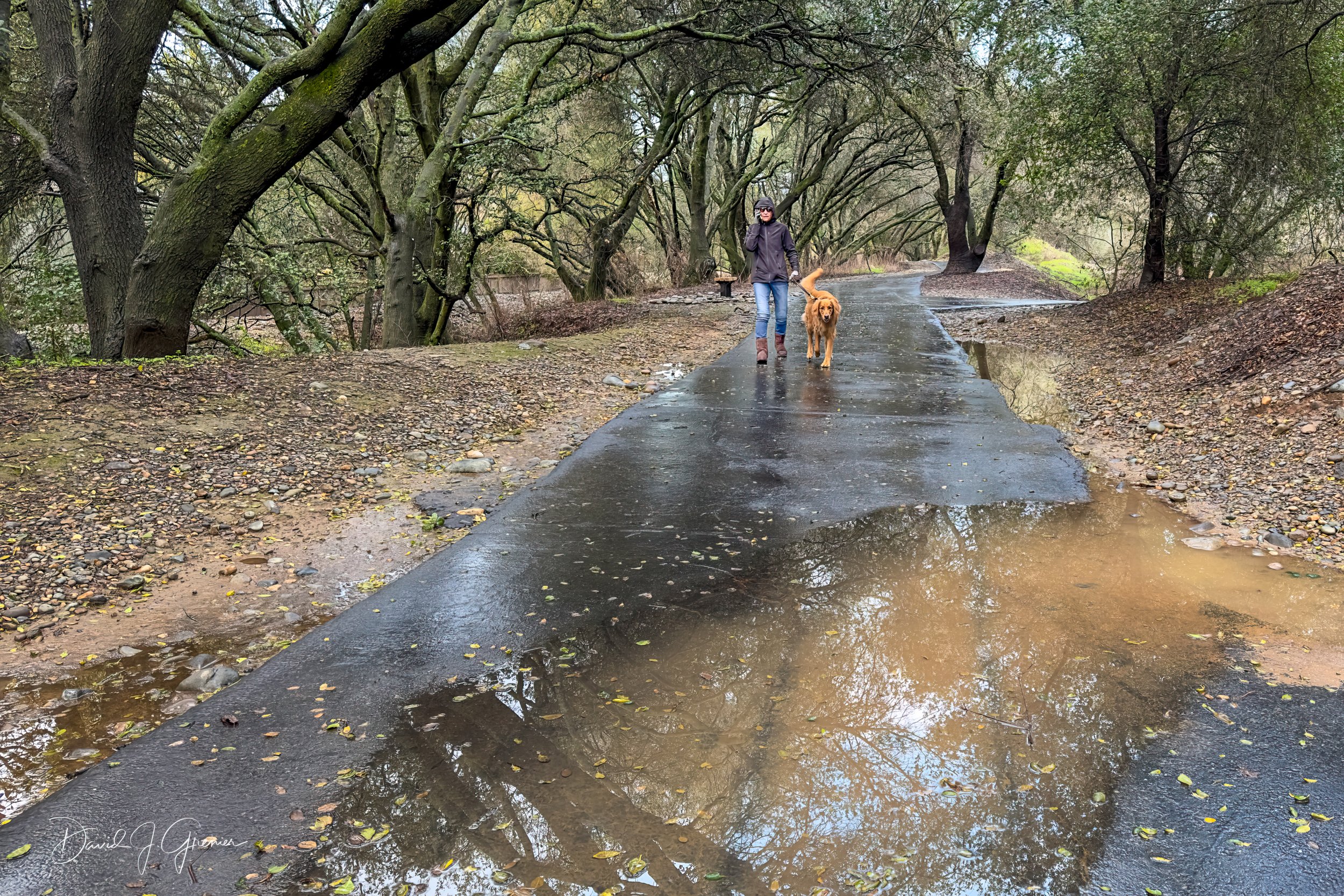
#10 ‘Country Roads’ – I’m very fortunate to live in an area that has miles of trails like this, that I use every day. They look especially beautiful after a heavy downpour, when the colors of the trees are saturated, pools of water form on the trails, which themselves glisten with the the wetness of the rain.

February 27, Gold River, CA; expo. 1/60 sec @ f/1.8; lens 6.9mm @ f/1.78; ISO 250.

#9 ‘Hope Springs Eternal’ – California had an exceptionally wet winter, 2022 through 2023. So we were blessed with a beautiful spring, and this was an image I captured just when the ground cover had just turned green and the trees were beginning to blossom with leaves.

"It's an illusion that photos are made with the camera...they are made with the eye, heart, and head." – Henri Cartier-Bresson

March 30, Gold River, CA; expo. 1/150 sec @ f/2.2; lens 2.22mm; ISO 50.

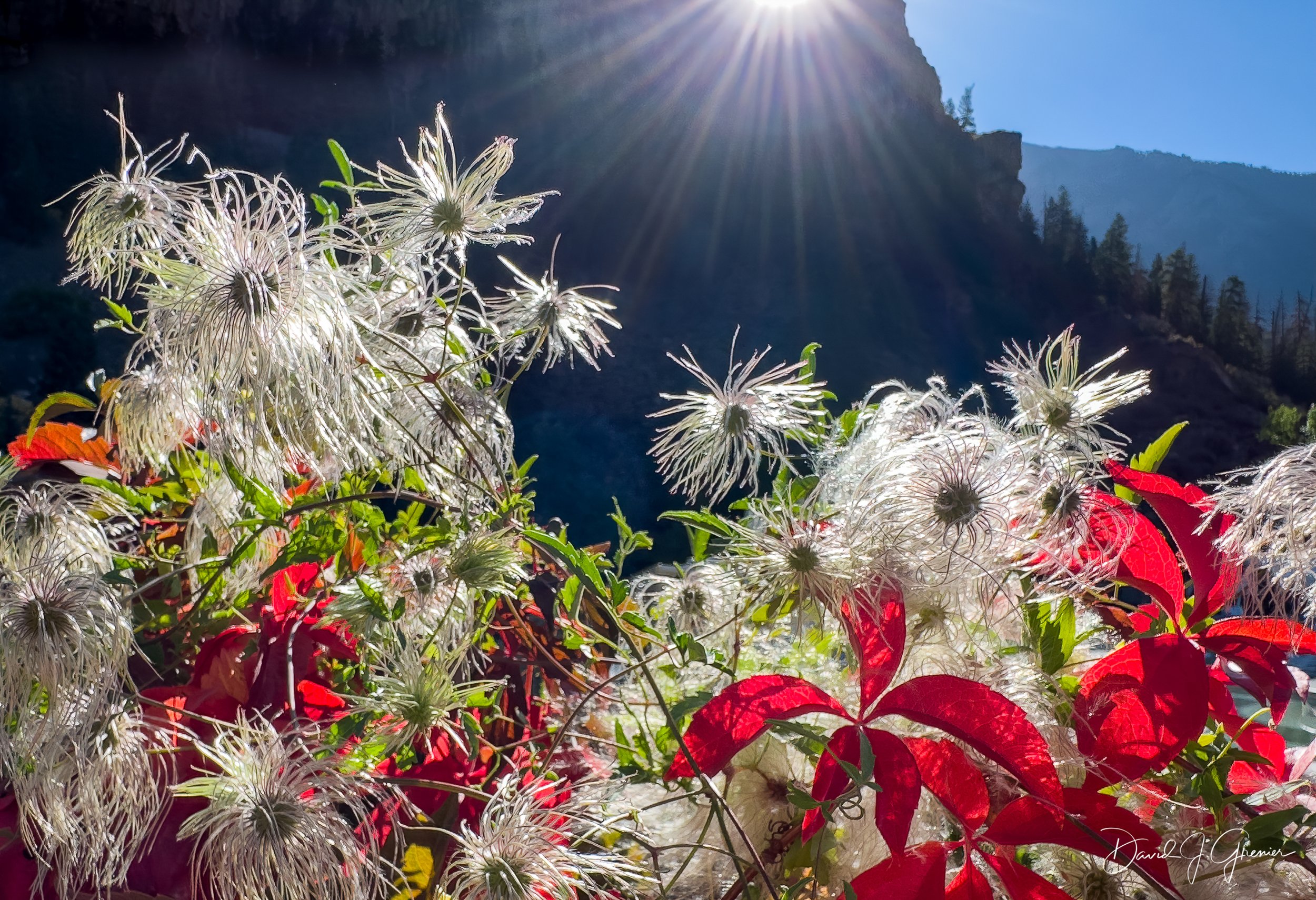
#8 ‘Entanglement’ an early morning shot, when Clamatis meets a Virgina Creeper Vine, in Ouray, Colorado. This was our first stop on a 14 day road trip, three photography friends finally meet again to create images, absent from doing so since November 2019! Lots of fun being together again after such a long absence.

March 30, Ouray, CO; expo. 1/150 sec @ f/2.2; lens 2.22mm; ISO 50.

#7 ‘Rocky Mountain High’ – one of the main goals of our 14 day road trip was to try and capture fall colors in Colorado, including the Rocky Mountains. It turned out we were about one week early for the fall colors, and this is an image that I captured that showed these magnificent mountains, and the fall colors that we were given.

September 26, Red Mountain Pass, CO; expo. 1/80 sec @ f/11; lens 24-104mm @ 50mm; ISO 250.

#6 ‘Remembering George’my cousin George Beven, passed away aged 93 earlier this year in London, England. He was one of Sri Lanka’s leading contemporary artists. This is a digital painting that I did to honor George, using a photo of mine of the many magnificent oak trees that grow in abundance in and close to my home. Here is one of many obituaries written in his honor: https://www.theguardian.com/artanddesign/2023/apr/02/george-beven-obituary

March 30, Gold River, CA; expo. 1/150 sec @ f/2.2; lens 2.22mm; ISO 50.

#5 ‘Dreamland’a pool of rain water, winterized, bare oak trees, on a walking trail, captured a few days after a rainfall. In my humble opinion it epitomizes one of my favorites quotes below.

"All pictures are already there, the photographer just has to find them." - Robert Capa

March 30, Gold River, CA; expo. 1/150 sec @ f/2.2; lens 2.22mm; ISO 50.

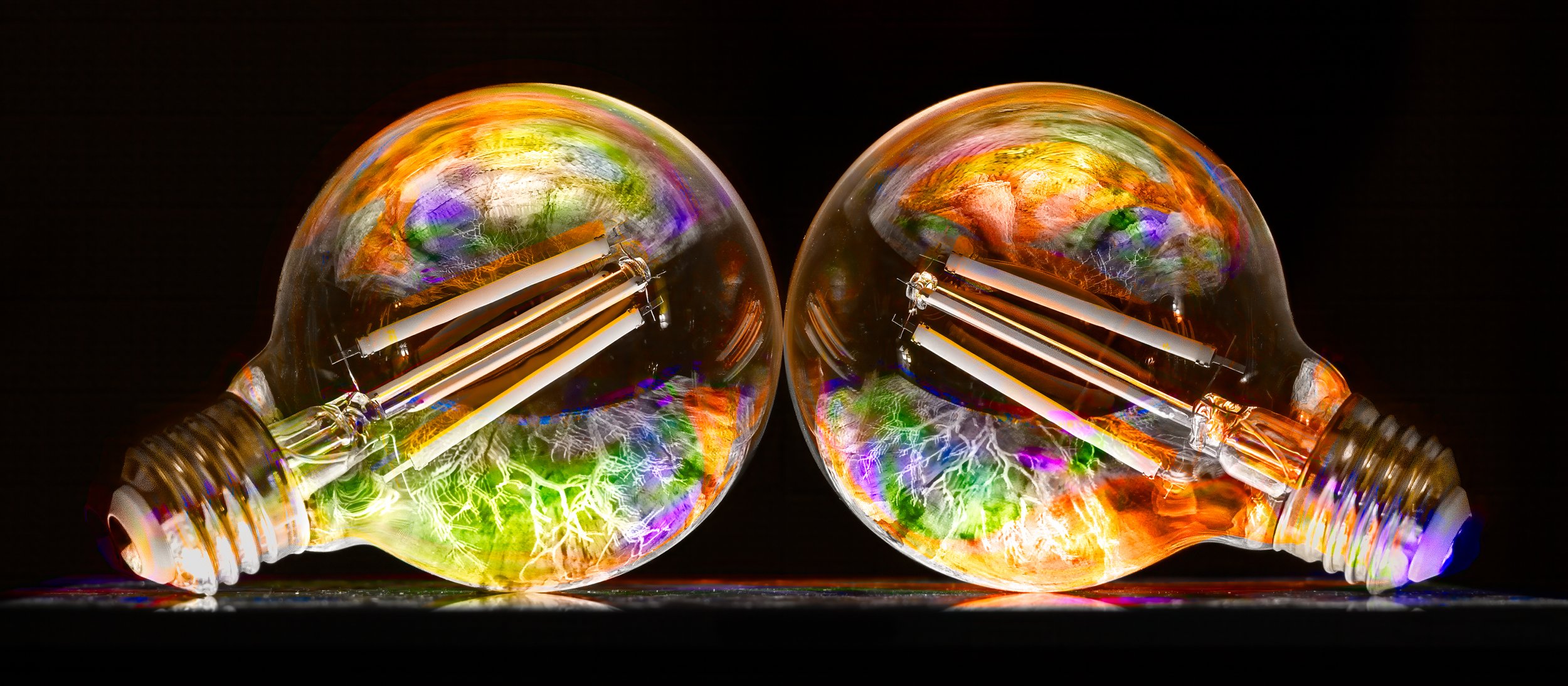
#4 ‘She Comes In Colors’ – this was a lot of fun to create, simple but ingenious I thought when I first stumbled upon how to do this. It all begins with an iPad, open to one of my colorful images, where I then placed two glass finials on top of the glass surface, and then placed a glass, colorful vase in the background.

January 27, Gold River, CA; expo. 1/100 sec @ f/6.3; lens 70-200 @ 180mm; ISO 800.

#3 ‘Can’t You See’ – I was given permission to photograph the Marshall Tucker Band’s performance at the Harris Center for the Arts, Folsom CA. They have been performing for 50 plus years, and one of their biggest hit songs, ‘Can’t You See’, has been streamed on Spotify over 207 million times!

January 27, Harris Center for the Arts, Folsom, CA; expo. 1/200 sec @ f/6.3; 24-240mm @ 129mm; ISO 4000.

#2 ‘California Rain’ – On the day I shot this image I got absolutely drenched in a downpour while out walking. When the rain finally let up, I was still quite a ways from my home, which gave me the opportunity to capture several reflections in the resulting puddles of rain water on my way home. This is an abstract blend of a couple of those images.

March 30, Gold River, CA; expo. 1/150 sec @ f/2.2; lens @ 2.2mm; ISO 50.

#1 ‘When The Rain Comes’ – and finally, the most liked image of 2023 is another rain drenched reflections in a puddle of water. This made me fondly remember having so much fun playing in rain puddles when I was a child growing up in Sri Lanka, a tropical paradise where torrential rains are frequent. Some seven plus decades later not much has changed, now living here in California.

March 28, Gold River, CA; expo. 1/45 sec @ f/2.2; lens f/2.22; ISO 1250.

And there you have it, my Top Twelve Photographs for the 2023 year. I always have fun, during the annual process of gathering these images, looking back at the past year, as it gives me an idea of what I created, where and when, and the advances that I have made to my craft. Deep gratitude to what I was given by Mother Nature, what I managed to do with these gifts, and now look forward to the coming New Year with measured anticipation and hope for a fruitful 2024!

I’d also like to say a big Thank You to all those who expressed their support of my photography on my Facebook page, and for taking the time to do so – it is greatly appreciated! As always, I also owe a great deal of gratitude to the many people who support my art by purchasing my images in various print formats, and especially those attending my private workshops. To one and all, THANK YOU!

I am looking forward to next year, with optimism and hope for us as Mankind. Lots of work to be done in various parts of the world, and my hope is that we can stop the numerous and senseless wars in our world, work together to look after the environment, and leave it a better place for the next generations, so that they can enjoy and marvel at what we have been given on this beautiful Blue Planet, Earth, which we all call Home!

Once again, Happy New Year!

The Evolution of "Making a Photograph" Software

Ansel Adams said, “You don't take a photograph, you make it“, way back in Oct 24, 1938. I have interpreted that to mean, after you capture an image in your camera in the field, you download the file at home, and then there is a need to develop it to its full potential.

I have shot a RAW file in my camera for many years now, ever since I became serious about creating fine art photography. A RAW file is lossless, meaning it captures uncompressed data from your camera sensor. Sometimes referred to as a digital negative, you can think of a RAW file as the raw “ingredients” of a photo that will need to be processed in order to bring out the picture's full potential.

The main difference between a JPEG (the most commonly used file) and a RAW file is its size. RAW files are significantly bigger than JPEG (and any other) image file formats. That's because they contain all the raw image information captured by your digital camera's sensors, completely uncompressed. It can then be saved in a JPEG format, the image file format used on any social media sites, and the images people carries around on their mobile devices.

The development of RAW files is accomplished using software, most commonly Adobe Lightroom and Adobe Photoshop. These softwares are updated periodically, with new capabilities that allow the user to develop a digital files easier, quicker, and in new or improved ways. These new development methods and improvements can be, and have been most recently, simply amazing. I wanted to write this blog about the current evolution and how I have used it on one of my most favorite performing arts photographs.

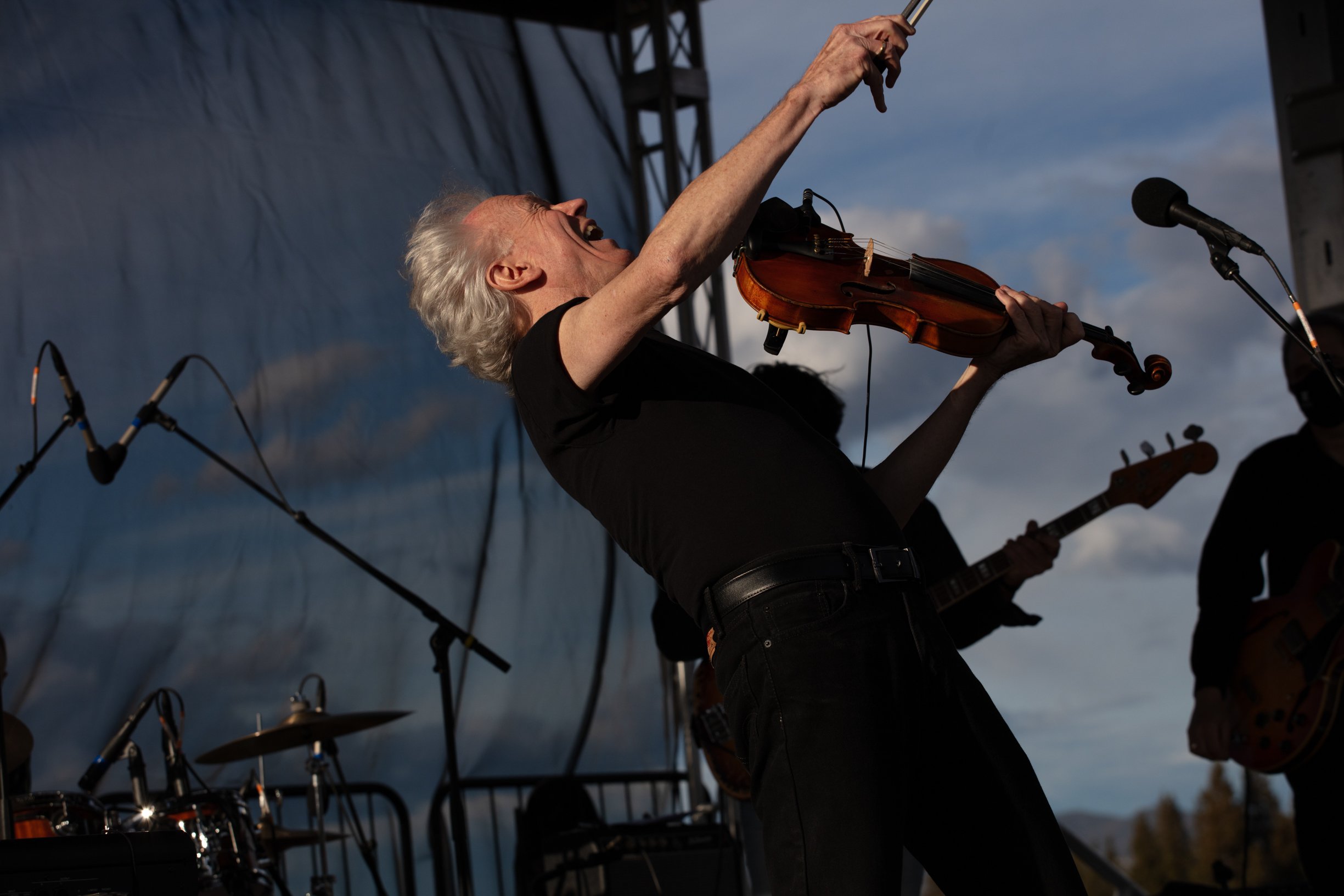
Below is the RAW file of an image I captured, February 13, 2021, at a concert that was held in the parking lot of the Harris Center for the Arts, Folsom, California. The event was held in the parking lot because the theater had been closed for almost a year due to COVID. This is Tom Rigney, leadsinger, violinist/fiddler, and composer for his band, Flambeau.

The first thing you do in post development is determine what corrections the image needs, and or what can you do to it to improve what you captured. There are a number of problems with this image, it is underexposed (too dark), it is cluttered, which takes a viewer’s eye away from the main subject. So here is my first pass at developing the image.

What I made above, is exposed better, not as cluttered, and in the eye of the beholder, a general and noticeable improvement of the original RAW file.

Over time, when I came back to this image, I saw further small improvements that I would like to make, shown above. This time I removed other distractions; the mike stand in the background and the drummer’s symbol.

Then, a few days ago I decided to remove the parts of a partially hidden bass player on the right hand side, as well as the left hand side of the featured musician in the image. I also straightened the scaffolding in the background. All little things, but it improves the image quite dramatically this time, again, in the eye of the beholder. So why now, after more than two years after shooting this image?

A couple of answers to a good question - number 1 reason; my skills to make these changes in Adobe Photoshop have improved over those years. And the number 2 reason, Photoshop recently released an amazing new feature they call ‘Generative Fill’. Only available in a downloadable Beta version of the software, and it is simply stunning what this new function is capable of.

I have always wanted to have an image that included the complete violin bow held in his hand. Impossible to do, with my level of expertise as a Photoshop user, that is until now!

I went ahead and downloaded the Beta version of Adobe Photoshop, learned some basic skills, and was able to generate the image above. This is created by the use of the AI (Artificial Intelligence) based Generative Fill feature, only available in the Beta version.

It is not perfect, which is why it is in Beta format as of now. The generated results sometimes are quite random, typically can not be duplicated or repeated consistently, but sometimes stunning nonetheless!

And lastly, using Generative Fill again, this time using the instructive words “add red boots, a stage floor, and extend scaffolding”, I made the image above.

Again, is it perfect in all aspects of the image? No, but it is simply stunning to me as a photographer, and my mind is excited about what the future holds for digital photography. I am fully aware of all the related ‘ethical’ issues going forward, but that is a topic for some other blog, at some other time.

Please remember and note, this is the tip of the iceberg, using software I just downloaded two days ago. There are many more amazing features in this software, and I’ve only shown a few. In the end, I simply wanted to share with you this groundbreaking technology that we have just been given in June, 2023, and how I have used it to create an image that once only existed in my imagination!

My Photography In Publications

A question that I am often asked is, “What do you do with your concert photography?” That is what prompted me to write this blog post, to answer that question, and show examples of where my photography has been used.

Over the last few years I have been fortunate to have my photography used in numerous publications. From cover photographs, to promotional posters, and full page news events in local magazines. It is always a thrill, and satisfying as an artist to see my work used in a variety of ways.

This trend began in early 2021, during the pandemic, when the Harris Center for the Arts, in Folsom, California, made the decision to have a concert in the parking lot of the theater, which had been closed for almost a year because of COVID. I asked to be allowed to photograph the event and was granted permission to do so, having had some prior experience photographing concerts at The Crocker Art Museum, Sacramento. Playing that day, February 13, 2021, on an outdoor stage in the parking lot of the Harris Center was Tom Rigney and Flambeau, to a sold out crowd, seated inside their automobiles, in assigned parking spots.

Ever since that day, I have continued to photograph various performing arts events, and I can say without a doubt, it is the most challenging genre for me, and also the most satisfying! Challenging because it is so different to what I have done previously, which was mostly landscape photography in many National Parks, and other locations in North America, and Canada. I also had experienced photography in Iceland, Australia, India, Sri Lanka, Argentina, and Chile. Satisfying because on a handful of occasions I have managed to capture the magic of a live performance, moments that are memorable, and extremely satisfying personally!

I enjoy concert photography because it allows me to combine two passions of mine, music and photography. The greatest difference between the two genres is landscape is done with a camera on a tripod, predictable, with lots of time to compose, expose correctly, and get the best shot possible. Photographing concerts on the other hand is shooting handheld, unpredictable, composing on the fly, dealing with mostly challenging, low light conditions, and looking to capture those special gestures of a performing artist on stage at their best, most expressive, and passionate self.

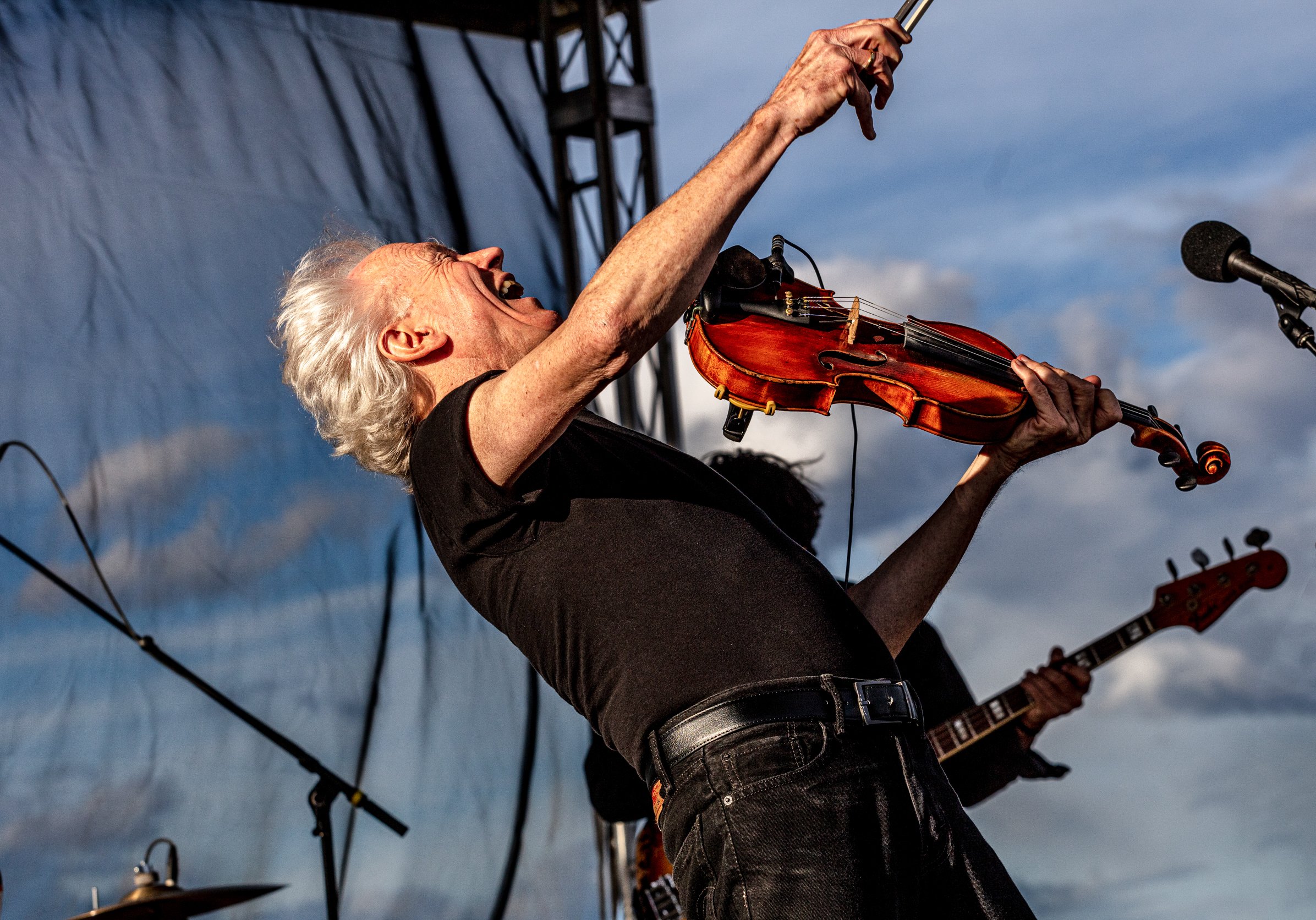
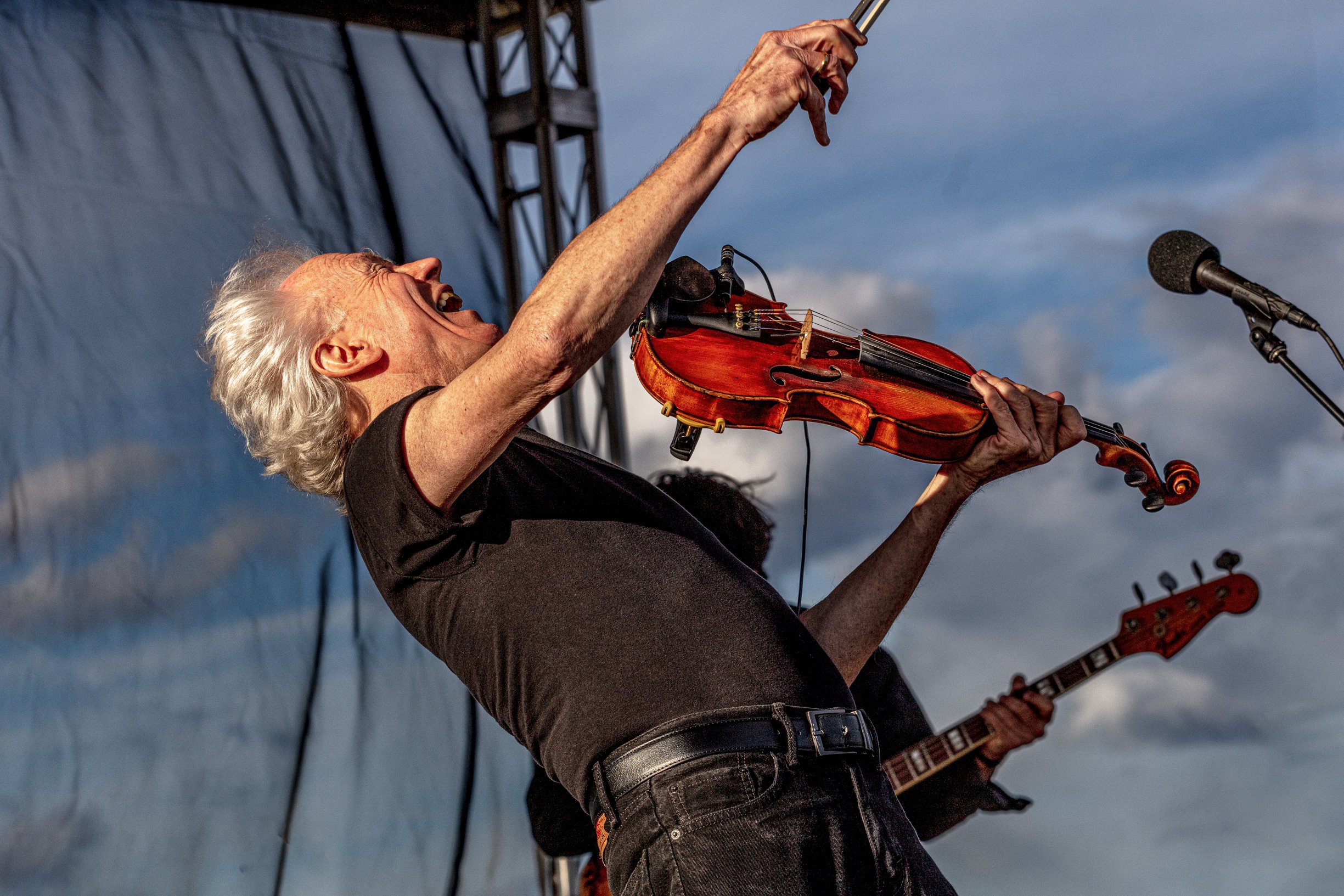
This image of Tom Rigney, captured towards the end of his great performance in the parking lot concert, was the beginning of my images being used in publications. Ironically, to this day, it is still my favorite concert shot, and it is also Tom’s favorite photograph of him performing, that he continues to use in social media sites to promote his many performances!

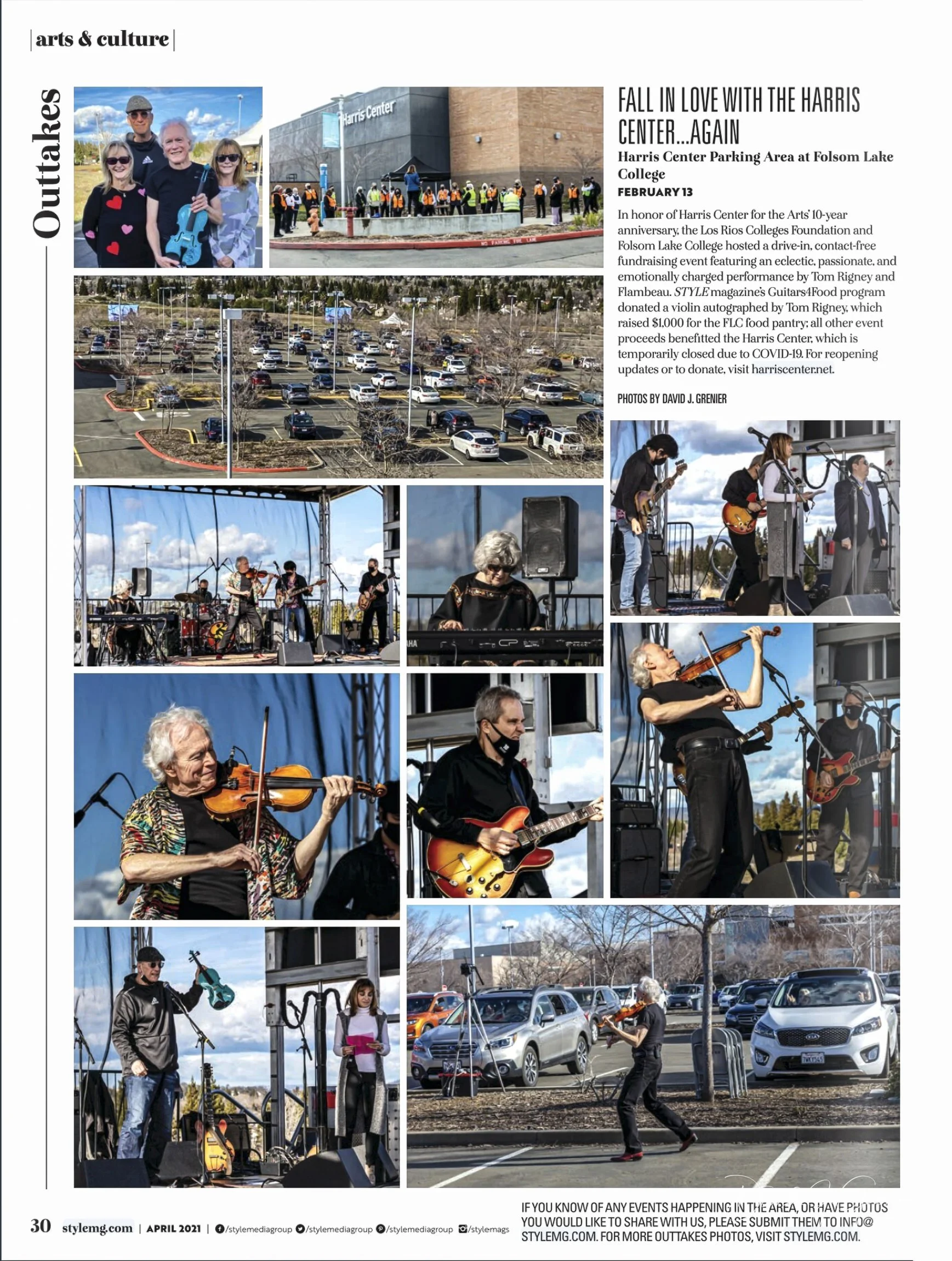
This successful and memorable concert at the Harris Center parking lot was written about in the local, “Style Magazine”, https://www.stylemg.com/ a full page article from their April 2021 publication. They used several images of mine shot at the concert, shown below:

In the Spring of 2020, in the middle of the worldwide COVID lockdown, I enrolled in some online adult education classes, through The Renaissance Society, that were conducted via Zoom. It was a safe, and very convenient way to spend time during this lockdown period, enrolling in classes that interested me, with attendance being in the convenience of my home. Here’s a brief description of this wonderful site, which I encourage you to visit:

Who is the Renaissance Society?

The Renaissance Society of Sacramento provides opportunities for participatory lifelong learning and community engagement for older adults. Our learning opportunities include seminars and other programs on widely varied subjects proposed and presented by our members. We also are involved with Sac State in many helping ways to provide more learning opportunities, such as providing scholarships or volunteering for many Sac State departments.

https://www.csus.edu/college/social-sciences-interdisciplinary-studies/renaissance-society/

I was recognized for my landscape photography in one of the classes I attended, and was encouraged to submit photographs that could be used in their upcoming semester’s, 2021 Fall Catalog. I worked with two people with a keen eye for good photography, Cindy and Allan, who had responsibility for the design of the catalog. The theme for this Fall 2021 Catalog was, “Patterns in Life and Nature,” and they chose an image for the cover that was an excellent fit, shown below.

This was a photograph that I made in Yosemite in early February, 2013, a frozen and frigid morning, when these three leaves caught my eye, highlighted and backlit with soft, early morning sunrise light. Never gave much credit for this capture, until it was used on the front cover of this publication!

My relationship with The Renaissance Society continued as a student, as well as my contributions of my photography to their new semester’s catalogs, which list in detail all of their educational offering per semester. This is the publication that all students used to read through, and choose which classes they would like to enrol in for that particular semester.

The theme for the following semester’s 2022 Spring Catalog was “Celebration”, and the photograph of Tom Rigney discussed above was chosen for the front cover. This image was used with the express permission of Tom Rigney. During a brief conversation with him at that time, he told me “I’ve literally had thousands of photographs taken of me playing music, and this is the first one that I’ve really liked”. High praise indeed!

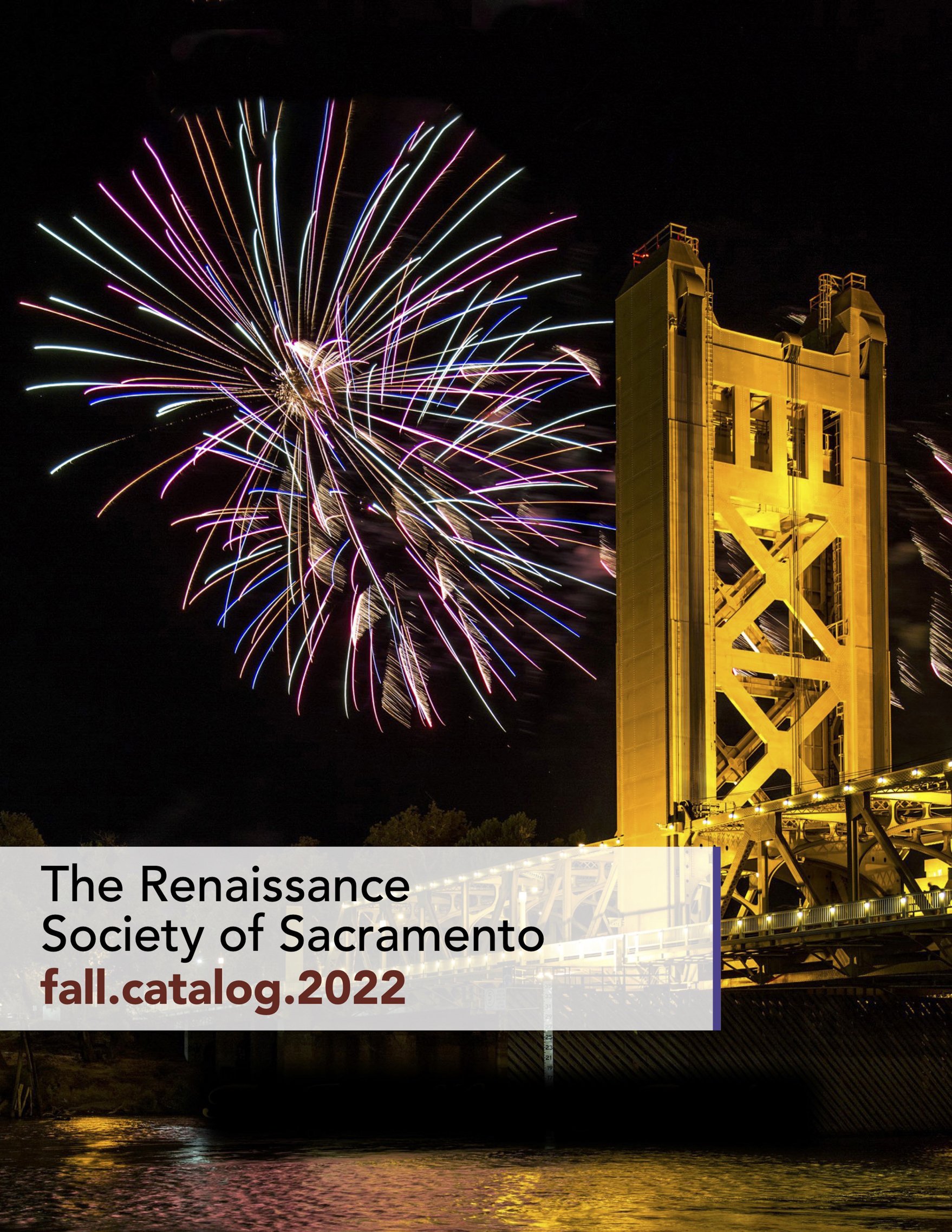
The theme for the next semester’s 2022 Fall Catalog was “The Joy of Learning Together,” which was probably the most difficult to encapsulate in one image, but we jointly came up with the image below. I shot this in August 2013, with fireworks exploding against the iconic Sacramento Tower Bridge. These fireworks are a tradition, and are set off at the end of a home game for the The Sacramento River Cats, a Minor League Baseball team of the Pacific Coast League, and the Triple-A affiliate of the San Francisco Giants..

This black and white version of the same image was also used for a separate document for the same semester, as shown below.

The majority of my concert photography has been done at the Harris Center for the Arts, Folsom, California. I began my association with this theater as a Volunteer, at their first soft opening event on March 11, 2011. I have been a Volunteer ever since, as well as a Donor Member sometimes. Donor Members are a vital monetary support for the successful functioning of the theater, and every season there is a concerted drive for new, and the resigning of existing members.

The 2022-2023 season Membership Drive poster and banner utilized several images I had shot at the theater, and a designer came up with the following creations.

First, the poster design below:

And the banner design:

Earlier this year, in April 2023, I was commissioned to photograph the Folsom Lake Symphony. I photographed the full orchestra on stage at the Harris Center for the Arts, and their esteemed Music Director and Conductor, Peter Jaffee. Those images were used in their 2023-2024 marketing poster and upcoming events brochure, seen below.

First the poster design:

And the event brochure design:

And finally, at this time of writing June 7, 2023, my concert photography was used for the upcoming theater new season’s 2023-2024 Membership Drive at the Harris Center for the Arts.

The following is the poster design:

And the new season’s banner design:

Last but not least, there are many people who have made it possible, and paved the way for me to pursue my art. These people obtained the permissions necessary for me to photograph the various performing arts events, from which I have been able to create the many images used in the publications shown above. Thank you to Kathleen, Marc & Ila, Amber, and Luis, without your help none of the above would have been possible!

2022 Top Twelve Photographs

“Twelve significant photographs in any one year is a good crop.” – Ansel Adams

It is that time of the year again, for me to share with you my Top Twelve Photographs of the Year 2022. This is the 10th edition of a tradition that began in 2013, inspired by the Ansel Adams’ quote above. Ansel Easton Adams (February 20, 1902 – April 22, 1984), is one of the most recognizable names in American landscape photography. His black-and-white landscape photographs of the American West, especially Yosemite National Park, have been widely reproduced on calendars, posters, books and prints.

I began 2022 with the hope that it would be much less restrictive than the COVID driven lockdowns and social distancing requirements that dominated 2020 and 2021. While that hope did eventually become a reality, proof of vaccination , and a negative test were still a mandatory requirement when I traveled to Australia in February. While these requirements were dropped later in the year, I still traveled wearing a mask when I entered any airport until I exited at my destination. The only time that I did not, a flight to photograph the White Sands National Park in New Mexico, I returned home and developed a massive dose of the flu!

My travels in 2022 included two trips to Australia (mostly family related issues), a trip to Virginia, the Outer Banks, North Carolina, and a trip to White Sands National Park, just outside Alamogordo, New Mexico. For the first time in forever I did not visit Yosemite, nor the Eastern Sierras this year, which I hope to rectify in 2023!

As in previous years, I determine my Top Twelve, and the order of the selections by the amount of unsolicited responses (Likes) the images received on my social media Facebook page.

I will begin with Number 12, its title, some background about each image, and some basic EXIF data.

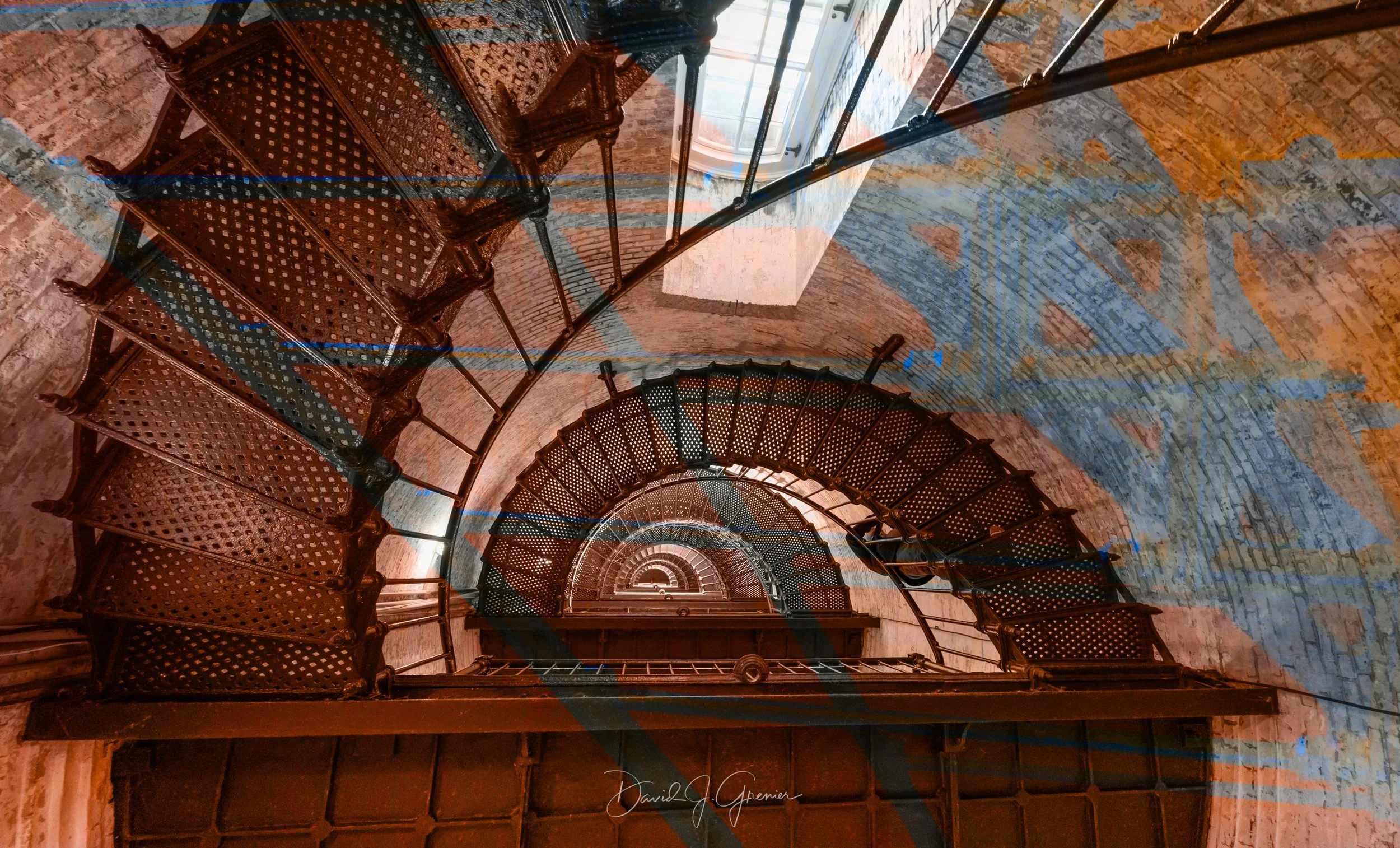
#12. ‘An Eye On The World’ – a shot of the colorful staircase at the Currituck Beach Lighthouse, Corolla, NC, a new and beautiful, extremely photogenic discovery. First lit on December 1, 1875, the beacon filled the remaining “dark spot” on the North Carolina coast between Cape Henry and Bodie Island lighthouses.

October 14, Currituck Beach Lighthouse, Corolla, NC; expo. 1/4sec @ f/4; 24-105mm lens @ 24mm; ISO 2000.

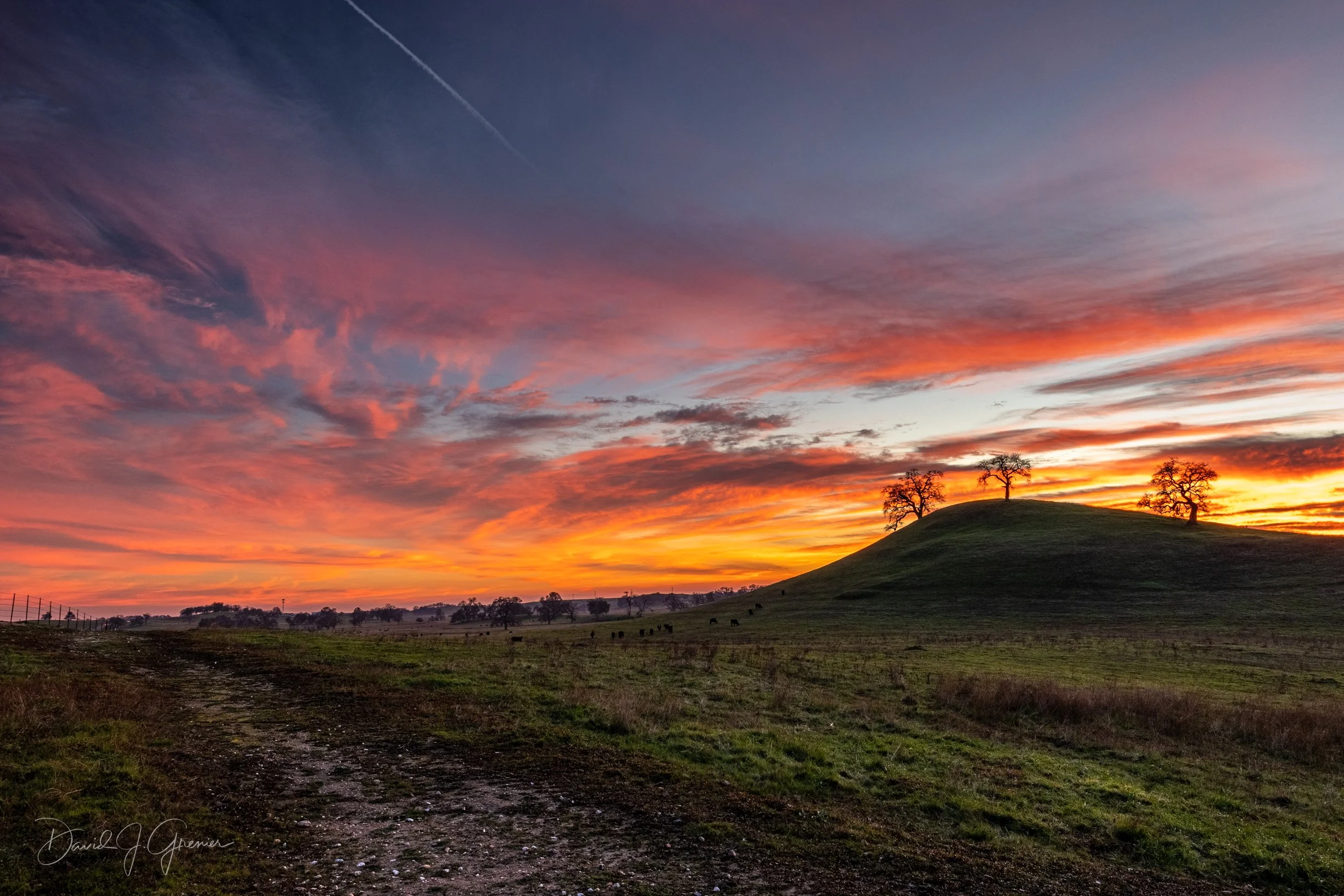
#11 ‘New Beginnings’ – my first image of 2022, an evening’s beautiful sunset at a local spot we call ‘The Three Sisters’, because of the three Oak trees on the hill..

“Dreams are renewable. No matter what our age or condition, there are still untapped possibilities within us and new beauty waiting to be born.” – Dale Turner

January 11, Rancho Murietta, CA; expo. 1/40 sec @ F/8; 14-35mm lens @ 14mm; ISO 125.

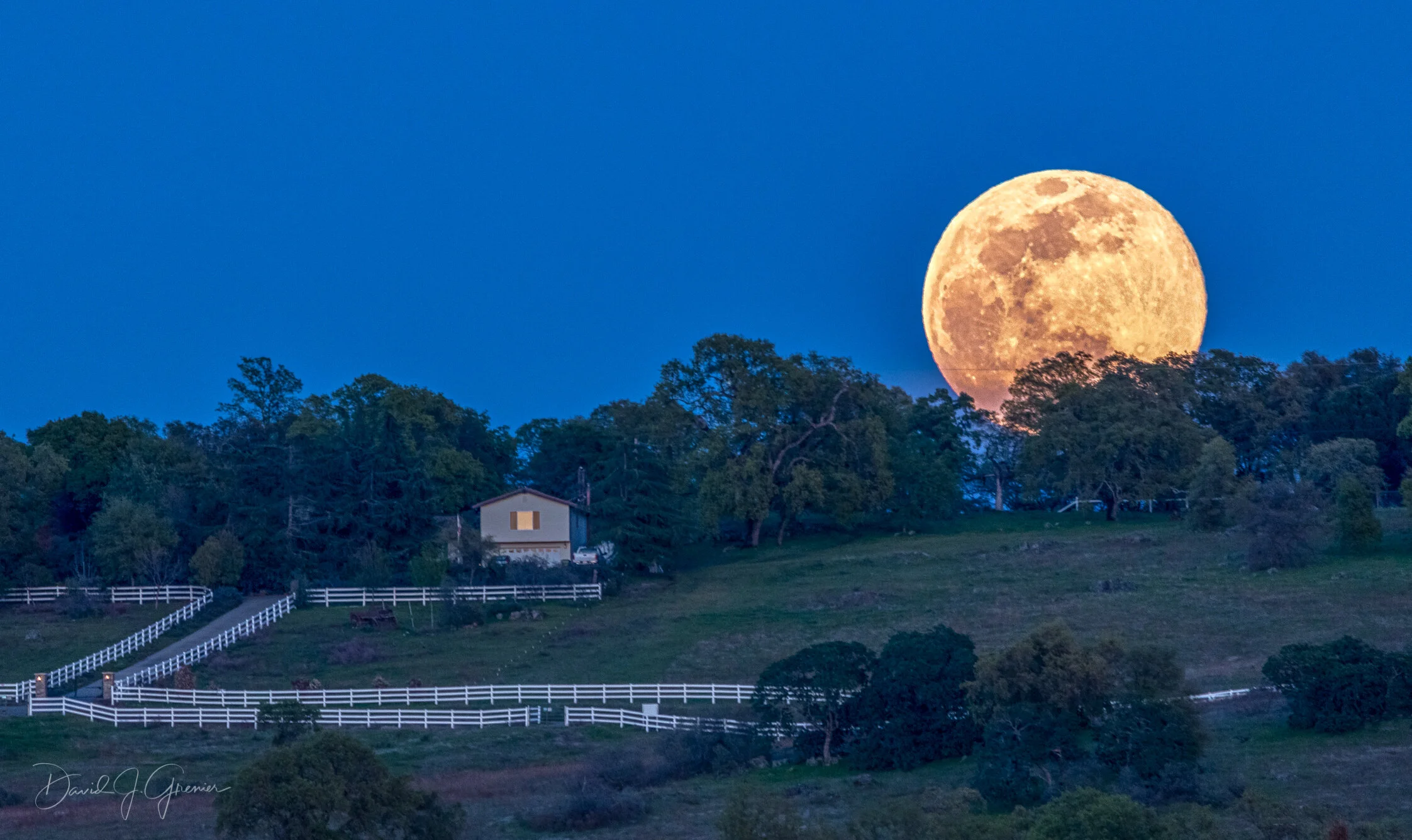
#10 ‘Smokey, Harvest Moon’ – the Harvest Moon rising, near the LDS Temple spire. NorCal had experienced a brutally hot summer, recording a highest temp in history of 116° F in its capitol Sacramento, as well as twelve days of triple digit temps in a row. This creates many wildfires nearby, and lots of smoke in the skies, which then accentuates the color of the rising moon.

September 9, Nimbus Overlook, Fair Oaks, CA; expo. 1/4 sec at f/6.3; 150-600mm lens @600mm; ISO 640.

#9 'It's How The Light Gets In' – this is my novice attempt at shooting multiple images in-camera, and then blending them in Photoshop. Loved the results of this image created of the staircase at the Currituck Beach Lighthouse, Corolla, NC, and the second image of the staircase to appear in my Top Twelve List!

October 14, Currituck Beach Lighthouse, Corolla, North Carolina; ; expo. 1/4sec @ f/4; 14-35mm lens @ 35mm; ISO 2000.

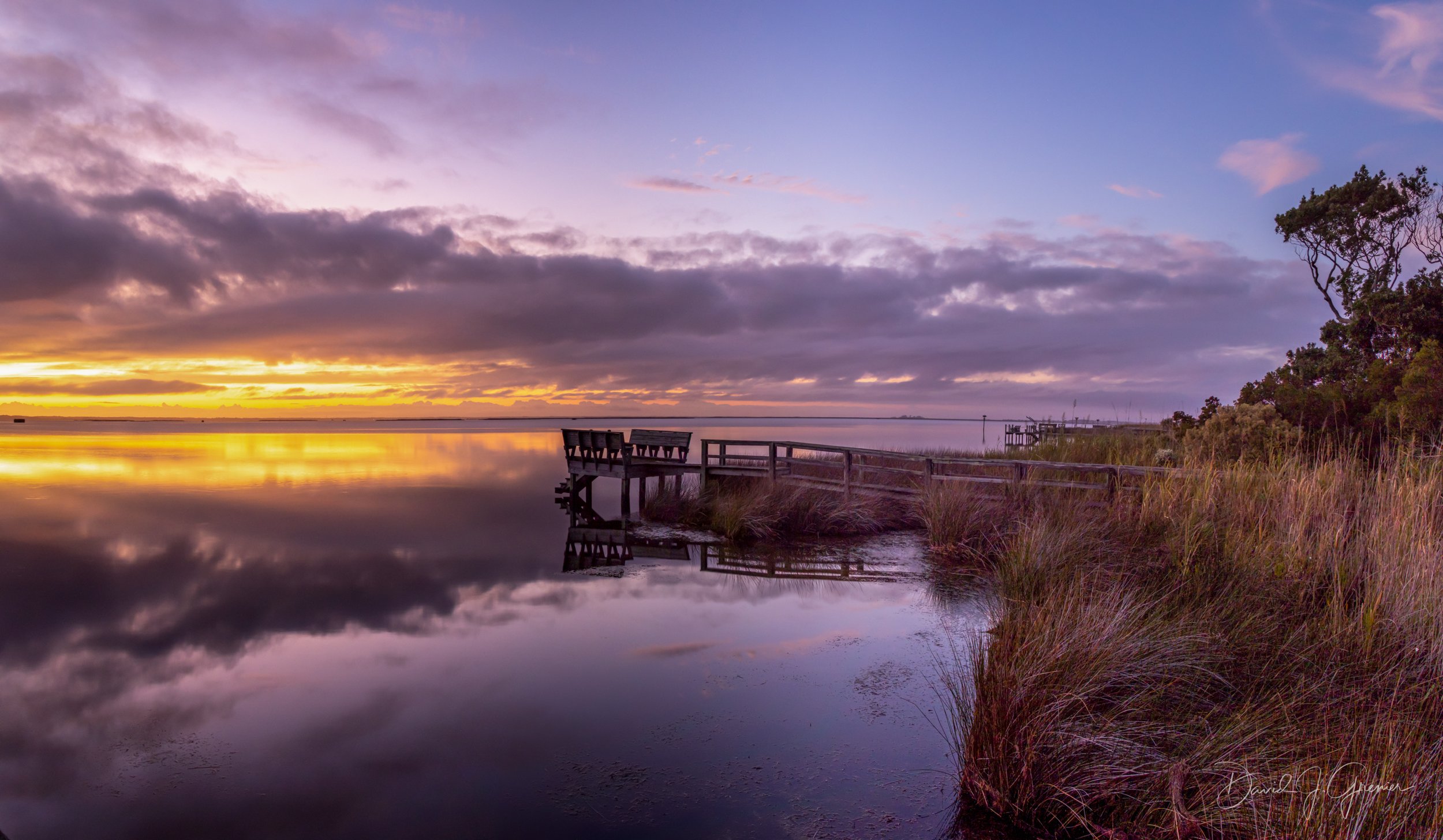
#8 'A Sanderling Sunset' – sunset in the backyard of the home of our wonderful host, Karen, whose hospitality, and generosity has brought together three photog old friends, who very much enjoy each other's company, and creating images together in the Outer Banks, NC.

October 13, Sanderling, NC; expo. 0.6 sec @f/11; 24-105mm lens @ 24mm; ISO 100.

#7 ‘Hallelujah’– I have wanted to grow California poppies in my front yard forever, and finally on this spring day, with a little help from my friends, I was given this little gem! I have sewed a lot more seeds this year, so looking forward to a more prolific crop of these joyous flowers next year.

April, 30, Gold River, CA; expo. 1/60 sec @ f/3.5; 100mm macro lens; ISO 125.

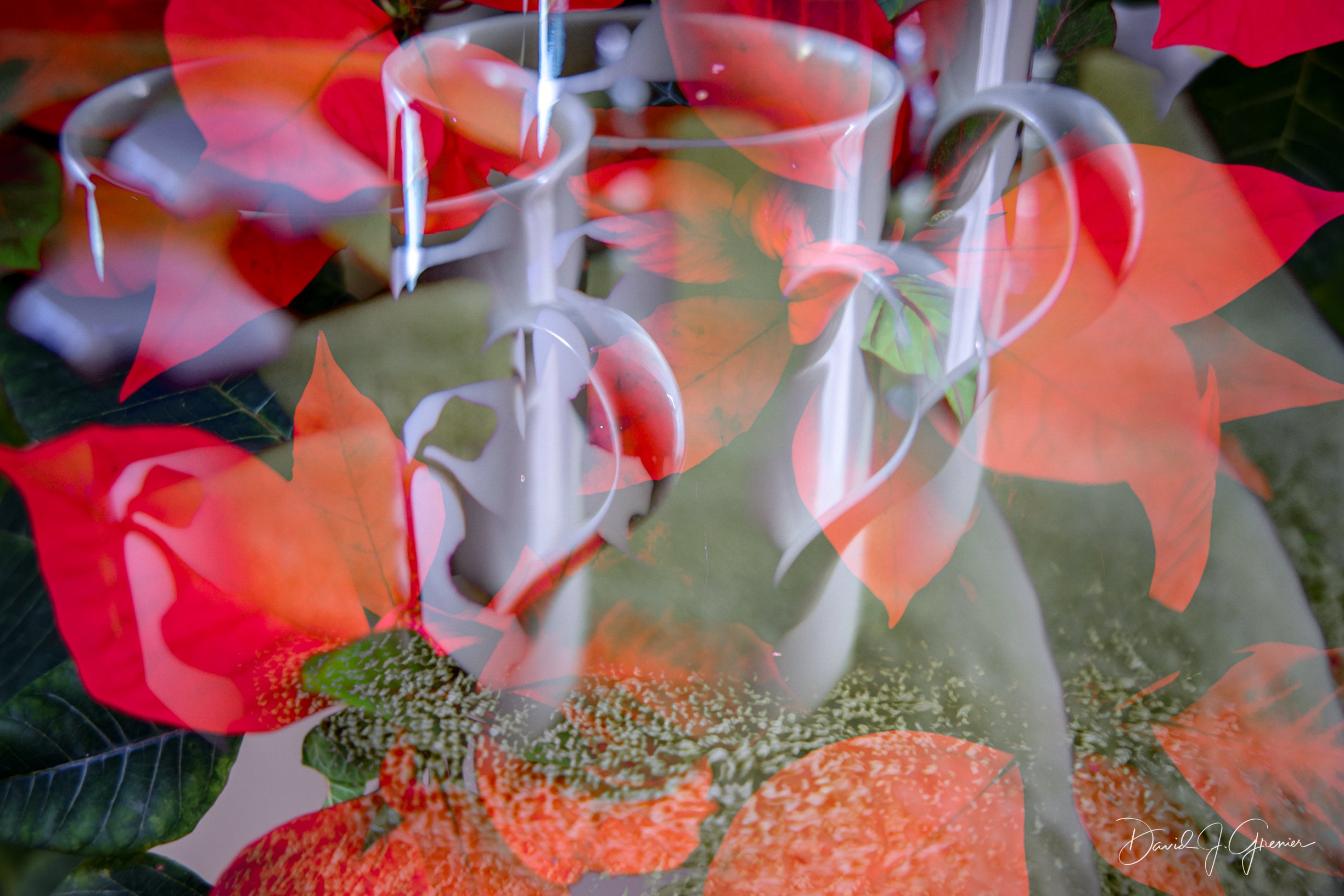
#6 ‘HAPPY THANKSGIVING!’

This is an in-camera multiple image of a coffee cup, then blended with an image of a poinsettia plant, that was growing in the front yard of my cousin’s home in Elanora, QLD, Australia.

'Reflect upon your present blessings of which every man has many, not on your past misfortunes, of which all men have some.' – Charles Dickens

November 4, Elanora, QLD, Australia; 1/160 sec @ F/4.0; 24-105mm lens @ 70mm; ISO 1600.

#5 ‘Eclipsed Moon Rising’ – this was the May version of the total eclipsed moon, captured from a favorite place of mine a few minutes from my home. In North America, the next chance we get at a total eclipse will be April 8, 2024.

May 16, Nimbus Overlook, Fair Oaks, CA; expo. 1/2500 sec at f/6.3; 150-600mm lens @600mm; ISO 640.

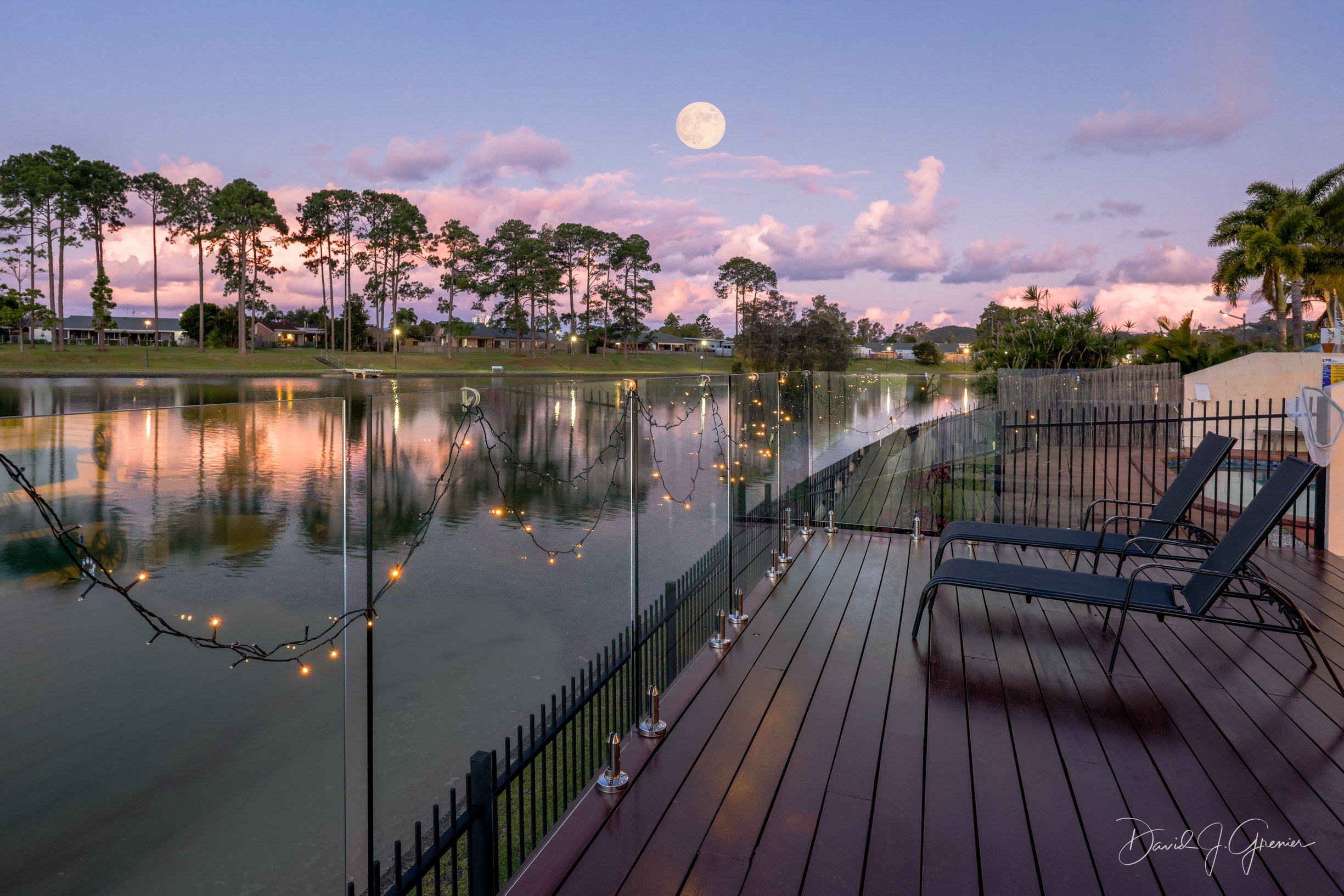
#4 'Moon Rise, Paradisio' – This is an image captured the day before the actual full moon, in the backyard of the home that I have been staying in since arriving Down Under. The reflection seen here is on Pine Lake, and the lights are hanging on the glass wall of the backyard deck of their beautiful lakeside home.

November 5, Elanora, QLD, Australia; expo. 1/10 sec @ f/8; 14-35mm lens @ 19mm; ISO 1250.

#3 'We Have Lift Off!' – this happened during my daily morning's walk. An Australian Pelican captured just as it lifted off from the Currumbin River. At least for me, birds in flight are one of the most difficult subjects to photograph well, so I was simply thrilled, and lucky, to capture this with my iPhone!

November 6, Currumbin, QLD, Australia; expo. 1/950 sec @ f/2.8; Apple iPhone 14, 9mm lens; ISO 32.

#2 ‘A Slice of Heaven’ – I’ve always said when it comes to landscape photography, ‘You get what you are given’. Sometimes, when you’re given this much, you are left in awe of the beauty before you, and grateful for the miracle that is Mother Nature. The Fair Oaks Bridge, and a special colorful sunset...

December 6, Fair Oaks, CA; expo. 1/30 sec at f/11; 14-35 mm lens @ 14mm; ISO 125.

#1 'Le Grand Sunset' – This is an image captured in the backyard of my cousin’s home, Michael and Sharlene, that I had been staying in since arriving back Down Under. The reflection seen here is in Pine Lake, and the lights are hanging on the glass wall of the backyard deck of their beautiful home, the same location as the image shown above in image #4. One big difference, this was an impromptu, low light shot with my iPhone 14 Pro, which has a new 48 MP sensor, the largest in the history of Apple’s iPhone cameras.

November 4, Elanora, QLD, Australia; expo. 1/30sec @ f/1.8; Apple iPhone 14, 6.8mm lens; ISO 2500.

And there you have it, my Top Twelve Photographs for the 2022 year. I always have fun looking back at the past year, as it gives me an idea of what I created, where and when, and the improvements that I have made to my craft. In retrospect, I really like these beautiful images created in 2022! Deep gratitude to what I was given by Mother Nature, what I managed to do with these gifts, and now look forward to the coming New Year with measured anticipation and hope.

I’d also like to say a big Thank You to all those who expressed their support of my photography on my Facebook page, and for taking the time to do so – it is greatly appreciated! As always, I also owe a great deal of gratitude to the many people who support my art by purchasing my images in various print formats, and especially those attending my private workshops.

If you have been following my photography for a while now you will know that I have been trying to conduct a photography workshop and tour in the country of my birth, Sri Lanka, since 2020. Every year, due to problems associated with COVID, I have had to postpone this trip. This year’s workshop was postponed due to the financial problems the country has endured. I am now planning on going to Sri Lanka in the July to August, 2023 timeframe on a scouting trip. I feel the need to go to the country that I have not visited since 2019, and see for myself what are the current conditions on the ground in some of the major regions of the country included in the original itinerary.

I am looking forward to 2023, with optimism and hope for us as Mankind. Lots of work to be done in various parts of the world, and my hope is that we can work together to look after the environment, and leave it a better place for the next several generations to come, so that they can enjoy and marvel at what we have been given on this beautiful Blue Planet we call Earth!

Happy New Year!

Making a Photograph from White Sands National Park

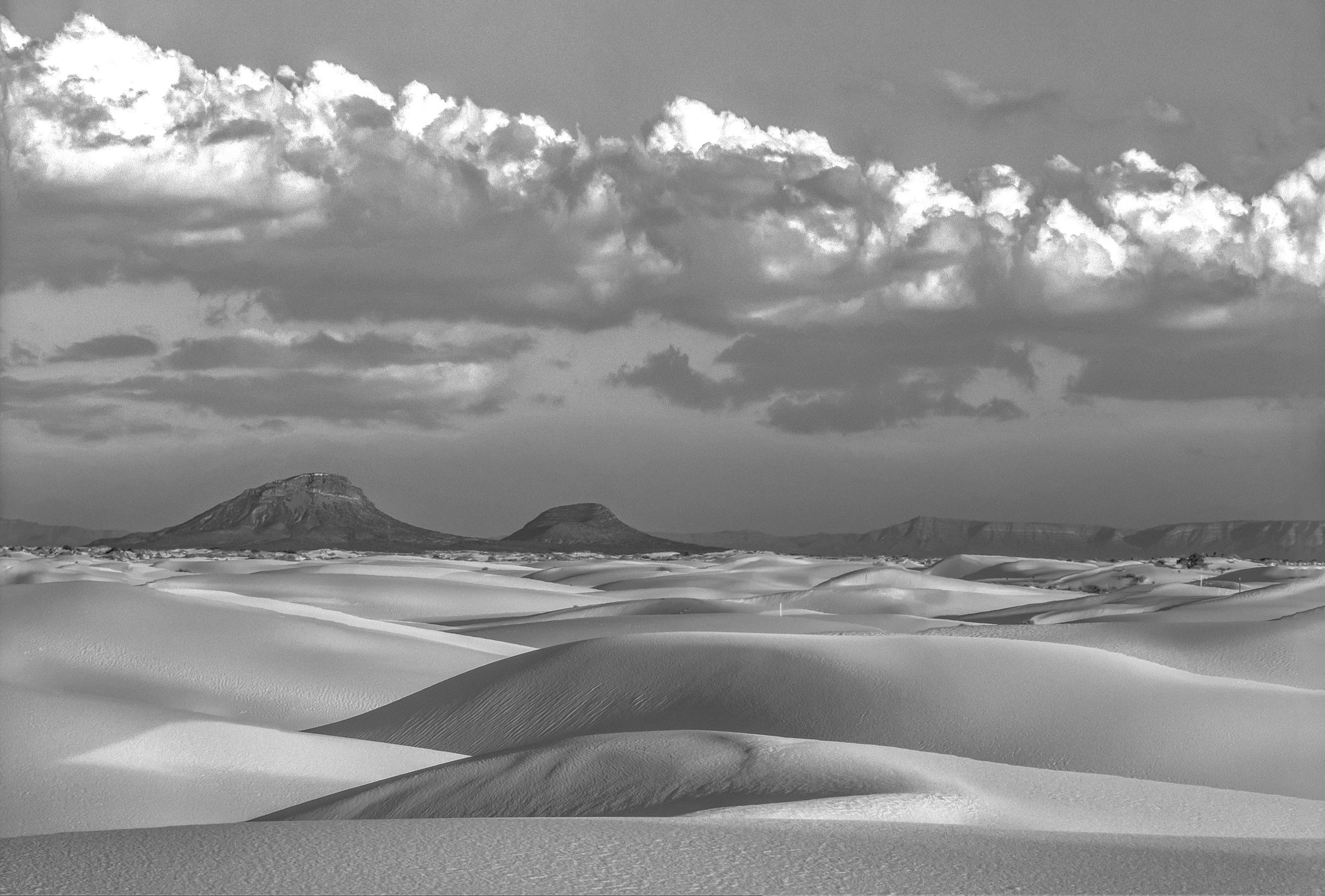
This is a short blog I felt motivated to write about how I was able to create an image that I really liked when I first saw this scene at White Sands NP, but felt so disappointed when I got back home.

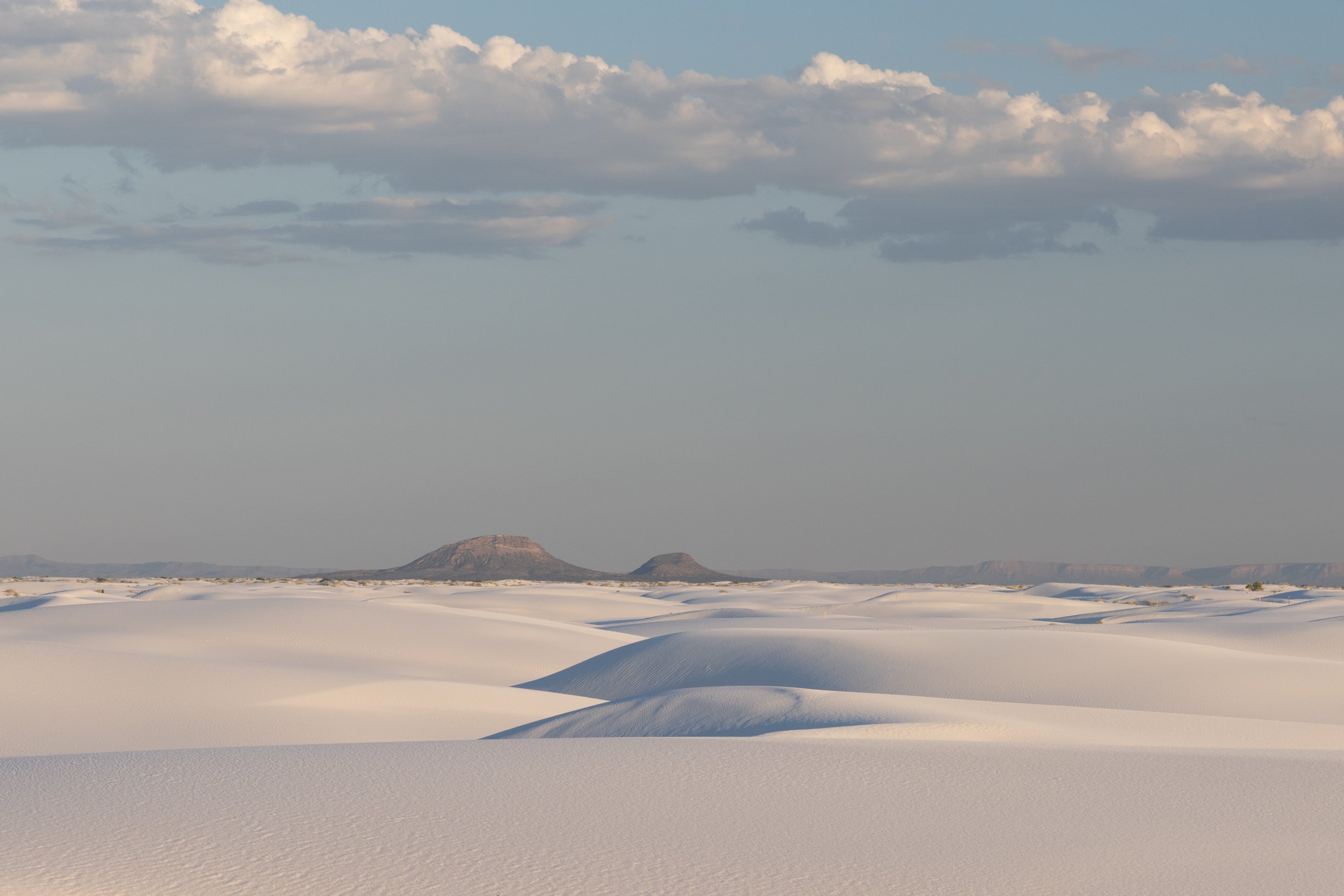
I was drawn to this scene by the shadows of the dunes in the foreground, leading the viewer into the mountain structures on the horizon, and the best cloud formations we had seen in all of the times spent in the White Sands.

However, there were some fundamental problems with the composition I had shot in the field. To help explain here is the original RAW file, straight out of my camera.

There were two elements to this image that I did not like; 1. the bald blue, hazy color between the bottom of the clouds and the horizon line, and 2. the clouds being cut off on the top left hand corner. After looking at this image a few times over the last 10 plus days since I returned home, I finally remembered a Photoshop technique that I was shown about 5 years ago, while on a workshop with Ian Plant in Patagonia.

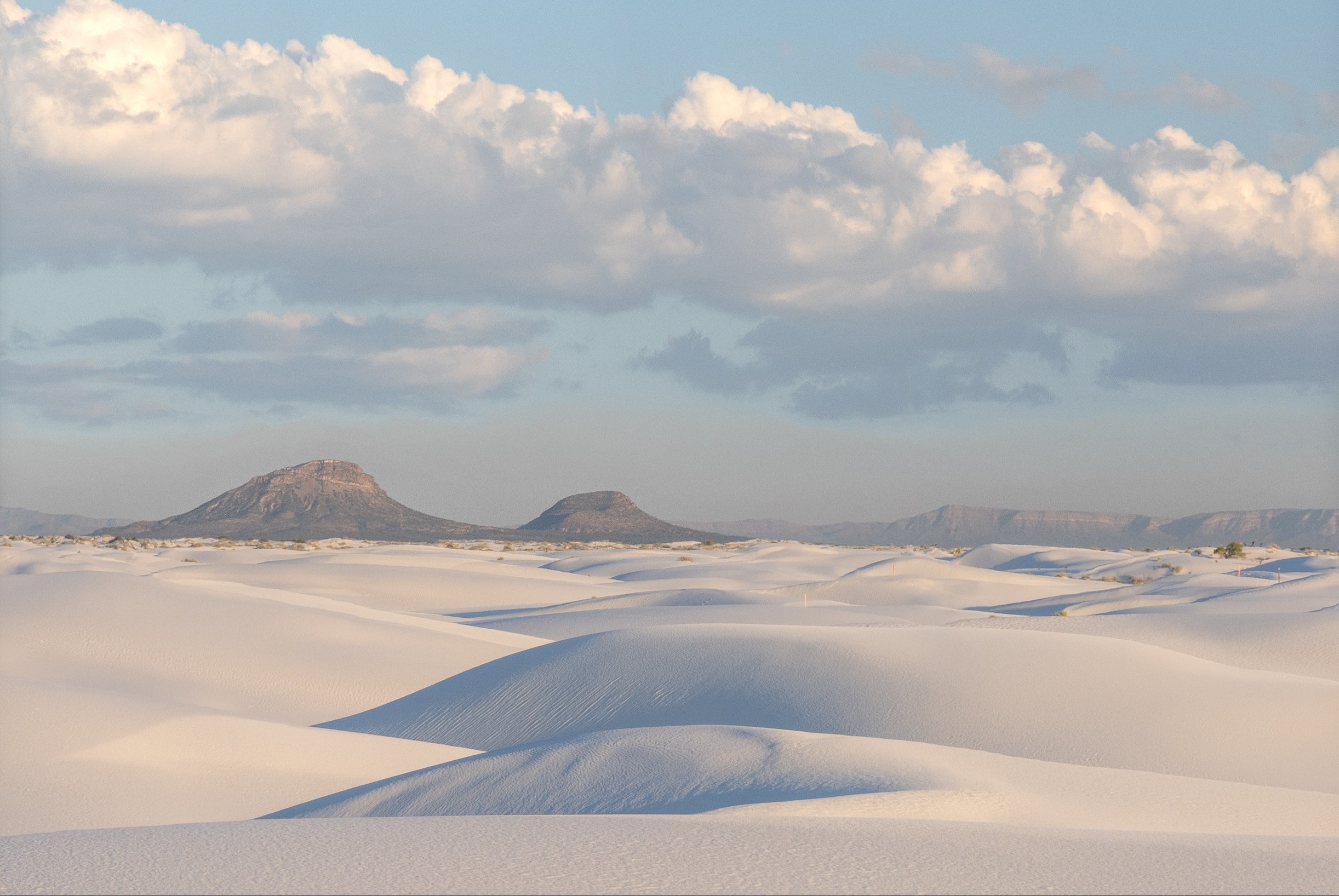
It is a function available in Photoshop that allows one to compress areas of an image, just like the bald, blue, hazy, sky in this one. So here is what I got done in Photoshop.

A much more pleasing composition to my eye, with one more tweak in Photoshop required to fix the clouds. Using Canvas Size, and Content Aware Fill, here’s the next image, with a little space added above the cloud..

One final problem to address - how to get rid of the dirty looking haze about the horizon line? The solution that I liked most was to try converting the existing image into black and white. To do that I used my favorite B&W conversion software, NIK’s Silver Efex Pro 3, and here’s what I came up with.

‘Shadows and Light’, White Sands NP, September 17, 2022

So, the whole point of this exercise is to reiterate an Ansel Adams quote that has been a guiding light to me, ‘You don’t take a photograph, you make it’. I encourage you to work on your ‘make it skills’ with the amazing array of software development tools available to a digital photographer today, but first you have to develop the vision, of what can be done and/or what should be done, which comes from experience in developing thousands of images over several years. Have fun!

2021 Top Twelve Photographs

“Twelve significant photographs in any one year is a good crop.” – Ansel Adams

It is that time of the year once again, for me to share with you my Top Twelve Photographs of the Year 2021. This is the 9th edition of a tradition that began in 2013, inspired by Ansel Adams’ quote above. Ansel Easton Adams (February 20, 1902 – April 22, 1984), is one of the most recognizable names in American landscape photography. His black-and-white landscape photographs of the American West, especially Yosemite National Park, have been widely reproduced on calendars, posters, books and prints.

I began 2021 with the hope that it would be much less restrictive than the COVID-19 driven lockdowns and social distancing requirements that dominated 2020. While that hope appeared to be achievable in the May/June time frame when vaccines were rolling out successfully, it was not to be in the end. A resistance to vaccinations, and the potent Delta variant turned out to be a game changer. Now, as I write this blog we are being inundated with record breaking daily new cases of COVID-19 fueled by the Omicron variant. We are still in very uncertain times, and how 2022 will turn out is anybody’s guess.

I traveled a little bit more in 2021 than in the previous year, but my travels were still quite restrictive. I did manage to get in a photography trip to Virginia, the Outer Banks, North Carolina, a visit to the Eastern Sierras, and three visits to Yosemite National Park, but no travel overseas.

As in previous years, I determine my Top Twelve, and the order of the selections by the amount of unsolicited responses (Likes) the images received on my social media Facebook page. One small twist that I added this year is an additional image, as I had a tie for tenth place, that I chose not to arbitrarily break as I have previously.

I will begin with Number 12, its title, some background about each image, and some basic EXIF data.

#12. ‘Constant Craving’ – sunset at Big Meadow, Shenandoah National Park, VA. A huge thank you to a very good friend of mine, for inviting, hosting, and driving me to these beautiful sites in Virginia, as well as the Outer Banks, without whose help this trip would not have been possible. I admit here that the ‘big picture’ in landscape photography is what catches my eye and I crave…

May 25, Big Meadow, Shenandoah National Park, VA,; exposure 1/400 sec @ f/20; 24-105mm lens @ 24mm; ISO 125.

#11. 'Quivering Aspens' - just outside Lee Vining, CA. I spent 3 days conducting a private workshop in the Eastern Sierras, and followed by 7 days in Yosemite in October. We found a small grove of Aspens, with fall colors on the side of Highway 395 as we were driving into Lee Vining. I just wasn’t getting an image that captured my emotions, when I decided to use ICM (Intentional Camera Movement) and created this image that I liked.

October 16, Lee Vining, CA, exposure 1/16 sec @ f/13; 24-105mm lens @ 65mm; ISO 50.

#10 'Highlights' – Yosemite Falls, during my third visit to Yosemite National Park after a significant snow storm. I tend to move around by instinct in areas that I am familiar with, and found myself arriving to this spot on South Side Drive, just as the sun created these highlights on Yosemite Falls, which lasted all of 10 minutes and then was no more.

“Youth is happy because it has the capacity to see beauty. Anyone who keeps the ability to see beauty never grows old.” – Franz Kafka

December 15, Yosemite National Park, CA, exposure 1/200 sec @ f/11; 16-35mm lens @ 22mm; ISO 400.

#10 ‘Black Beauty’ – this was my first experience photographing wild horses. It was simply stunning to see this beautiful, black, wild stallion galloping along the beach in the Outer Banks, NC. We spent a few days driving up and down this beach, and in the dunes looking for and photographing these magnificent wild animals. This Black Beauty was the highlight of this unique experience. Extremely grateful to my dear friend for bringing me here!

May 17, The Outer Banks, North Carolina, exposure 1/8000 sec @ f/5.6; 28-300mm lens @ 300mm; ISO 1000.

#9 'Fluttering Cold' – ICM of the road leading into Pohono Bridge, and South Side Drive, Yosemite Valley. Photography to me is an emotional pursuit, and sometimes I need to do something different to feel that emotional connection to a creation of mine. This year I have rediscovered that Intentional Camera Movement sometimes is that difference between the mundane and that creative spark.

December 16, Yosemite Valley, CA, exposure 0.8 sec @f/14; 24-105mm lens @ 24mm; ISO 50.

#8 ‘The Way We Were’ – the iconic Hope Valley Barn, a worthwhile four hour round trip from my home. This day, our arrival timing was perfect, and we got there just as the available light painted this beautiful scene exactly the way I wanted it to be!

"Fall has always been my favorite season. The time when everything bursts with its last beauty, as if nature had been saving up all year for the grand finale." – Lauren Destefano

October 14, Hope Valley, Markleville, CA, exposure 1/50 sec @ f/11; 24-104mm lens at 50mm; ISO 250.

#7 ‘Reaching for the Moon’ – The Harvest Moon, is the closest full moon to the autumn equinox, September 22 this year, and is symbolic of a new beginning. It traditionally signaled the time of year for farmers to start harvesting their summer crops before the arrival of the autumn frosts. I captured this rising moon from the Nimbus Overlook, Fair Oaks, CA, which allowed me to place the moon next to the spire of the Sacramento California, Mormon Temple.

September 22, Fair Oaks, CA, exposure 1/600 sec @ F/6.3; 150-600mm lens @ 600mm; ISO 800.


#6 ‘It’s The Little Things’ – morning light on the leaves of this Fruitless Plum tree in my front yard that caught my eye. While I am usually attracted to the wide majestic landscape shot, intimately well-lit gems like compels me to stop and capture its beauty.

“Enjoy the little things in life…for one day you’ll look back and realize they were the big things. – Robert Brault

March 13, Gold River, CA, exposure 1/640 sec @ f/2.8; 100mm Macro lens; ISO 50


#5 ‘Reflections En Masse’ – we drove through The Great Dismal Swamp, VA, to get to Lake Drummond, where we encountered this magnificent sky reflected on a perfectly still lake. I do not remember ever seeing such a beautiful sky reflected in such a perfect setting, a fantastic start to our trip down to photograph wild horses in the Outer Banks, NC.

May 15, Lake Drummond, VA, exposure 1/80 sec @f/11; 24-105mm lens @ 24mm; ISO 100.

#4 ‘The Two of Us’ – sunset at the Fair Oaks Bridge, Fair Oaks, CA, a 10 minute drive from my home, and my new go-to location to shoot a sunset. The bridge, built in the early 1900s, continues to serve as a pedestrian and bicycle crossing and remains a cultural icon for the local community. Paid a lot for the two models in the foreground, albeit worth every penny because of their impeccable sense of timing…

March 3, Fair Oaks, CA, exposure 1/1250 sec @ f/11; 16-35mm lens @ 16mm; ISO 1250.

#3 'Christmas Lighting, Yosemite Style' - caught this beautiful evening light on El Capitan at Valley View, AKA The Gates of the Valley, Yosemite National Park. Yosemite is my favorite place to visit and photograph, and winter after a snow storm is particularly beautiful. Yosemite is also beautiful in the spring, and fall, and I leave summer to the tourists, their families and children, as the park gets crowded with predominantly ‘bald blue skies’.

December 15, Valley View, Yosemite National Park, CA, exposure 1/25 sec @ f/11; 16-35mm lens @ 16mm; ISO 125 .

#2 'Dreamland' – I don't think that I have ever seen a more perfect, colorful, fall scene in Yosemite Valley in all the years I have been privileged to visit this beautiful national park. In photography, as in life, you get what you are given. So grateful to witness Mother Nature's artistry, which touches me so deeply...

October 22, Yosemite National Park, CA, exposure 0.4 sec @ f/11; 24-105mm lens @ 45mm; ISO 125.

#1 ‘Amazing Grace’ – my fellow photographer friends and I were on our way out of Yosemite morning after spending two nights here, when we spotted fog in El Capitan Meadow, and instinctively I went to see what it would look like on the Merced River from the El Capitan Bridge. We were treated to the most amazing show of God rays, aka Crepuscular rays, that I have ever seen, which appeared to be doubled in size with the reflection off the perfectly still river!

November 19, El Capitan Bridge, Yosemite National Park, CA, exposure 0.6 sec @f/11; 16-35mm lens @ 16mm; ISO 100.

And there you have it, my Top Twelve Photographs for the 2021 year. I always have fun looking back at the past year, as it gives me an idea of what I created, where and when, and the improvements that I have made to my craft. In retrospect, looking back I had a very good year! Deep gratitude to what I was given by the Universe, what I managed to do with these gifts, and now look forward to the coming New Year with measured anticipation and hope.

I’d also like to express a big thank you to all those who expressed their support of my photography on my Facebook page, and for taking the time to do so – it is greatly appreciated! As always, I also owe a great deal of gratitude to the many people who support me by purchasing my images in various print formats, and especially those attending my private workshops.

Again this year, I will attempt to conduct my Sri Lanka Photography Workshop & Tour. All arrangements for the 2022 version have been made and are in place, contingent upon being given the chance to travel freely internationally in a safe manner. Please see all the details of this exciting event at my webpage, and feel free to contact me if you have any questions, and if you’d like to join us: https://www.davidjgrenier.com/srilanka2022

It is my sincere hope that 2022 will gradually bring us toward a new normal. A time where we learn to live with COVID-19, when it begins to looks like it may move from being a pandemic, to one where we become used to living with COVID-19 as an endemic.

Much to learn going forward, and much healing needs to be done as well as mankind. To a place where hopefully we begin the healing process of acting more as a united nation than a divided nation. One in which we can learn to live with diverging points of view, and learn to compromise by working with each other in a respectful and civil manner, towards solutions that benefit all of mankind, not just a few, as well as healing this beautiful planet that we call Home!

Happy New Year!

2020 Top Twelve Photographs

“Twelve significant photographs in any one year is a good crop.” – Ansel Adams

It is that time of the year once again, for me to share with you my Top Twelve Photographs of the Year 2020. This is the 8th edition of a tradition that began in 2013, inspired by Ansel Adams’ quote above. Ansel Easton Adams (February 20, 1902 – April 22, 1984), is one of the most recognizable names in American landscape photography. His black-and-white landscape photographs of the American West, especially Yosemite National Park, have been widely reproduced on calendars, posters, books and prints.

To say that 2020 was an unusual year would be a huge understatement. To begin with no one alive today has lived through a pandemic, an experience I hope no one has to go through again. It had a significant limiting affect on my photography due to the Stay at Home Orders issued by the State of California, and the resultant curtailment of domestic and international travel.

I can state here emphatically I did not travel as far and wide this year as I have done the previous many years. I would joyfully state at this point in my blog all the places I had traveled that year, and how many times I got to the local venues that I love to visit and photograph. In 2020 I did not travel overseas at all, and only managed to traveled domestically to Yosemite National Park one time.

As in previous years, I determine my Top Twelve and the order of the selections by the amount of unsolicited responses (Likes) the images received on my social media Facebook page. One new element that I added this year - I have included images captured from previous years shoots that I developed and published for the first time this year.

Considering the significant lack of travel due to COVID-19, I spent time culling through previous years shoots and finding images that caught my eye, developing them, and publishing the resultant images on Facebook and are included in this years countdown. I will begin with Number 12, its title, some background about each image, and some basic EXIF data.
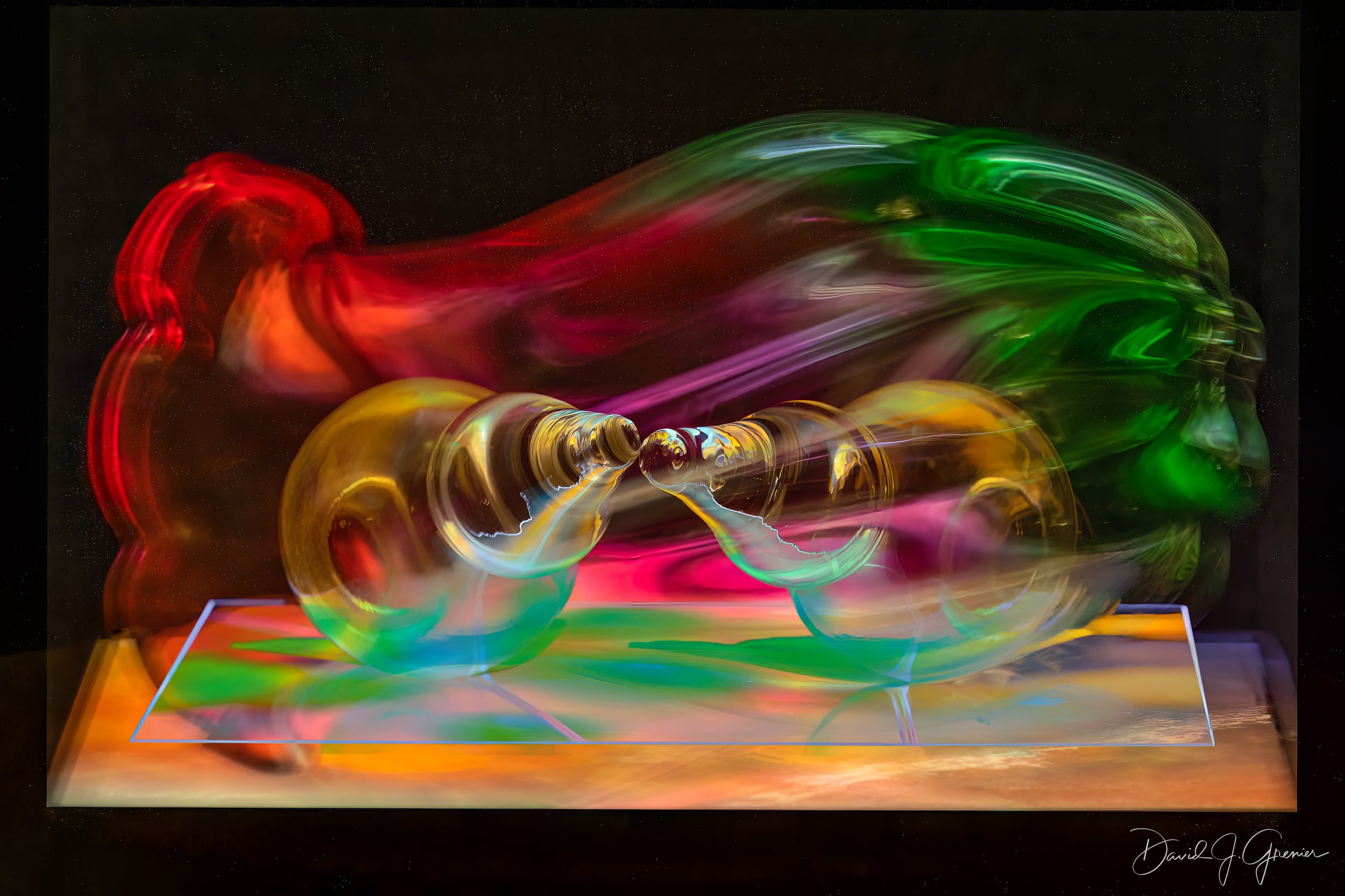
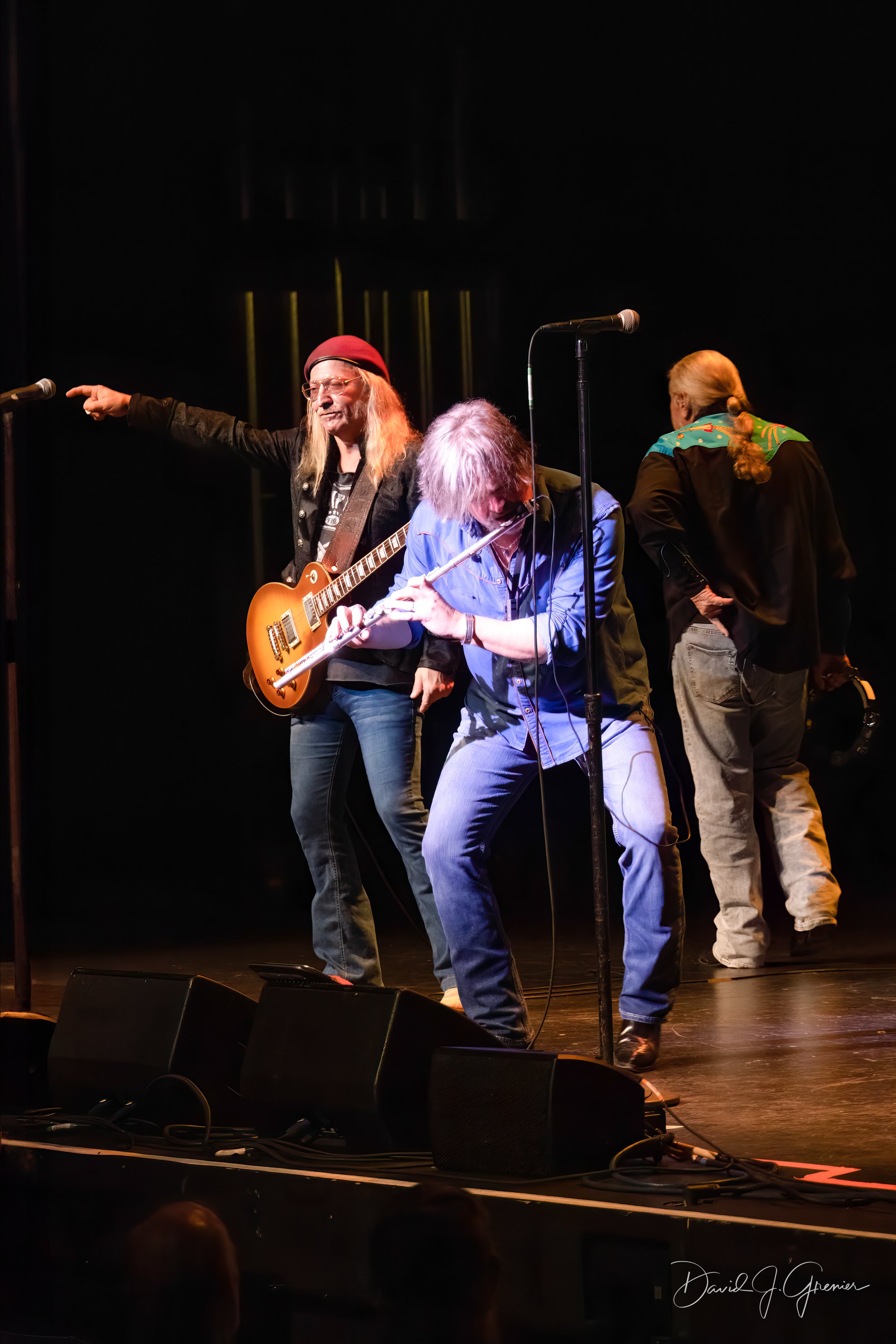
#12 - ‘Little Red Canoe’ – one from the archives. The most beautiful site I saw in Banff National Park, Alberta, Canada, was Moraine Lake. We were lucky to have an early snowfall for the region in mid-September, 2018, which added a whole other interesting dimension to this beautiful area. I had never in my life before seen the bright turquoise color of this lake, and situated in the Valley of the Peaks that surrounds it, I felt so grateful to be exposed to this level of beauty and serenity.!

September 17, 2018, Moraine Lake, Banff National Park, Canada, exposure 1/40 sec @ f/11; 16-35mm lens @ 16mm; ISO 100

September 17, 2018, Moraine Lake, Banff National Park, Canada, exposure 1/40 sec @ f/11; 16-35mm lens @ 16mm; ISO 100

#11 - ‘Stormy Monday’ – a Monday evening’s sunset. When storms go through NorCal in the spring and fall, the resultant clouds can be dramatic and beautiful. I have lived close to this location for some 17 plus years and only just discovered this spot that is spectacular at sunset! So much fun as a photographer to have local ‘go-to places’, especially when you are limited to staying at home to survive a deadly pandemic.

May 18, 2020, El Dorado Hills, CA, exposure 1/8 @ f/11; 24-105mm lens @ 24mm; ISO 250

May 18, 2020, El Dorado Hills, CA, exposure 1/8 @ f/11; 24-105mm lens @ 24mm; ISO 250

#10 - ‘On Golden Pond’ – another from the archives, I captured this image just after some heavy snowfall during the month of February, 2019, in Yosemite National Park. A sunset shot from Sentinel Bridge with the glow from the setting sun on Half Dome, reflected in a very still Merced River. Yosemite is a magical place to visit and photograph, but winter with lots of snow on the ground just maybe my favorite!

“Thousands of tired, nerve-shaken, over-civilized people are beginning to find out that going to the mountains is going home; that wildness is a necessity”. ― John Muir

February 11, 2019, Sentinel Bridge, Yosemite National Park, CA, exposure 0.8 secs@ f/11; 24-105mm lens @ 31 mm; ISO 125

February 11, 2019, Sentinel Bridge, Yosemite National Park, CA, exposure 0.8 secs@ f/11; 24-105mm lens @ 31 mm; ISO 125

#9 - ‘Stuck in the Middle…’ – the Harvest Moon from September, 2019. Shot locally where I lived, I blended two shots to make this image. One focused on the branches of the tree, and the other on the moon since the disparity in focal length would have resulted in one of the key element of this composition being out of focus, and I wanted both to be sharp.

“It is a beautiful and delightful sight to behold the body of the Moon.” – Galileo Galilei

September 12, 2019, El Dorado Hills, CA, exposure 1/8 sec @ f/6.3; 150-600 mm lens @ 600mm; ISO 800

September 12, 2019, El Dorado Hills, CA, exposure 1/8 sec @ f/6.3; 150-600 mm lens @ 600mm; ISO 800

#8 - ‘Imagine’ – another from the archive. The story behind this image is, I have always loved this black and white image of Mount Fitzroy, a mountain range in Patagonia on the border between Argentina and Chile. It is located in the Southern Patagonian Ice Field near El Chaltén village, where I visited in 2016. I recently began using a software named Luminar 4, mainly for two features that they offer - an easy way to replace a bald blue sky with one of my own skies and the ability to add objects into an image, like for instance a full moon. In this image I dropped in the full moon, which I had shot earlier in the year when we were experiencing terrible air quality due to the many wildfires that burned in record amounts this year in California. In my opinion, the addition of the reddish colored full moon into the black and white landscape, made a good image quite spectacular and special. A salute to imagination!
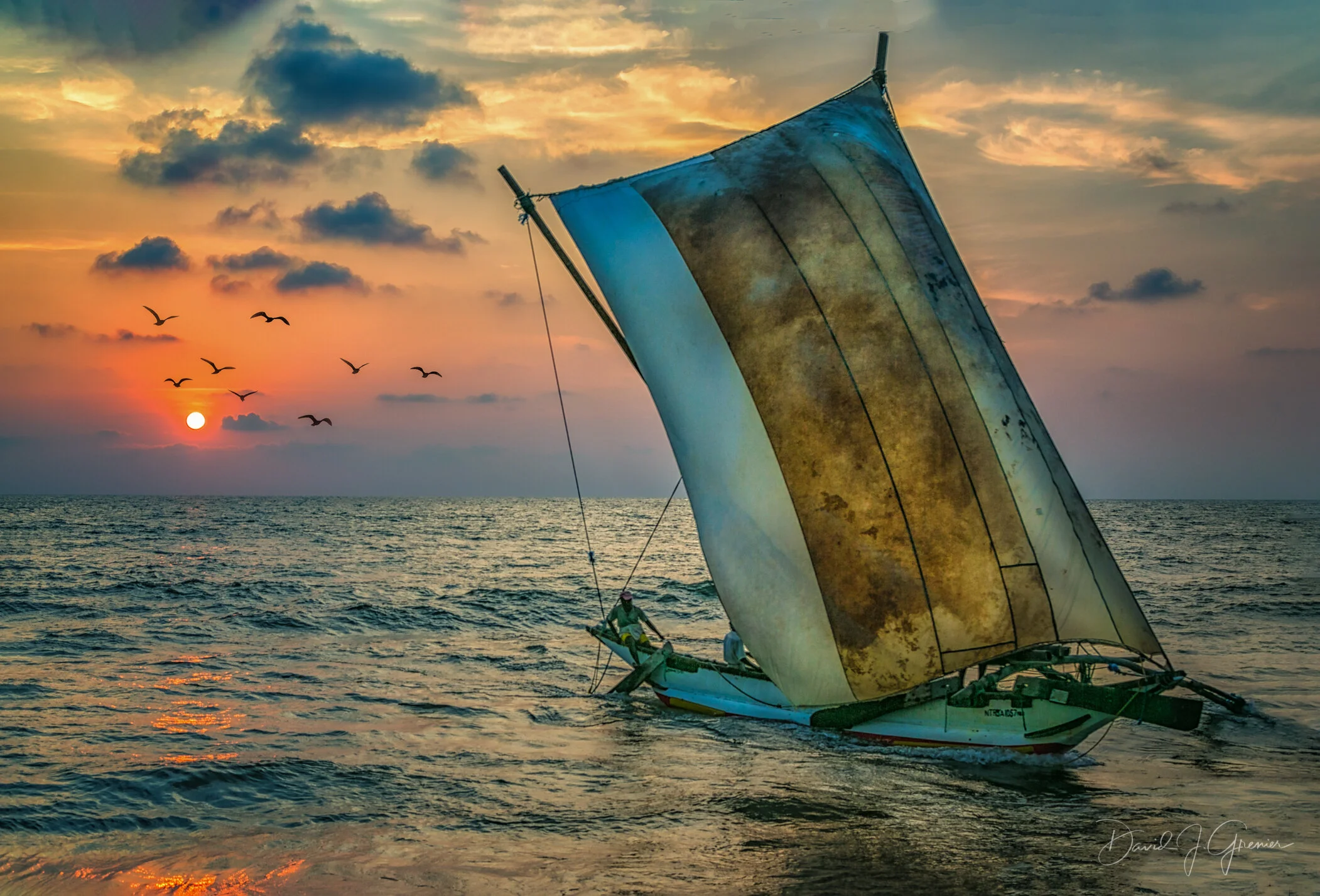
“Imagination is more important than knowledge. Imagination is the language of the soul. Pay attention to your imagination and you will discover all you need to be fulfilled.” Albert Einstein

October 26, 2016, Mount Fitzroy, El Charlton, Argentina, exposure 6.0 sec @ f/11; 70-200mm lens @ 70mm, ISO 200

October 26, 2016, Mount Fitzroy, El Charlton, Argentina, exposure 6.0 sec @ f/11; 70-200mm lens @ 70mm, ISO 200

#7 - ‘Hallelujah’ – sunrise at Church Rock, a pillar in Navajo County, Arizona. It is located near the mouth of Church Rock Valley with a summit elevation of 5,862 feet (1,787 m). I got to this location via a workshop that I attended run by Arizona Highways Photoscapes. This is a group that I would highly recommend to anyone wanting to learn how to improve your landscape photography skills, or if you simply want to be taken to the best locations at the best times, especially to capture images in iconic Arizona locations. I also want to commend the man who led the group I attended, no better workshop leader to have in this region of Arizona than Navajoland Native Son, and photographer extraordinaire LeRoy De Jolie.

April, 28, 2017, Church Rock, Kayenta, Navajo County, AZ, exposure 0.5 sec @ f/16; 24-105mm @ 55mm; ISO 400

April, 28, 2017, Church Rock, Kayenta, Navajo County, AZ, exposure 0.5 sec @ f/16; 24-105mm @ 55mm; ISO 400

#6 - ‘Sunset Sailing’ – another from the archives. This is an image from 2014, when I first went back to visit the country of my birth, Sri Lanka, after an absence of some 55 years. This is a catamaran sailing at sunset in Negombo, a coastal city I consider to be my ‘hometown’. I had planned to lead a photo workshop into Sri Lanka, in the June/August 2020, which got postponed due to CORVID-19. Sri Lanka is truly a magical island in the Indian Ocean, with sights, sounds, and tastes unique to this tropical paradise. With the rollout of the COVID vaccines just beginning, I am now ‘audaciously hoping’ that I will be able lead the same Workshop with revised dates in mid-August, 2021. We still have some seats available and if you are interested in attending my 2021 Sri Lanka Workshop & Tour, all details of the journey and the revised itinerary are available here: https://www.davidjgrenier.com/srilanka2021

“Hope lies in dreams, in imagination, and in the courage of those who dare to make dreams into reality.” – Jonas Salk

March 22, 2014, Negombo, Sri Lanka, exposure 1/80 sec @ f/8; 24-105mm lens @ 45mm; ISO 100

March 22, 2014, Negombo, Sri Lanka, exposure 1/80 sec @ f/8; 24-105mm lens @ 45mm; ISO 100

#5 - ‘Meet My Neighbor, the Moon’ – this was shot on my 75th birthday, just after the Stay at Home order in California was first put in place. After a virtual celebration of my birthday via Zoom & Skype, I walked into my backyard and set up to capture April's full moon. Dubbed the "Super Pink Moon". This full moon appeared larger and brighter than usual because it was at the closest point to Earth in its elliptical orbit. It is a stunning sight to see a full moon rising at the horizon, where it appears to be the largest, especially when it can be placed next to trees and/or houses for some relativity.

April 7, 2020, El Dorado Hills, CA, exposure 1/30 @ f/6.3; 150-600 lens @ 600mm; 1600 ISO

April 7, 2020, El Dorado Hills, CA, exposure 1/30 @ f/6.3; 150-600 lens @ 600mm; 1600 ISO

#4 - ‘Once in a Blue Moon’ – this full moon, set against the bell tower of the Holy Trinity Church, El Dorado Hills, is named a Blue Moon (AKA Halloween Moon because it happened to fall on Halloween Day), and it was the 2nd full moon in the month of October! Why is it called the Blue Moon? Every 2.7 years, two full moons are squeezed into one month, as it was this month, which accounts for the most commonly used meaning of the term, “once in a blue moon,” referring to something that happens on a very infrequent basis. On a personal note, this was also an end of an era for me of being able to shoot most of these rising moons from my backyard in the home I lived in for 17 plus years!

October 30, 2020, El Dorado Hills, CA, exposure 1/60 @f/6.3; 150-600mm lens @ 600mm; ISO 1000

October 30, 2020, El Dorado Hills, CA, exposure 1/60 @f/6.3; 150-600mm lens @ 600mm; ISO 1000

#3 - ‘A Snow Moon Rising’ – as you may have noticed, during these lockdown times of the pandemic, the one thing I did shoot ofter were images of a full moon rising. This is an image shot in Yosemite National Park of the spectacular Snow Moon rising above Clouds Rest (9,931 feet). It’s worth noting that as a photographer, the best time to photograph the full moon is the day before, when it is 98% full. More importantly, it provides the best lighting because the sky is still blue when the moon appears just above the horizon, which enables you to capture some of the foreground as well. Typically, on the night of the full moon, it rises when the sky is black, so the moon is incredibly bright and the rest of the composition is very black. According to the Farmers' Almanac, northeastern Native American tribes referred to the second full moon of winter as the Snow Moon because of February's heavy snow.

February 8, 2020, Clouds Rest, Yosemite National Park, exposure 1/2000 @ f/8; 150-600 lens @ 600mm; ISO 160

February 8, 2020, Clouds Rest, Yosemite National Park, exposure 1/2000 @ f/8; 150-600 lens @ 600mm; ISO 160

#2 - 'The Lady in Red' – alpenglow on the magnificent El Capitan, Valley View, Yosemite National Park, reflected in a still Merced River at sunset. Alpenglow is an optical phenomenon that appears as a reddish glow near the horizon opposite to the Sun when the solar disk is just below the horizon. I only made one trip into Yosemite in 2020, due to Stay at Home restrictions in California, and was fortunate to get the image above and this one during a short two nights visit to the Park!

February 6, 2020, Yosemite National Park, CA, exposure 5.0 sec @f/8; 24-105mm lens @ 35mm; ISO 1600

February 6, 2020, Yosemite National Park, CA, exposure 5.0 sec @f/8; 24-105mm lens @ 35mm; ISO 1600


#1 - ‘In Memoriam’ – as a photographer, conditions aren’t always ideal especially when you are a long way from home as it was when I shot this image of the magnificent Taj Mahal, Agra, India, in 2018. So, with a lot of time on my hands I began to imagine what those ideal conditions could have actually looked like. First thing I did was replace the sky I had shot in the original image, using Luminar 4, with a sunset sky I had shot locally. Then using an IOS App, I created the reflection in the area that was an almost dry river bed when I shot the image originally. Finally, I would like to say here that I could not have done this trip without the planning and guidance from Ken Lee & Harsh Agarwal, who together offer the best photo tour of India, and gave me a journey of a lifetime filled with unforgettable memories and a gallery of stunning images!

February 26, 2018, Agra, India, exposure 1/40 sec @ f/11; 70-200mm lens @ 73mm; ISO 400

February 26, 2018, Agra, India, exposure 1/40 sec @ f/11; 70-200mm lens @ 73mm; ISO 400


And there you have it, my Top Twelve Photographs for the 2020 year. Also, a continuing tradition, a few observations in closing: 1) five of the Top Twelve images voted on this year were shot in 2020, and seven were shot at other times, and published for the first time in 2020.

I’d also like to express a big thank you to all those who expressed their support of my photography on my Facebook page, and for taking the time to do so – it is greatly appreciated! As always, I owe a great deal of gratitude to the many people who support me by purchasing my images in print form, and attending my workshops.

2021 is the year that as mankind, we are looking forward to in the hopes of gradually getting back to being able to enjoy being social again, travel both domestically and internationally without the fear of being infected by COVID, and brining an end to the tragic loss of lives, that as of this writing has reached the staggering number of 1.8 million deaths worldwide, and of those, some 350,000 plus deaths in the United States of America.

I would also like to see the economies around the world gradually get back to a place where the unemployed get back to work, restaurants become places of social gatherings and enjoyment again, places of worship open for their congregations to gather safely, and the thousands of brave, courages, frontline workers get their lives back to normal.

The availability of vaccines, brought to the market in record times, is the chief reason and basis for these hopes, and a great deal will hinge on the ability of governments around the globe being able to roll out these vaccinations to people in an efficient and timely manner. Therefore, as this historically difficult year comes to an end I approach 2021 with the ‘audacity of hope’ alive and well deep within me!

Happy New Year!

DECEMBER 30, 2020